You’ve done the research on cheap e-bikes and something doesn’t sit right. The £600 options feel compromised — heavy frames, dodgy brakes, batteries that won’t last three years. But you also don’t want to spend £3,000 on a Specialized when you’re not even sure you’ll ride it past March. The £1,000-£1,500 bracket is where e-bikes get properly good without reaching into “justifying it to your partner” territory. For related guidance, see our Best Electric Bikes 2026: UK Road & Commuter Tested guide. For related guidance, see our Best Folding Electric Bikes 2026: Compact Picks for UK Commuters guide.
In This Article
- Best Overall: Ribble Hybrid AL e
- Why £1,000-£1,500 Is the Sweet Spot
- Best E-Bikes Under £1,500 by Category
- What to Look For at This Price
- Motor Types at This Price Point
- Battery and Range Expectations
- Components That Matter
- Where to Buy E-Bikes in the UK
- Cycle to Work Schemes and Finance
- Frequently Asked Questions
Best Overall: Ribble Hybrid AL e
The Ribble Hybrid AL e (about £1,300 direct from Ribble) is our top pick in this bracket. It weighs just 15kg — lighter than most e-bikes costing twice as much — and uses a Mahle X20 rear hub motor that’s virtually silent. The integrated battery sits inside the downtube, so it looks like a regular bike rather than an electric Frankenstein. Range is about 50-60 miles on a single charge in eco mode, which covers a week’s commuting for most people.
We’ve been commuting on one since last autumn. The thing that surprised us most is how natural the assistance feels — the Mahle system reads your pedalling torque rather than just sensing pedal rotation, so it accelerates smoothly rather than lurching forward. The Shimano 105 groupset gives you proper road-bike gearing. At 15kg, it’s light enough to carry up a flight of stairs to an office or flat without dreading it every morning.
The main limitation? No suspension, so it’s a road/light gravel bike. If you need mountain bike capability, keep reading.
Why £1,000-£1,500 Is the Sweet Spot
What Changes From Budget E-Bikes
Below £1,000, manufacturers cut corners that directly affect your riding experience and the bike’s lifespan. At £1,000-£1,500, you get meaningful upgrades:
- Torque-sensing motors instead of cadence sensors — smoother, more natural assistance
- Branded drivetrains (Shimano Deore/105, SRAM) instead of unbranded components
- Hydraulic disc brakes instead of mechanical — better stopping in wet conditions
- Better frame geometry — designed by people who ride bikes, not just engineers meeting a spec
- Longer-lasting batteries — 400-500Wh vs 250-350Wh on budget bikes, with proper BMS protection
What You Still Won’t Get
Be realistic about the compromises at this price versus £2,500+:
- Mid-drive motors (Bosch, Shimano STEPS) — most bikes under £1,500 use hub motors
- Full suspension — budget allows hardtail only at this price point
- Carbon frames — you’re looking at aluminium, which is perfectly fine for commuting
- Premium finishing (internal routing, thru-axles throughout) — some bikes have it, most don’t
Best E-Bikes Under £1,500 by Category
Best Commuter: Ribble Hybrid AL e — £1,300
Already covered above but worth emphasising: for a daily commute of 5-15 miles each way on roads, nothing in this price range touches the Ribble. The lightweight build means it doesn’t feel like hard work even with the motor off. Mudguard and rack mounts included. The charger is compact enough to keep in a pannier for top-ups at work.
- Motor: Mahle X20 rear hub (40Nm torque)
- Battery: 250Wh internal (60-mile range in eco)
- Weight: 15kg
- Best for: road commuting, fitness riding, anyone who wants a bike that doesn’t scream “e-bike”
- Where to buy: ribblecycles.co.uk (direct only)
Best Hybrid: Decathlon Riverside 500E — £1,100
Decathlon continues to disrupt the market. The Riverside 500E is a proper all-rounder — comfortable geometry, 100mm front suspension fork, and a rear rack included. The Brose hub motor delivers 45Nm of torque with decent cadence-sensing assistance. The 418Wh battery gets you 50-80km depending on terrain and assist level. Build quality is surprisingly good for the price — we’d compare the feel to bikes costing £1,600-£1,800 from traditional brands.
- Motor: Brose rear hub (45Nm)
- Battery: 418Wh removable
- Weight: 22kg
- Best for: mixed use — commuting, towpaths, light trails, weekend rides
- Where to buy: Decathlon stores and decathlon.co.uk
Best Mountain Bike: Voodoo Bizango E — £1,300
Halfords’ Voodoo range punches above its weight in e-MTB. The Bizango E uses a Shimano E5000 mid-drive motor (one of the few mid-drives under £1,500) with 40Nm torque. The RockShox Judy fork with 120mm travel handles trail centre blues and reds comfortably. Frame geometry is modern and aggressive — not a converted hybrid with a motor bolted on. After six months of weekend trail riding, the frame and motor have been faultless.
- Motor: Shimano STEPS E5000 mid-drive (40Nm)
- Battery: 418Wh integrated
- Weight: 22.5kg
- Best for: trail centre riding, off-road commuting, towpaths with attitude
- Where to buy: Halfords stores and halfords.com
Best Folding: Tern Vektron S10 — £1,400
Folding e-bikes under £1,500 that aren’t compromised on quality are rare. The Vektron S10 uses a Bosch Active Line motor (the cheapest Bosch system, but still Bosch — reliable, well-supported, torque-sensing). It folds to 86 × 79 × 38cm, fitting in a car boot or under a desk. The 400Wh battery gives 40-60 miles of range. Not cheap for a folder, but the Bosch ecosystem means dealer support and parts availability for years.
- Motor: Bosch Active Line (40Nm)
- Battery: 400Wh PowerPack
- Weight: 22kg (heavier than non-electric folders)
- Best for: train commuters, people with no bike storage, multi-modal commutes
- Where to buy: independent Bosch dealers, Evans Cycles
Best Value: Carrera Crossfuse — £1,000
The entry point to this bracket. Halfords’ Carrera brand with a Bosch Active Line motor — remarkable at this price. The Crossfuse is a hybrid-style frame with 63mm suspension fork, hydraulic discs, and a 300Wh battery. Range is more modest (30-40 miles realistic) and it’s heavier at 23kg, but for a Bosch-powered e-bike at a grand, it’s exceptional value. Halfords’ nationwide service network means you won’t be stuck if something needs warranty attention.
- Motor: Bosch Active Line (40Nm)
- Battery: 300Wh PowerTube
- Weight: 23kg
- Best for: budget-conscious commuters who want brand reliability
- Where to buy: Halfords stores (test rides available)
What to Look For at This Price
Frame Material
Aluminium is standard and perfectly adequate. Look for hydroformed tubing (smoother welds, better stiffness-to-weight ratio) rather than straight-gauge tubes. Internal cable routing is a bonus at this price but not universal. Check weld quality around the motor mount and battery housing — these are stress points.
Brake Quality
Hydraulic disc brakes are non-negotiable at this price. E-bikes are heavier and faster than regular bikes, so you need brakes that can handle repeated stops on a loaded descent. Shimano MT200 or Tektro HD-M275 are the minimum acceptable spec. Avoid anything with mechanical discs at £1,000+ — that’s a cost-cutting decision that affects safety.
Tyre Width
Wider tyres (40-50mm) provide better comfort, grip, and puncture protection on UK roads. Commuter e-bikes should come with at least 38mm tyres. If the bike comes with skinny 28mm tyres on an e-bike frame, that’s a mismatch — you’ll feel every pothole and risk pinch flats with the extra weight.
Motor Types at This Price Point
Hub Motors (Most Common Under £1,500)
The majority of e-bikes in this bracket use rear hub motors. They’re simpler, cheaper to manufacture, and reliable. The best hub motors (Mahle X20, Fazua, some Brose units) use torque sensors for natural-feeling assistance. Cheaper ones use cadence sensors, which feel more on/off.
Torque-Sensing vs Cadence-Sensing
This is the single biggest ride-quality differentiator at this price:
- Torque-sensing — measures how hard you’re pushing the pedals and matches assistance proportionally. Feels like having stronger legs. Natural, intuitive, efficient with battery.
- Cadence-sensing — detects that you’re pedalling and delivers a set level of power regardless of effort. Feels like a moped. Less natural, uses more battery.
At £1,000-£1,500, prioritise torque-sensing motors. The Ribble and Tern above have them. The Decathlon Riverside is cadence-sensing — still usable but less refined.
Mid-Drive Motors (Rare Under £1,500)
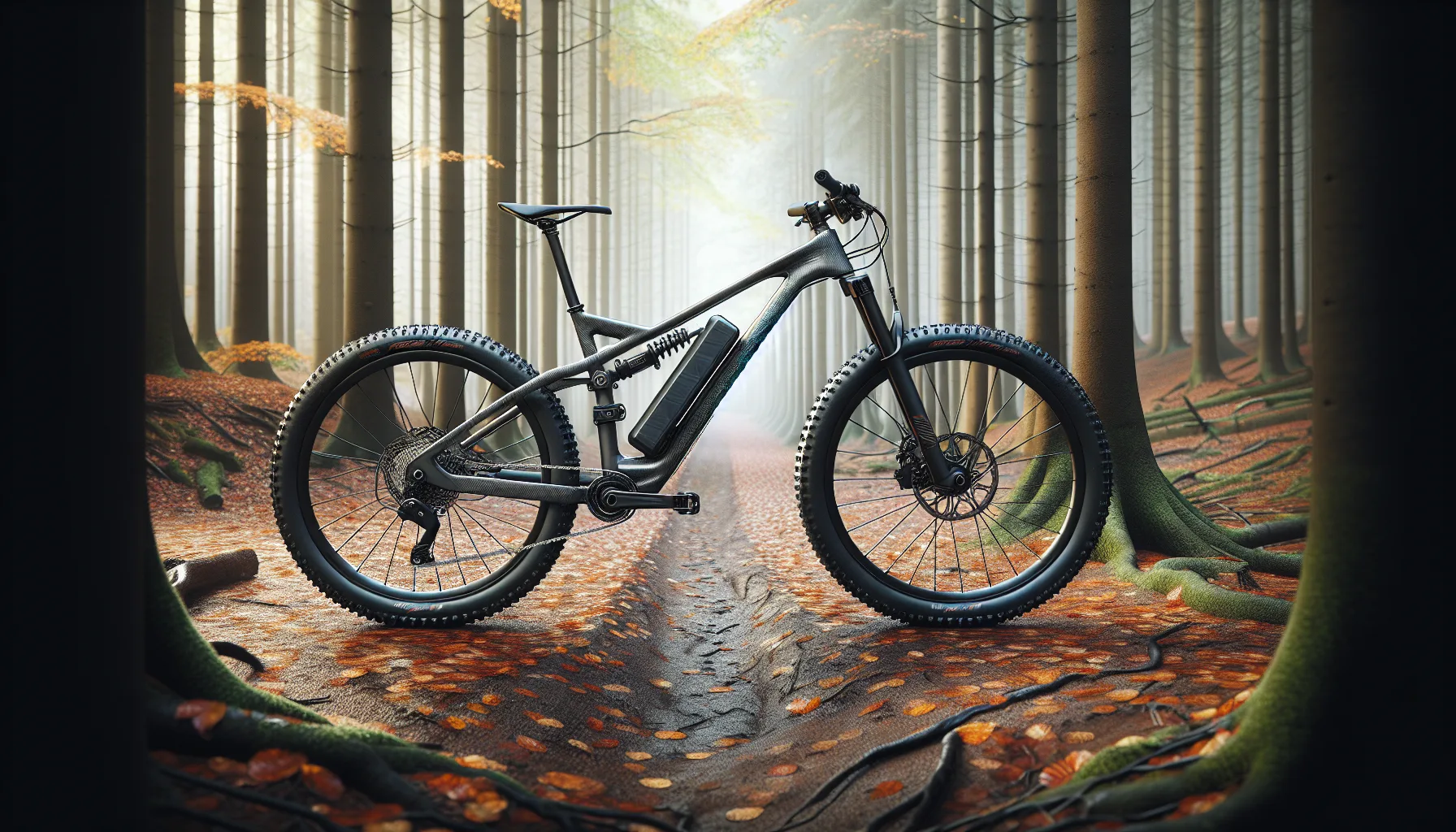
Mid-drives (Bosch, Shimano STEPS) mount at the bottom bracket, using the bike’s gears for better hill climbing and weight distribution. They’re the gold standard but expensive. The Voodoo Bizango E and Carrera Crossfuse are notable exceptions — both getting Bosch/Shimano mid-drives into this price range by economising elsewhere. If hills are a major part of your ride, prioritise a mid-drive.
Battery and Range Expectations
Realistic Range at This Price
Manufacturers’ range claims are best-case scenarios: eco mode, flat terrain, light rider, no headwind. Real-world expectations for £1,000-£1,500 bikes:
- 250Wh battery (Ribble) — 40-60 miles eco, 25-35 miles high assist
- 300Wh battery (Carrera) — 30-50 miles eco, 20-30 miles high assist
- 400-418Wh battery (Decathlon, Voodoo, Tern) — 50-80 miles eco, 30-45 miles high assist
Your weight, terrain, wind, and assist level all affect range. A 90kg rider on hills in turbo mode gets roughly half the range of a 70kg rider on flat roads in eco. We found our real-world commute (12 miles each way, some hills, medium assist) uses about 40% of a 250Wh battery — comfortable for daily riding without range anxiety.
Battery Longevity
Good batteries (Samsung or LG cells, proper Battery Management Systems) retain 80%+ capacity after 500-700 full charge cycles. That’s 3-5 years of daily commuting. Cheap batteries from unknown manufacturers degrade faster and may not have adequate thermal protection. At this price point, most reputable brands use quality cells — check the spec sheet mentions the cell manufacturer.
The UK government’s EAPC regulations specify that the motor must cut out at 15.5mph and produce no more than 250W continuous — all bikes listed here comply. This also means they’re legal to ride without insurance or a licence, same as a regular bicycle.
Components That Matter
Groupset
- Shimano Deore — the workhorse. Reliable, cheap to service, every bike shop stocks parts
- Shimano 105 — road-oriented, lighter, smoother shifting. Found on the Ribble
- SRAM SX/NX — good alternative, particularly on mountain-oriented e-bikes
- Unbranded/Microshift — acceptable on sub-£1,000 bikes but disappointing at this price
Wheels and Tyres
Cheap wheels flex under load and make the bike feel imprecise. At this price, expect double-walled rims with sealed bearings. Schwalbe Marathon or Continental Contact tyres are ideal for commuting — puncture-resistant with reflective sidewalls for visibility.
Saddle and Grips
The most underrated components. Manufacturers often save money here with rock-hard saddles that you’ll replace within a month. Budget £30-50 for a proper saddle (Charge Spoon or Specialized Bridge are excellent) if the stock one doesn’t suit. Ergon grips (about £25) transform the handlebar feel on longer rides.
Where to Buy E-Bikes in the UK
Direct-to-Consumer
- Ribble (ribblecycles.co.uk) — best value in the performance bracket. UK-designed, ships from Preston.
- Canyon (canyon.com/en-gb) — German engineering, competitive pricing, online-only
High Street
- Halfords — widest in-store range (Carrera, Voodoo, Boardman). Free test rides. Nationwide servicing.
- Decathlon — exceptional value. Test ride in-store. 365-day returns.
- Evans Cycles — premium selection, knowledgeable staff, Bosch service centre
Specialist Online
- Sigma Sports — higher-end selection with good customer service
- Tredz — strong range with detailed comparison tools
Tips for Buying
Test ride before committing if possible. E-bikes feel different from brand to brand — the motor characteristics, weight distribution, and geometry all affect the riding experience in ways spec sheets don’t convey. Halfords and Decathlon both offer no-pressure test rides. If you’re curious how this bracket compares to cheaper options, our cheap e-bikes under £1,000 guide covers what you sacrifice at lower prices.
Cycle to Work Schemes and Finance
How the Scheme Works
The Cycle to Work scheme lets you spread the cost of a bike over 12-48 months and save 25-39% through salary sacrifice (the saving depends on your tax bracket). Most schemes now cover e-bikes up to £1,500 — some (like Cyclescheme and Green Commute Initiative) go higher.
Which Schemes Work for E-Bikes
- Cyclescheme — most employers offer this. £1,000 limit unless your employer opts for the uncapped version.
- Green Commute Initiative — no upper limit. Partners with most major retailers.
- Cycle Solutions — popular with larger employers. Good range of bike shops.
The Maths
A £1,300 e-bike through Cycle to Work at the higher tax rate (40%):
- Monthly salary sacrifice: about £54 over 24 months
- Total cost to you: about £780 after tax savings
- Saving versus retail: approximately £520
That makes a £1,300 bike cost you under £800 in practice — pushing it into budget territory for the quality you’re getting. If you’re employed and your company offers a scheme, there’s almost no reason not to use it.
For more on the legal side of e-bike ownership, our UK e-bike laws guide covers everything from speed limits to where you can ride. And if battery care concerns you, the e-bike battery guide covers charging, storage, and maximising lifespan.
Frequently Asked Questions
Is a £1,500 e-bike good enough for daily commuting? Yes — this is the price point where e-bikes become properly reliable for daily use. Quality components, decent batteries, and motors from reputable brands mean you can expect 3-5 years of trouble-free commuting with basic maintenance. Many commuters in this bracket never feel the need to upgrade.
How long do e-bike batteries last before needing replacement? Expect 500-700 full charge cycles before the battery drops to 80% capacity. For a daily commuter charging every 2-3 days, that’s roughly 4-6 years. Replacement batteries cost £300-£600 depending on the system. Proper charging habits (not leaving it fully depleted or fully charged for long periods) extend lifespan.
Can I ride an e-bike in the rain? Yes. All the bikes listed here have sealed electrical systems rated for riding in wet conditions. Motors, batteries, and displays are designed for UK weather. Don’t submerge the bike or jet-wash the motor area directly, but rain, puddles, and wet roads are fine. Our commuter bike has lived through two British winters without issue.
Do I need to service an e-bike differently from a regular bike? The mechanical components (brakes, chain, gears, tyres) need the same servicing as any bike. The electrical system is largely maintenance-free — firmware updates happen via an app for most brands. Annual service costs are typically £50-£80 at a local shop, plus parts as needed. Budget for brake pads and a new chain annually if commuting daily.
Will a £1,500 e-bike hold its value? Better than budget e-bikes, yes. Branded motors (Bosch, Shimano, Mahle) retain value because replacement parts and servicing are available long-term. Expect 40-60% resale value after 2-3 years if well maintained. Bikes with discontinued motor systems lose value faster because battery replacements become impossible.