You’ve got an e-bike, a tent you haven’t used since that soggy Glastonbury warm-up, and a vague idea that combining the two might be the best weekend you’ve had in years. You’re right — e-bike camping (or bikepacking, if you want the proper word) is one of those activities that sounds complicated until you actually do it. The e-bike handles the hard bits — hills, headwinds, carrying extra weight — so you can focus on finding a decent spot, setting up camp, and pretending you’re Bear Grylls while eating supermarket pasta from a titanium mug. For related guidance, see our How to Choose a Folding E-Bike: Weight, Fold Size & Range guide. For related guidance, see our When to Replace an E-Bike Battery: Signs and Costs guide.
In This Article
- What Is E-Bike Camping?
- Choosing the Right E-Bike for Camping
- Essential Kit List
- How to Pack an E-Bike for Camping
- Battery Management on Multi-Day Rides
- Wild Camping in the UK: What You Need to Know
- Best UK Routes for E-Bike Camping
- Campsite vs Wild Camping
- Food and Cooking on the Trail
- Safety and Practical Tips
- Frequently Asked Questions
What Is E-Bike Camping?
E-bike camping is exactly what it sounds like: loading camping gear onto your electric bike and riding to a spot where you pitch a tent and spend the night. It sits between traditional cycle touring (panniers, B&Bs, planned routes) and ultralight bikepacking (minimal kit, off-road trails, adventure-first).
Why E-Bikes Make It Better
The motor changes everything. Traditional bikepacking means agonising over every gram — do you really need a pillow, or can you stuff a jacket into a dry bag? With an e-bike, you’ve got pedal assist handling the extra 5-8kg of camping gear without destroying your legs.
- Hills stop being a deal-breaker. The Lake District, Scottish Highlands, and Welsh valleys become accessible rather than terrifying
- Range increases. A typical e-bike with camping gear covers 50-80km per day comfortably, depending on terrain and assist level
- You arrive at camp with energy left. This matters more than you’d think — setting up a tent while exhausted and hangry is miserable
After a three-day trip through the Yorkshire Dales last summer — fully loaded with tent, sleeping bag, stove, and enough food for the weekend — the e-bike motor was the difference between arriving at camp excited and arriving broken. The climbs out of Swaledale would have ended me on an analogue bike.
Choosing the Right E-Bike for Camping
You don’t need a specialist bikepacking e-bike. Most mid-range e-bikes work fine with the right setup.
What Matters Most
- Battery capacity: 500Wh minimum for multi-day trips. 625Wh or 750Wh gives you comfortable margin. Our e-bike battery guide explains capacity in detail
- Frame mounting points: you need bosses (threaded holes) for bottle cages and ideally rack mounts. Check before buying bags
- Tyre clearance: wider tyres (40mm+) handle gravel tracks and canal towpaths better than skinny road tyres. If you’re going off-road, 50mm+ is ideal
- Motor type: mid-drive motors (Bosch, Shimano, Brose) handle loaded riding better than hub motors because they work through the gears. See our motor types guide for the full comparison
- Weight capacity: check the manufacturer’s maximum system weight (rider + bike + luggage). Most e-bikes handle 120-150kg total
Best E-Bike Types for Camping
- Hardtail e-MTB — the most versatile option. Handles trails, gravel, and roads. Plenty of tyre clearance and usually good mounting points
- Gravel e-bike — lighter and faster on roads, still capable on easy trails. Drop bars give more hand positions for long days
- Touring e-bike — built for carrying weight with integrated racks and mudguards. Heavier but purpose-built
What Won’t Work
Full-suspension e-MTBs lose a lot of rear mounting space to the suspension linkage — fitting a rear rack or large seatpost bag is often impossible. Folding e-bikes lack the stability for loaded riding. Road e-bikes with narrow tyres and no rack mounts are a last resort.
Essential Kit List
Pack for the conditions you’ll actually face, not the conditions you hope for. This is Britain — rain is a when, not an if.
Shelter
- Tent — 1-person or 2-person lightweight tent (1.5-2.5kg). Brands worth looking at: Vango, Wild Country, MSR. A 2-person tent gives enough space for you and your bags inside
- Bivvy bag — the ultralight option if you’re comfortable sleeping semi-exposed. Weighs under 500g but offers no privacy or storage
- Sleeping bag — 3-season minimum for UK use. Down is lighter but useless when wet; synthetic is heavier but works in damp conditions
- Sleeping mat — inflatable (Thermarest, Sea to Summit) or foam. Don’t skip this — ground cold saps body heat fast
Cooking
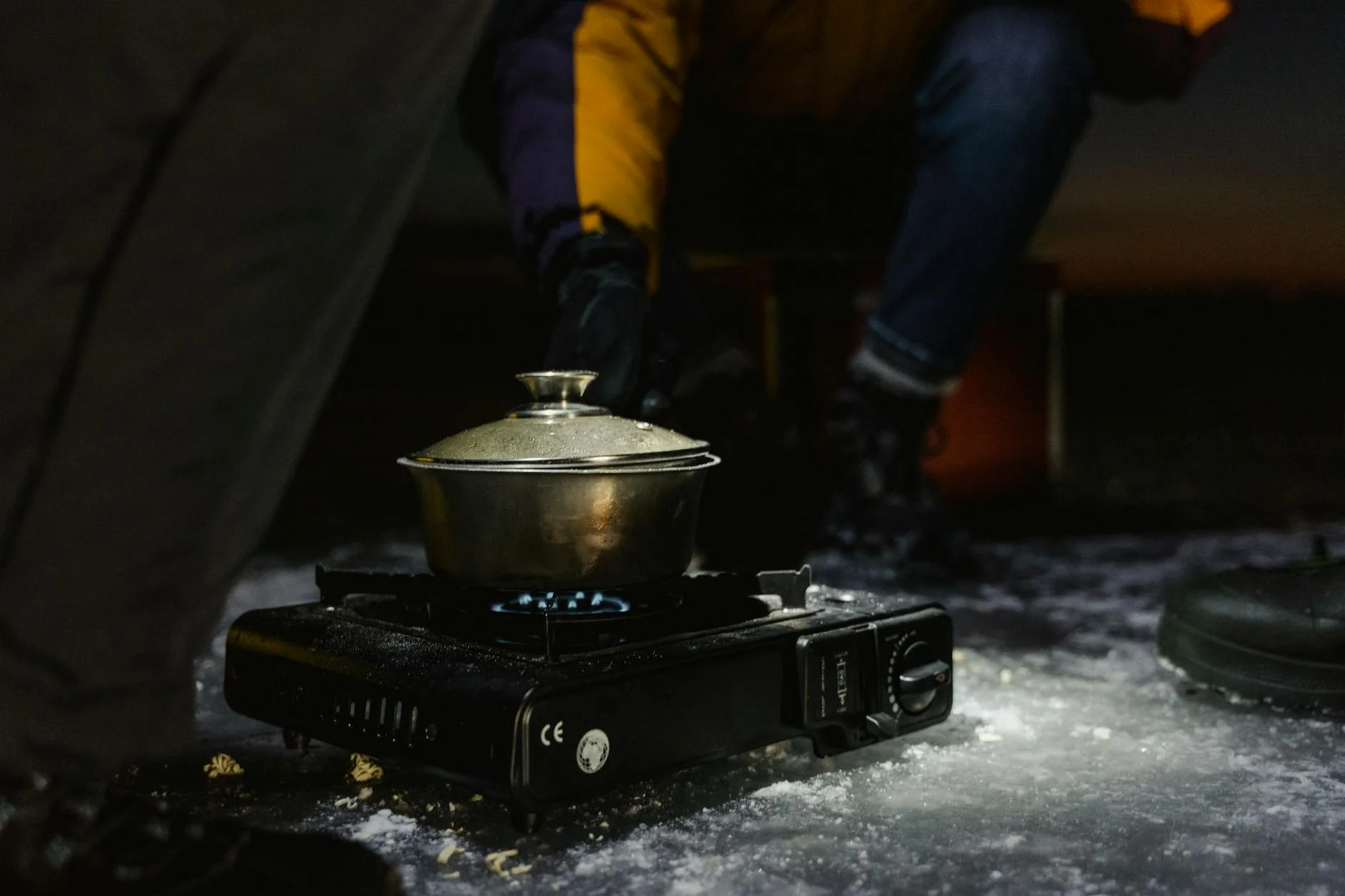
- Stove — compact gas canister stove (Jetboil, MSR PocketRocket). About £30-70 and boils water in 3-4 minutes
- Fuel canister — 100g for a weekend, 230g for longer trips. Available at Decathlon, Go Outdoors, or most outdoor shops
- Pot and mug — titanium is lightest, aluminium is cheapest. One 750ml pot does everything
- Spork — yes, really. One utensil to rule them all
- Water bottle or bladder — 1-2 litres capacity. Water purification tablets as backup
Clothing
- Waterproof jacket — non-negotiable in the UK. Breathable, packable, and actually waterproof (not “shower-resistant”)
- Warm layer — fleece or lightweight down jacket for evenings. Temperature drops sharply after sunset, even in summer
- Cycling shorts and jersey — for riding. Change into dry clothes at camp
- Dry spare socks — the single most important luxury item. Cold wet feet ruin everything
Tools and Safety
- Multi-tool with chain breaker — for trailside repairs
- Spare inner tube and tyre levers — or a tubeless repair kit if you run tubeless
- First aid kit — basic: plasters, antiseptic wipes, ibuprofen, blister pads
- Head torch — essential after dark. Petzl Tikkina or similar, about £20
- Phone and portable charger — for navigation, emergencies, and photographing your dinner
How to Pack an E-Bike for Camping
Weight distribution matters more on a bike than in a car. Get it wrong and the bike handles like a shopping trolley.
The Golden Rule: Low and Central
Keep heavy items (stove, food, water, tools) as low and close to the bike’s centre of gravity as possible. Light bulky items (sleeping bag, clothes) go higher or further back.
Bag Setup Options
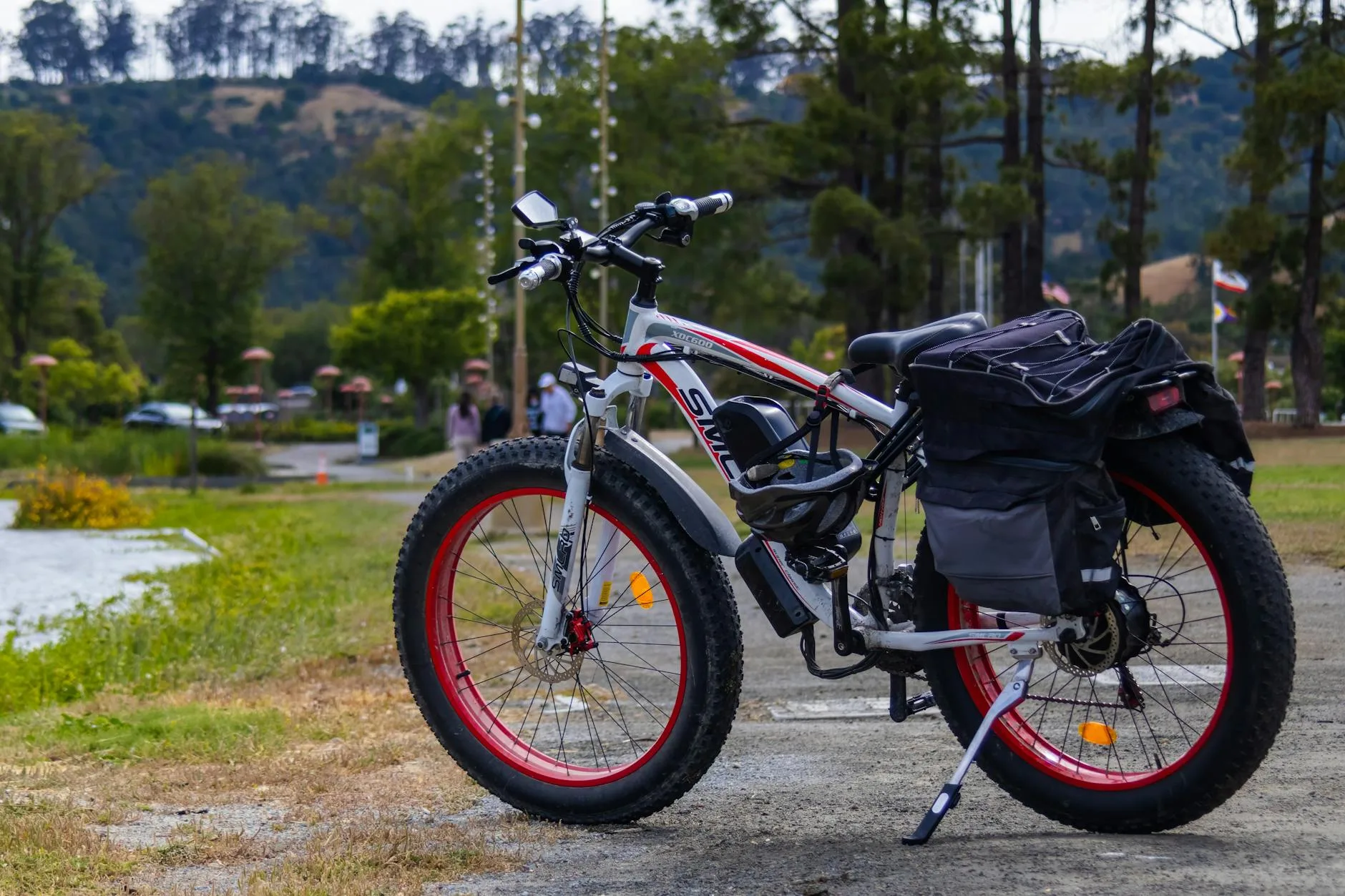
- Bikepacking bags — frame bag (centre triangle), seatpost bag (behind saddle), handlebar roll (front). No rack needed. Best for off-road and trails
- Panniers + rack — traditional touring setup. More capacity (40-60 litres per pair) but needs rack mounting points. Best for road and canal towpath routes
- Hybrid — frame bag for heavy items, small panniers or seatpost bag for the rest. The approach most e-bike campers settle on
What Goes Where
- Frame bag — heavy, dense items: stove, fuel, tools, spare battery if carrying one
- Seatpost bag or rear panniers — sleeping bag, sleeping mat, tent
- Handlebar roll or front rack — clothes, food, anything you need quick access to
- Top tube bag — snacks, phone, sunscreen, cash
Weight Limits
Most bikepacking seatpost bags max out at about 5-7kg. Handlebar rolls manage 3-5kg. Frame bags vary hugely by size. If you’re using panniers, the rack weight limit (usually 20-25kg) is your constraint. Weigh everything before your first trip — you’ll be shocked how quickly 15kg of “essential” gear accumulates.
Battery Management on Multi-Day Rides
This is the bit that worries people most, and for good reason. Running out of battery 30km from camp with a loaded bike isn’t fun.
Planning Your Power
- Know your range loaded. An e-bike rated at 80km range unladen might manage 50-60km loaded with camping gear on hilly terrain. Subtract 20-30% from the manufacturer’s claimed range as a starting point
- Use eco mode by default. Save turbo for steep climbs. Eco mode doubles or triples your range compared to turbo
- Pedal more, assist less. On flat sections, drop to the lowest assist level or switch off entirely. Bank the battery for when you need it
Charging Options
- Campsites with power — most UK campsites have electric hook-ups or charging points in communal areas. Bring your charger (don’t forget it — this is the most commonly left-behind item)
- Café stops — ask politely. Most cafés will let you plug in while you eat. A 2-hour lunch gives you 40-60% charge on most systems
- Portable power stations — Jackery or EcoFlow units can recharge an e-bike battery, but they weigh 3-6kg and cost £200-500. Only worth it for remote multi-day trips with no mains access
For more on maximising battery life in tough conditions, our hilly terrain range guide covers specific techniques.
The Spare Battery Question
A second battery adds 2.5-3.5kg and £300-500 to the trip. For a weekend trip with campsite charging, you don’t need one. For a 4-5 day remote trip in the Highlands, it’s worth considering. Most Bosch and Shimano systems support dual-battery setups with an adapter.
Wild Camping in the UK: What You Need to Know
Wild camping and the law vary hugely depending on where you are in the UK.
Scotland
Wild camping is legal under the Land Reform (Scotland) Act 2003, which gives everyone the right to camp on most unenclosed land. This is the main reason Scotland is the top destination for UK bikepacking. Be responsible: camp away from roads and buildings, take everything with you, don’t light fires without landowner permission.
England and Wales
Wild camping is technically illegal without landowner permission, except on some Dartmoor commons (and even that’s been contested recently). In practice, if you pitch late, leave early, and leave no trace, the risk of being moved on is low — but you are breaking the law. Popular wild camp spots on well-known routes (like the South Downs Way) have an informal tolerance.
Northern Ireland
Similar to England — no legal right to wild camp. Permission from the landowner is required.
The Leave No Trace Rule
Wherever you camp:
- Pitch after sunset, leave by sunrise (in areas where wild camping isn’t legal)
- Take all rubbish with you — including food scraps
- No fires unless you have explicit permission. Use a stove instead
- Camp at least 100m from roads and buildings
- Use a trowel for toilet waste — bury it 15cm deep, at least 50m from water sources
Best UK Routes for E-Bike Camping
The Caledonia Way (Scotland)
236km from Campbeltown to Inverness. A mix of quiet roads, forest tracks, and canal towpaths. Wild camping is legal throughout. The terrain is hilly but e-bike-friendly with plenty of villages for resupply and charging. Allow 4-5 days.
The South Downs Way (England)
160km from Winchester to Eastbourne. Bridleway throughout, so bikes are permitted. Rolling chalk hills with long views. No legal wild camping, but there are campsites every 15-20km along the route. An e-MTB or gravel e-bike handles the terrain well. Allow 2-3 days.
Lôn Las Cymru (Wales)
400km from Cardiff to Holyhead through the heart of Wales. Quiet lanes and off-road sections through Brecon Beacons and Snowdonia. Challenging hills but stunning scenery — this is where the e-bike motor earns its keep. Mix of campsites and (discreet) wild camping. Allow 5-7 days.
The Coast and Castles (England/Scotland)
320km from Newcastle to Edinburgh along the Northumberland coast. Mostly quiet roads and well-surfaced paths. Campsites are plentiful along the coast. Flat to rolling terrain with a few short climbs. Allow 3-4 days.
Campsite vs Wild Camping
Campsites: The Comfortable Option
- Facilities: toilets, showers, water, often a shop or pub nearby
- Charging: electric hook-ups or indoor sockets for your e-bike battery
- Cost: £10-25 per night for a pitch (more for sites with fancy facilities)
- Social: other cyclists, campfires, shared stories. Part of the experience
- Book ahead: popular sites (Lake District, Pembrokeshire coast) fill up in summer
Wild Camping: The Adventure Option
- Free — that’s the biggest draw
- Freedom — camp wherever you find a good spot (legally in Scotland, discreetly elsewhere)
- Solitude — no neighbours, no noise, just you and the landscape
- No facilities — bring everything you need, including water. Carry a filter or purification tablets
- No charging — plan your battery usage carefully
The Hybrid Approach
Most e-bike campers alternate: wild camp one night, campsite the next. This gives you the adventure of sleeping wild while topping up your battery and grabbing a shower every other day. It’s the practical sweet spot.
Food and Cooking on the Trail
Keep It Simple
You’re not running a restaurant. The goal is calories, warmth, and minimal washing up.
- Breakfast: porridge (instant oats + hot water), coffee from a Jetboil, maybe a banana bought the day before
- Lunch: pub stop, café, or sandwiches from a village shop. Don’t carry lunch ingredients — buy fresh along the route
- Dinner: dehydrated meals (Firepot, Expedition Foods), or pasta with a packet sauce. One-pot cooking only
- Snacks: flapjacks, nuts, dried fruit, energy bars. Graze throughout the day rather than relying on three big meals
Water
Carry 1-2 litres and refill at every opportunity. Village taps, pub toilets, café stops, streams (with purification). Running dry on a hot day with a loaded e-bike is one of the fastest ways to ruin a trip.
The Weight Trade-Off
Food is heavy. A day’s worth of dehydrated meals plus snacks weighs about 600-800g. Three days’ worth adds 2kg+ to your bike. The trick is to plan routes through villages where you can resupply — this keeps pack weight down and gives you an excuse to buy cake.
Safety and Practical Tips
Tell Someone Your Route
Share your planned route and expected check-in times with someone who isn’t coming. A simple text message — “Riding from X to Y today, expect to arrive by 6pm” — could be the thing that triggers a search if something goes wrong.
Navigation
- Phone with offline maps — download the route beforehand. OS Maps or Komoot work well for UK trails
- Paper backup — a waterproof OS map of the area. Phone batteries die, screens crack, signal disappears
- GPX route file — load onto your phone or bike computer before you leave
Weather
Check the forecast the morning you leave and adjust plans accordingly. British mountains generate their own weather — a sunny valley can be fog and rain at 500m. For rides above 300m elevation, carry waterproofs regardless of the forecast.
Bike Security
A determined thief won’t be stopped by any lock you can carry on a bike. But a basic cable lock (about £10, 200g) deters opportunists while you’re in a café or shop. At camp, keep the bike inside the tent porch or lock it to something solid.
First-Time Trip Advice
Do a single overnight first. Ride 30-40km to a campsite, sleep out, ride back the next day. You’ll learn more about what you actually need (and what you packed but didn’t touch) in one night than from reading a hundred articles. Including this one.
Frequently Asked Questions
How far can an e-bike go with camping gear? Most e-bikes with a 500Wh battery cover 50-70km per day when loaded with camping gear on mixed terrain. Flatter routes extend this; hilly routes shorten it. Using eco mode and pedalling actively on flat sections makes a big difference. Plan conservatively and you won’t get caught short.
Is wild camping legal in England? Technically no — you need landowner permission. In practice, discreet wild camping following leave-no-trace principles (pitch late, leave early, take all rubbish) is widely tolerated on well-known cycling routes. Scotland is the exception, where wild camping is a legal right under the Land Reform Act 2003.
Can I charge my e-bike at a campsite? Most UK campsites have electric hook-ups or communal charging areas. Bring your charger and ask at reception. A full charge from empty typically takes 4-6 hours. Some campsites charge a small fee (£2-5) for electricity use.
What tent is best for bikepacking? A 1-2 person tent weighing under 2.5kg. Popular choices include the Vango Helium UL 1, Wild Country Zephyros 1, and MSR Hubba NX. Prioritise packed size over luxury — you need it to fit in a seatpost bag or on a rear rack.
Do I need a special e-bike for camping? No. Any mid-range e-bike with a 500Wh+ battery, mounting points for bags or a rack, and tyres wider than 40mm works well. Hardtail e-MTBs and gravel e-bikes are the most versatile options for mixed-terrain camping trips.