The best UK mountain bike trails for e-bikes are not always the steepest or most famous ones. A good e-MTB day needs legal access, repeatable climbs, sensible trail grading, enough battery margin and facilities that do not punish you for turning up with a 24kg bike.
In This Article
- Best UK Mountain Bike Trails for E-Bikes: What Makes a Good Pick
- The Shortlist: UK Trail Centres Worth Considering First
- Access Rules, Trail Grades and E-Bike Etiquette
- Battery, Range and Climbing: Plan the Day Properly
- Costs to Budget For Before You Go
- Bike Setup and Kit for UK Trail Centres
- Common Mistakes on E-Bike Trail Days
- Frequently Asked Questions
Best UK Mountain Bike Trails for E-Bikes: What Makes a Good Pick
An e-bike changes a mountain bike day in two opposite ways. It makes climbing less of a grind, so you can repeat loops and cover more distance. It also adds weight, speed and battery planning, so poor trail choice becomes obvious fast.
The best UK mountain bike trails for e-bikes usually have three things: clear waymarked routes, climbs that are worth repeating, and enough facilities to make the day easy. Trail centres are the natural starting point because they publish grades, maps, closures and visitor information. Wild or unofficial singletrack can be brilliant, but it is a worse first answer for a public guide because access rules vary.
What I would prioritise
For a first e-MTB trail trip, I would choose a centre with blue and red options, not just black or downhill tracks. E-bike assistance can flatter your fitness on the climb, then the descent still asks for proper braking, line choice and body position. A motor does not make a rocky red trail into a canal path.
Look for:
- Graded trail progression: green, blue, red and skills loops let you build the day sensibly.
- Official access information: you want clear rules, not forum rumours.
- Repeatable climbing: e-bikes shine when the climb is rideable rather than a push-up.
- Parking and toilets: boring until you are muddy, hungry and 90 minutes from home.
- Bike wash or nearby workshop: useful after a winter ride, especially with e-bike drivetrains.
- Phone signal or visitor centre: not guaranteed in forests, but helpful if something breaks.
What I would avoid at first
Avoid making your first e-bike trail day a remote epic. It is tempting because range looks huge on the display, but trail range collapses with mud, cold, high assist and repeated climbing. If you are still getting used to the bike, a centre with shorter loops beats a huge back-country route.
If you are choosing between a known trail centre and an Instagram-famous unofficial route, choose the trail centre first. You can be more adventurous once you know your battery, tyres, brakes and skill level.
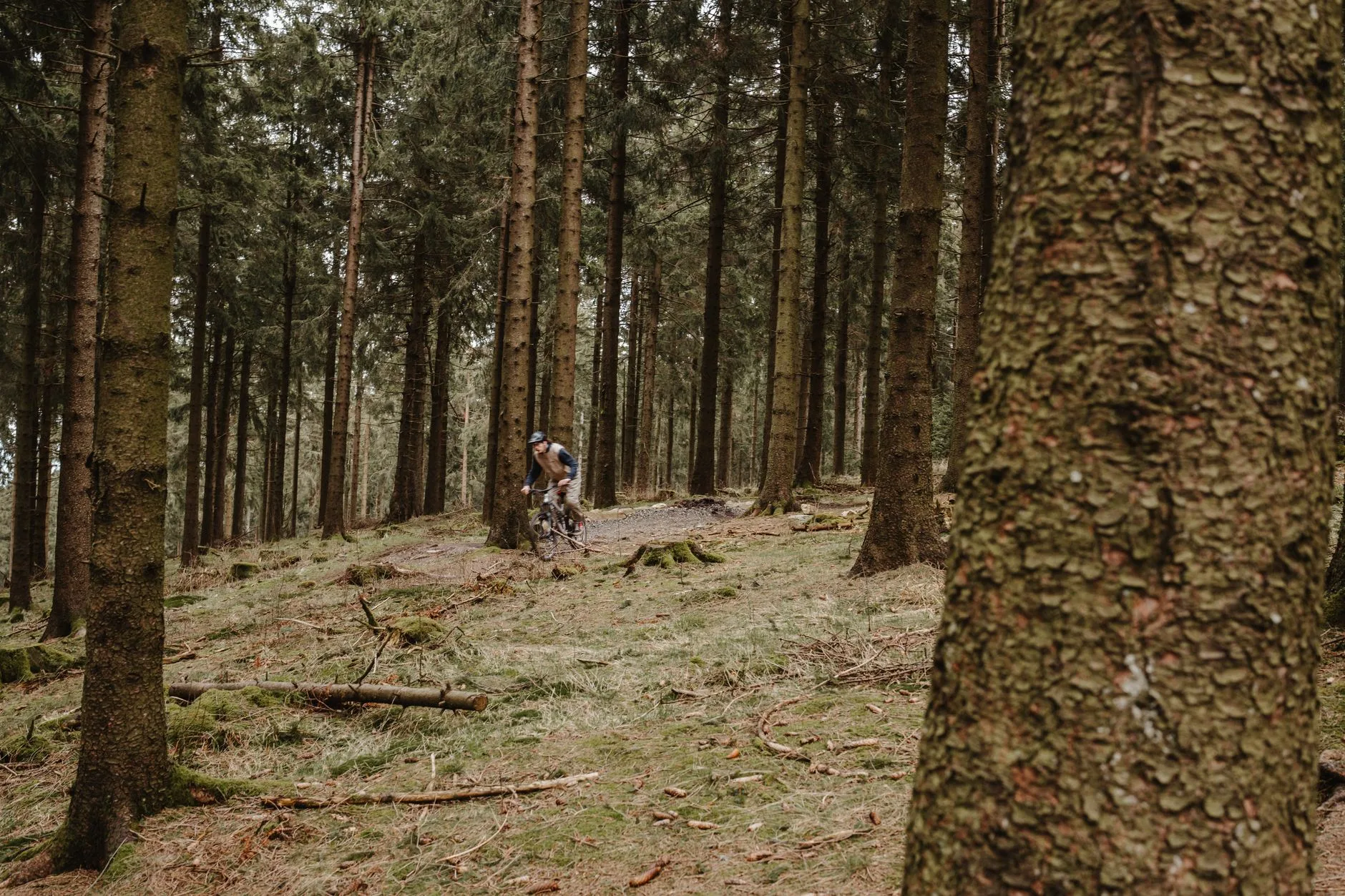
The Shortlist: UK Trail Centres Worth Considering First
This is not a ranking of every trail in Britain. It is a practical shortlist of places that make sense for e-bike mountain biking because they combine recognised trails, facilities or repeatable climbing with sensible planning options.
Dalby Forest, North Yorkshire
Dalby is one of the safest recommendations because it has proper trail-centre structure without feeling tiny. Forestry England lists cycling and mountain biking trails at Dalby, and the red route is published at 34.3km, which is long enough for an e-bike to feel useful without needing a remote expedition mindset.
Dalby suits riders who want a full day with natural-feeling forest riding, not just short bike-park laps. It is especially good if you are moving from commuter e-bike fitness into trail riding because you can choose easier trails first, then build up.
Best for: mixed-ability groups, first proper e-MTB trail days and riders who want mileage.
Forest of Dean Cycle Centre, Gloucestershire
Forest of Dean is a strong pick if you want options. There are family-friendly routes, blue and red trails, downhill lines and a well-established MTB scene. For e-bike riders, the appeal is repeatability. You can do more laps without turning the day into a slog, then stop before fatigue ruins your braking.
It also pairs neatly with an e-bike because the riding is varied. You can warm up, ride a blue, try a red, then decide whether the downhill area is your thing. That choice matters more than chasing the hardest trail on arrival.
Best for: progression, varied trail days and riders travelling with non-identical skill levels.
Glentress and the 7stanes, Scottish Borders
Glentress is the obvious Scottish Borders answer. Forestry and Land Scotland describes the 7stanes as award-winning centres with routes for beginners, families and expert riders, and Glentress has the scale to justify a long drive or weekend.
For e-bikes, the Borders make sense because climbing is part of the experience. The bike helps you get more out of the day, but the trails still demand attention. If you are used to flat bridleways, do not jump straight into the hardest red or black loop just because the motor makes the fire-road climb feel easy.
Best for: big trail-centre weekends, confident riders and groups who want several route choices.
BikePark Wales, Merthyr Tydfil
BikePark Wales is not the same kind of day as a forest trail centre. It is more controlled, more gravity-focused and more expensive, but it is also one of the clearest places to plan a serious riding day. The current uplift page showed adult uplift passes from about £52 and pay-as-you-go uplift runs at £7 for riders aged 13+ when checked in June 2026.
An e-bike can be fun here, but be honest about the format. If you are paying for uplift, the motor matters less. If you are pedalling, the e-bike helps you repeat descents without destroying your legs. Either way, choose trails by grade, not ego.
Best for: gravity days, progression on marked trails and riders who want facilities.
Coed Llandegla, North Wales
Coed Llandegla is a very practical e-bike choice because it has a trail-centre feel, a bike shop, cafe and clear visitor setup. OnePlanet Adventure’s FAQ showed standard hire bikes at £45 for a full day, and its Trail Collective membership was listed at £16.95 per month with free parking, which matters if you are local enough to visit often.
Llandegla is good for riders who want a neat day rather than a rough explore. The trails are managed, the facilities are strong, and it is easy to turn the day into repeat laps or a skills session.
Best for: North Wales day trips, repeat visits and riders who like a polished trail-centre setup.
Sherwood Pines, Nottinghamshire
Sherwood Pines is not the gnarliest name on the list, and that is exactly why it belongs here. Forestry England describes it as a traffic-free natural cycling day out with waymarked trails for different abilities. For newer e-bike riders, that is valuable.
If you have bought an e-MTB but are still nervous about steep red descents, Sherwood Pines gives you room to practise without turning every corner into a test. It is also a sensible family or mixed group option.
Best for: newer riders, family days and building confidence before rougher trail centres.
Laggan Wolftrax, Scottish Highlands
Laggan Wolftrax is a more committed trip. Forestry and Land Scotland describes it as purpose-built singletrack with more than 20 miles of trails through Laggan Forest. An e-bike helps with the effort, but the remoteness means you need better preparation.
This is where I would want fresh brake pads, tyres in good condition and a realistic battery plan. The reward is a proper Highland trail day, not another gentle loop near a cafe.
Best for: experienced riders, Highland trips and people who already know their bike well.
Afan Forest Park or Cwmcarn, South Wales
South Wales is stacked for mountain biking, and Afan or Cwmcarn can both make sense for e-bike riders. The appeal is climbing, descending and trail density. The caution is that grades and conditions matter: wet rock, roots and braking bumps feel different on a heavier e-bike.
If you are already confident on red trails, South Wales is hard to beat. If you are new, start with an easier loop and build the day from there.
Best for: stronger riders, repeat climbs and proper trail-centre riding.
Access Rules, Trail Grades and E-Bike Etiquette
Before choosing a destination, check that your bike is a legal EAPC and that the trail or land manager allows e-bikes. GOV.UK’s electric bike rules state that an EAPC must have pedals, motor assistance that cuts off at 15.5mph and a maximum continuous rated motor output of 250W. If your bike exceeds those limits, it may be treated as a moped or motorcycle rather than a bicycle.
Local rules still matter
Legal on the road does not automatically mean accepted on every trail. Some venues treat compliant pedal-assist e-bikes like normal bikes. Others may restrict e-bikes on certain routes, uplift services or events. Check the venue’s own page before travelling, especially if you are using a high-powered or modified bike.
Our UK e-bike laws guide covers the road-legal basics in more detail, but trail access is still local. Do not assume a permissive bridleway, forest route or bike park has the same policy as the road.
Grade your riding level
Trail grades are about technical difficulty, not just fitness. E-bike assistance reduces the climbing effort, but it does not improve your cornering, jumping, braking or line choice. If you normally ride blue routes on an analogue bike, do not start your e-bike day by jumping to a black trail because your legs feel fresh.
I prefer this progression:
- Ride a green or easy blue loop to check brakes, tyres and assist modes.
- Move to a normal blue or moderate red once the bike feels settled.
- Repeat one trail and improve line choice rather than collecting every route.
- Save harder trails for after lunch only if concentration is still good.
The heavier the bike, the more fatigue shows up in your arms and braking fingers. E-bikes hide leg fatigue, not upper-body tiredness.
Be normal around other riders
Most tension around e-bikes comes from speed difference and surprise. Slow down for walkers, horses, children and climbing riders. Do not buzz people on shared trails. On singletrack climbs, give analogue riders space rather than sitting on their back wheel in Turbo mode.
No one likes being silently caught by a heavy bike doing twice their speed. The fix is simple: call early, pass wide, and remember that good access depends on riders not being annoying.
Battery, Range and Climbing: Plan the Day Properly
Trail-centre range is different from road range. A 625Wh battery that feels endless on canal paths can drop quickly on muddy climbs, cold days and repeated red loops. If you use Turbo everywhere, you are swapping fitness for battery anxiety.
Start with a conservative range plan
For a first visit, assume you will get less range than the display promises. Knock 25-40% off the optimistic number if the route is hilly, wet or cold. If you have a 500Wh battery and the trail centre has a 30km red loop with lots of climbing, do not start at 62% and hope.
Our e-bike range anxiety guide goes deeper on planning longer rides, but the trail-centre version is simple: arrive charged, ride the first climb in Eco or Trail, and save Boost/Turbo for short steep sections.
Watch elevation, not just kilometres
Distance is a poor guide on mountain bike trails. A 12km loop with steep climbs can use more battery than a 30km flat ride. Look at elevation gain, surface and likely stop-start riding.
Use your first lap as data. If a blue loop uses 18% battery and you still feel fresh, you can plan another two or three laps. If it uses 35%, change the day before the bike decides for you.
Charging is a bonus, not a plan
Some venues have cafes, shops or sockets, but do not assume public charging is available or welcomed. Carrying a charger is fine if you know there is somewhere appropriate to use it. It is not a substitute for arriving with a full battery.
If you are planning a longer day beyond a trail centre, our guide to finding e-bike charging points on long UK rides is more relevant. For trail centres, the better plan is usually one full battery, sensible assist use and a loop you can shorten.
Costs to Budget For Before You Go
Some trail centres are cheap days out. Others are closer to a bike-park experience. The ride itself may be free, but parking, uplift, hire, food, travel and replacement parts still add up.
Typical UK trail-day costs
Use these as planning numbers, not promises. Prices change, and venues often vary by season, vehicle type or booking date.
- Forestry England parking: Sherwood Pines listed parking at £4 for up to 1 hour, £7.50 for up to 2 hours, £11 for up to 3 hours and £12.50 for over 3 hours when checked in June 2026.
- Forestry England National Membership: listed at £96 per year per household, which can make sense if you visit paid-parking forests often.
- BikePark Wales uplift: adult uplift passes were shown from about £52, with pay-as-you-go uplift at £7 per run for riders aged 13+.
- Coed Llandegla regular membership: OnePlanet Adventure’s Trail Collective Explorer+ was listed at £16.95 per month with free parking and shop/cafe discounts.
- Standard bike hire at OnePlanet Adventure: listed at £45 for a full day.
- Food and coffee: allow £8-£15 if you are eating at a trail-centre cafe.
If you are driving two hours each way, fuel can cost more than parking. That is why local, repeatable trail centres often beat famous destinations for actual riding value.
Parts and wear
E-bikes are heavier and harder on consumables. A wet trail day can punish brake pads, chains and tyres. You do not need to carry a workshop, but budget for wear.
Typical UK replacement costs:
- Disc brake pads: about £10-£25 per pair depending on brand and compound.
- Tubeless sealant top-up: about £8-£15 for a small bottle.
- E-bike rated chain: roughly £20-£45.
- Tyre insert or tough casing tyre: often £40-£70 per tyre if you keep damaging rims or sidewalls.
- Muc-Off or similar wet lube: about £5-£10.
This is why cleaning the bike after muddy rides matters. Our guide to cleaning an E-MTB after a muddy ride is not glamorous, but it saves money.
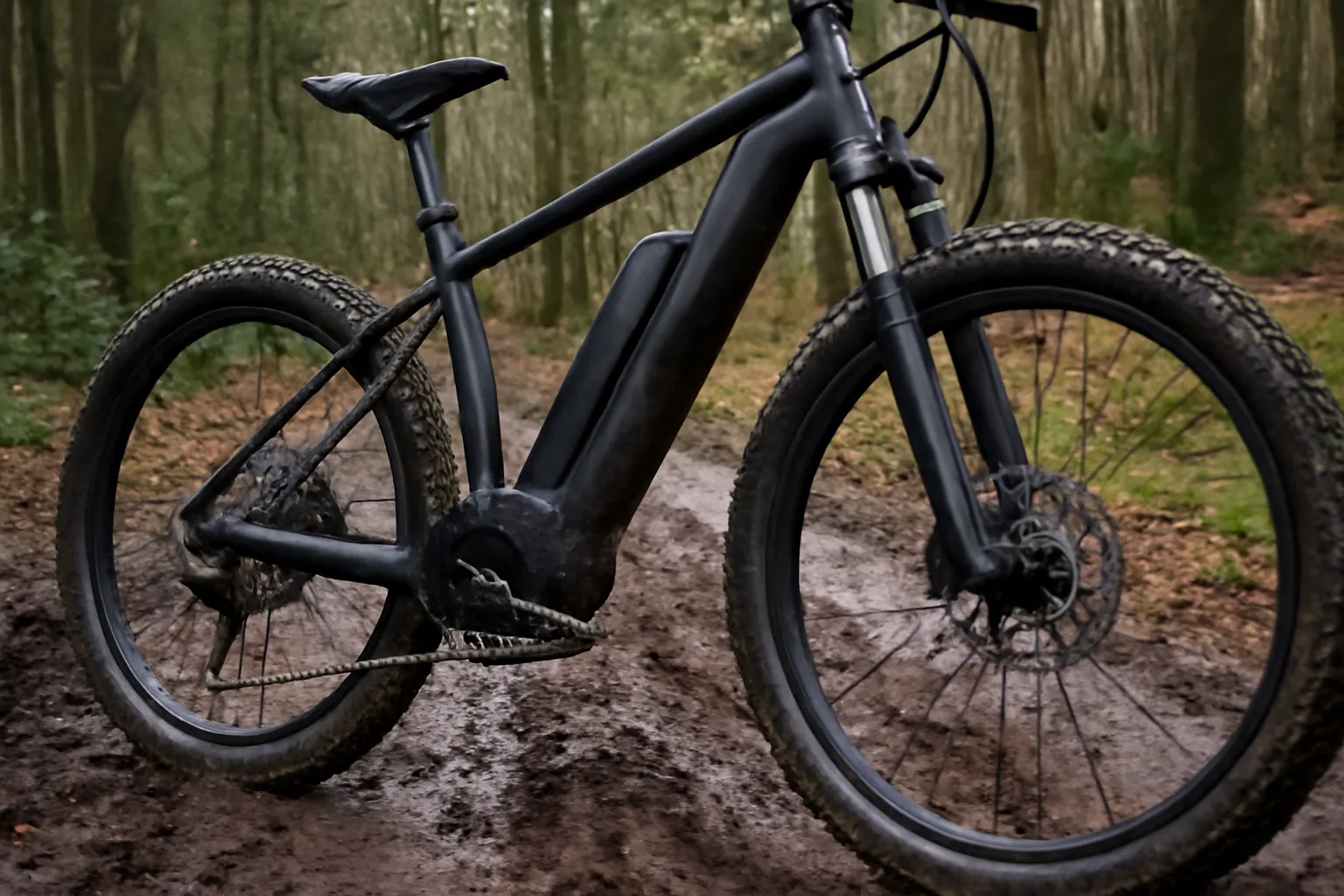
Bike Setup and Kit for UK Trail Centres
A good e-bike trail setup is more about reliability than clever accessories. The bike is already complicated enough. Make sure the basics are right before adding gadgets.
Tyres, brakes and suspension
Run tyres that match the surface. A fast-rolling commuter-style tyre is not enough for wet roots, rocks and braking bumps. For UK trail centres, I would rather have slightly heavier tyres with better sidewalls than lightweight tyres that make every rock feel expensive.
Brake pads matter too. E-bikes carry extra weight, and long descents heat brakes. If pads are half worn before the trip, replace them. A £15-£25 pair of pads is cheaper than losing confidence halfway down a red trail.
Suspension should be set for your riding weight with kit and battery in place. If you bought a used e-MTB or changed tyres, spend ten minutes checking sag and rebound before a big day. Our second-hand e-bike checklist is useful if the bike is new to you.
What to carry
For most trail-centre rides, carry:
- Multi-tool with chain tool: £15-£30.
- Spare tube even if tubeless: about £5-£10.
- Tubeless plugs: about £5-£12.
- Mini pump or CO2 inflator: £15-£35.
- Mech hanger if your bike uses a specific one: usually £15-£25.
- Small first-aid kit: £8-£20.
- Waterproof shell: Decathlon and Endura options often sit around £30-£90.
Do not overpack until the bike handles badly. A small hip pack or riding backpack is enough for most centre days.
Navigation and phone setup
Trail centres are waymarked, but a phone still helps with closures, parking and emergency calls. A bar-mounted phone can be vulnerable on rough trails, so I prefer keeping the phone in a pocket or pack and using posted trail maps. If you do use a phone mount, buy a proper vibration-resistant one; cheap £8 clamp mounts are not where I would trust a £900 phone.
For bigger rides outside trail centres, GPS planning matters more. That is a different article; this one is about choosing trail centres that work for e-bike riding without turning the day into admin.
Common Mistakes on E-Bike Trail Days
The usual e-bike trail mistakes are predictable. None are dramatic. They just turn a good day into a faff.
Assuming e-bike equals skill
The motor helps you climb. It does not choose lines, pump rollers or brake before a wet root. Ride the grade you can descend, not the grade you can climb.
Using Turbo too early
Turbo on the first climb feels fun. Turbo on every climb empties the battery and teaches you nothing. Use Eco or Trail for most of the day, then save high assist for steep pitches or tired legs near the end.
Forgetting the bike is heavy
A heavy e-bike needs earlier braking and firmer body position. If you ride it like a light hardtail, it can push wide in corners and feel sluggish on tight switchbacks. Practise braking before the steep bits, not halfway through them.
Ignoring closures
Trail centres close routes for forestry work, storm damage, events and weather. Check before travelling. If the red loop is shut and that was your whole plan, you need a Plan B.
Choosing famous over suitable
The best trail is the one that matches your current riding, not the one with the loudest reputation. A clean day on blue and red trails beats surviving one black trail with clenched hands and cooked brakes.
If you want a simple first choice, pick Dalby, Forest of Dean, Sherwood Pines or Coed Llandegla depending on geography and confidence. If you already ride red trails well, add Glentress, Laggan, Afan, Cwmcarn or BikePark Wales to the list. The e-bike will make the climbing better; your job is still to choose the right descent.
Frequently Asked Questions
Are e-bikes allowed on UK mountain bike trails? Often yes if they are legal pedal-assist EAPCs, but access is set by the land manager or venue. Always check the trail centre’s own rules before travelling.
What is the best first UK trail centre for an e-MTB? Dalby Forest, Forest of Dean, Sherwood Pines and Coed Llandegla are sensible first choices because they offer graded routes and useful facilities.
Do I need a full-suspension e-bike for trail centres? Not always. A hardtail e-MTB can be fine on green, blue and smoother red trails, but full suspension is more comfortable and controlled on rocky or rooty routes.
How much battery do I need for a trail-centre day? Start with a full battery and plan conservatively. A 500-625Wh battery is enough for many centre days, but mud, cold, rider weight and high assist can cut range quickly.
Are e-bikes allowed at BikePark Wales? BikePark Wales has supported e-MTB riding, but passes, uplift options and rules can change. Check the current booking page before travelling.
Should beginners ride red trails on an e-bike? Only if they already have the handling skills for red trails. The motor helps with climbs, but red descents still need braking, line choice and confidence.