The best e-bike routes in London traffic free enough for a relaxed ride are not the ones that try to cross the whole city in one heroic line. Pick a park, river or canal corridor, keep the road sections short, and plan your battery around stop-start riding rather than open-road range.
In This Article
- Best E-Bike Routes in London Traffic-Free: Quick Picks
- Route 1: Hyde Park, Kensington Gardens and Green Park
- Route 2: Battersea Park, Chelsea Embankment and Hyde Park
- Route 3: Regent’s Canal, Victoria Park and Queen Elizabeth Olympic Park
- Route 4: Lee Valley and Walthamstow Wetlands
- Planning Charging, Hire and Kit for London E-Bike Routes
- Safety, Access and Etiquette on Traffic-Free London Routes
- Frequently Asked Questions
Best E-Bike Routes in London Traffic-Free: Quick Picks
For a first London e-bike ride, I would start with Hyde Park and Kensington Gardens rather than trying to thread through Soho, the City and every landmark in one go. You get proper London scenery, wide paths in places, plenty of places to stop, and enough route choice that a wrong turn does not ruin the day.
Here is the short version before the detail:
- Best easy central loop: Hyde Park, Kensington Gardens and Green Park. Good for visitors, short hire-bike rides and nervous riders.
- Best river-and-park mix: Battersea Park, Chelsea Embankment and Hyde Park. Better if you want a longer ride with cafes and river views.
- Best east London feel: Regent’s Canal, Victoria Park and Queen Elizabeth Olympic Park. More varied, but busier and tighter in places.
- Best green distance: Lee Valley and Walthamstow Wetlands. The nicest choice if you want to stretch the motor and avoid central crowds.
The common mistake is thinking “traffic-free” means “fast”. In London it usually means shared paths, park roads, canal towpaths, segregated cycle lanes and short linking roads. An e-bike helps with the stop-start rhythm, but it does not give you permission to ride like you are late for a train.
If you are using your own bike, read our guide to riding an e-bike safely in UK traffic before joining the short road sections. If you are planning a longer day, our e-bike range anxiety guide is the better companion because London riding drains battery differently from quiet country lanes.
Route 1: Hyde Park, Kensington Gardens and Green Park
This is the easiest answer for most people searching for the best e-bike routes London traffic free riders can actually enjoy. Start around Hyde Park Corner, loop through Hyde Park using permitted cycling routes, edge towards Kensington Gardens, then come back through the park roads and Green Park if you want a short royal-parks ride.
Who This Route Suits
Choose this route if you want a gentle central London ride with very little commitment. It works well for:
- Visitors using hire e-bikes: plenty of nearby docking and parking options, depending on your provider.
- New e-bike riders: low gradients, wide open spaces and easy bailout points.
- Couples or family groups: lots of places to stop without making the ride feel like a fitness session.
The route is not fully traffic-free in the neat Dutch-cycleway sense. You still need to obey park signs, use permitted paths only and watch for pedestrians drifting across the route without looking. That happens constantly around the Serpentine and the palace-side paths. No judgement; half of them are holding coffees and looking at the view.
What to Ride
A city e-bike is ideal here. You do not need suspension, fat tyres or a big battery. A folding e-bike works too, especially if you are arriving by train at Paddington, Victoria or Marylebone. If you are still deciding on a small urban bike, compare the trade-offs in our guide to choosing a folding e-bike.
Use eco or tour mode rather than turbo. In a park, the motor is there to smooth out starts after crossings and junctions, not to make you the fastest thing on the path.
Practical Stops
Hyde Park is forgiving because you can ride for 20 minutes, stop, then change the plan. The Serpentine works for a coffee break, Kensington Gardens gives a quieter extension, and Green Park is useful if you want to end near Buckingham Palace or St James’s without pushing through too much central traffic.
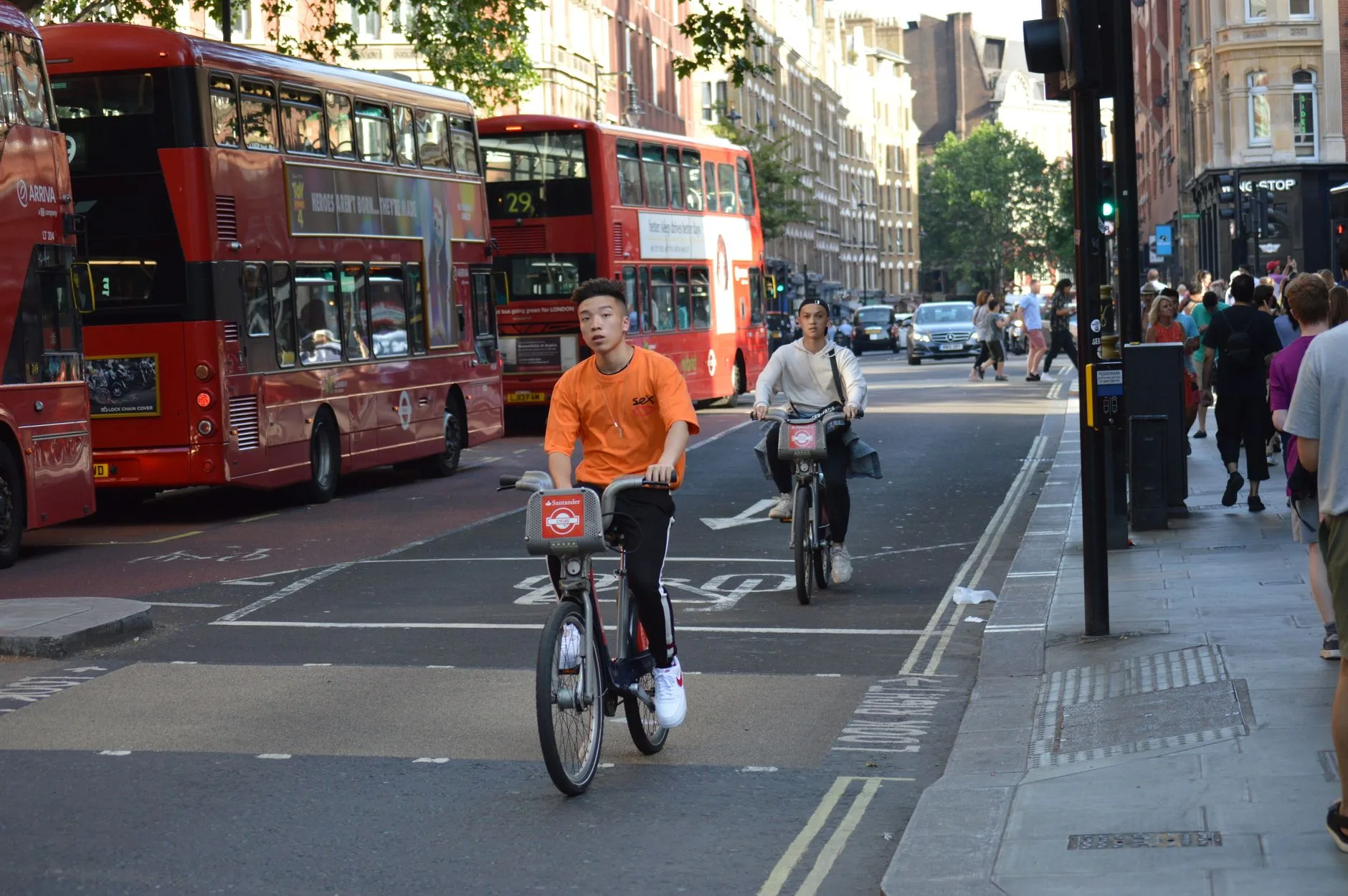
If you are hiring, check your app before you commit to the return leg. A Santander e-bike single ride is £3 for up to 30 minutes, while a Day Pass starts from £3.50 and adds £1 per e-bike journey, according to TfL’s Santander Cycles pricing. That makes short park loops sensible; it makes accidental 90-minute meanders expensive.
Route 2: Battersea Park, Chelsea Embankment and Hyde Park
This route gives you a better ride than a pure landmark crawl. Start at Battersea Park, use the park paths and quiet roads, cross towards Chelsea Embankment, then work up towards Hyde Park using the calmer cycle links rather than trying to bully your way through the busiest roads.
Why It Works on an E-Bike
Battersea to Hyde Park is short enough for a hire e-bike, but varied enough to feel like a proper London ride. The motor helps on the stop-start parts around bridges and junctions, and you get a useful mix of:
- Park riding: calmer, slower and good for getting comfortable with the bike.
- Riverside stretches: scenic, but you need to be patient around pedestrians and junctions.
- Central connections: the bits where a legal 25 km/h assisted bike feels helpful without being overkill.
If you have your own e-bike, check the lock situation before you stop for lunch. A decent Sold Secure D-lock usually costs about £50-90 in the UK, and a heavier chain can be £70-130 from Halfords, Decathlon or specialist bike shops. That is boring money, but it is cheaper than replacing a £1,500 commuter bike. Our best e-bike locks UK guide covers the sensible options.
Best Direction
I prefer Battersea Park first, then Hyde Park, because the ride starts calm and gives you a clear destination. If you do it the other way round, the park-to-river transition can feel like the ride gets messier as you go.
For a short version, do Battersea Park, Albert Bridge, Chelsea Embankment and back. For a longer version, continue towards Hyde Park and finish near Marble Arch or Lancaster Gate, where transport connections are easier.
What to Watch
Do not assume every attractive riverside path is a cycle route. Some sections are pedestrian-first or awkwardly shared, and your map app may be a bit too optimistic. The TfL cycling routes and maps page is the safest starting point for checking Cycleways, docking stations and route options before you ride.
If the route starts to feel too busy, slow down and use the e-assist for smooth pulling away rather than speed. The best London e-bike riders look boring. That is a compliment.
Route 3: Regent’s Canal, Victoria Park and Queen Elizabeth Olympic Park
Regent’s Canal into Victoria Park and Queen Elizabeth Olympic Park is the most interesting route here, but it needs the most patience. It is a good ride if you want east London, water, cafes, towpath riding and wide park spaces in one route.
The Character of the Route
The canal sections are narrow and shared. They are not the place to test acceleration or weave around people. Use low assist, keep your fingers near the brakes and expect dogs, runners, buggies and people stopping suddenly for photos.
Victoria Park changes the mood. It gives you more space, better places to pause and a cleaner way to reset before heading towards the Olympic Park. Once you are in Queen Elizabeth Olympic Park, the riding opens out again, with wider paths and fewer tight canal pinch points.
Who Should Choose It
Pick this one if you are already relaxed on an e-bike and you do not mind riding at walking pace in places. It suits:
- Explorers: riders who prefer neighbourhoods, canals and coffee stops over landmark ticking.
- Owners testing a new commuter e-bike: the route has enough starts, turns and shared-path moments to teach you how the bike behaves.
- Riders based east or north-east: easier to join without crossing half of London first.
If you are new to electric assist, do a shorter park route first. The canal is lovely when you are calm and annoying when you are tense.
Kit That Helps
A phone mount is worth having here because you will make more small navigation decisions than on the Hyde Park loop. A basic Quad Lock or SP Connect setup is usually about £25-45, while cheaper Amazon UK mounts around £12-20 can work but often wobble on rougher paths. A small handlebar bag, about £20-35 from Decathlon or Halfords, is handy for a waterproof, gloves and battery pack.
If you are using a privately owned e-bike, keep a mini pump and puncture kit in the bag. Budget £15-30. Canal grit and broken glass are not rare enough to ignore.
Route 4: Lee Valley and Walthamstow Wetlands
Lee Valley is the route I would choose when someone says they want London, but not too much London. You can build a ride around Walthamstow Wetlands, reservoirs, waterways and green corridors, with less of the stop-start central-city feeling.
Why It Is Good for E-Bikes
This route lets an e-bike do what it does best: flatten effort without turning the ride into a workout. The distance can creep up, especially if you extend north along the valley, but the terrain is kind and the scenery changes enough to keep it interesting.
It is a good match for hybrid e-bikes, commuter e-bikes and lighter touring e-bikes. You do not need an e-MTB. If your bike has a removable battery, a 400-500Wh pack should be ample for a relaxed half-day ride, assuming it is healthy and you are not using turbo everywhere. For a deeper range estimate, use our guide to calculating real-world e-bike range.
Best Way to Ride It
Start near Walthamstow or Tottenham Hale if you want an easy public-transport join. Build a loop rather than a straight out-and-back if your map app gives you a sensible option, and keep the route flexible. The Wetlands are better when you stop, look around and let the ride breathe.
This is also the best route in this list for riders who dislike crowds. It is still London, so do not expect solitude, but it feels less like you are constantly negotiating with buses, tourists and traffic lights.
What to Avoid
Do not over-plan the mileage. The appeal is the green corridor, not proving you can squeeze 60 km out of a Saturday morning. If the wind picks up or the paths are busy, shorten the ride and save battery for the return.
Also check opening times and access rules for specific green spaces before relying on them as through-routes. London parks and wetlands can have gates, events and seasonal restrictions that a generic cycling app may not understand.
Planning Charging, Hire and Kit for London E-Bike Routes
London e-bike route planning is less about finding a plug socket and more about avoiding silly friction: dead phone, weak lock, wrong hire zone, low battery, no lights, no waterproof. Get those right and the ride feels easy.
If You Are Hiring
Santander e-bikes are useful for short central routes, especially Hyde Park and nearby Cycleways. The pricing means you should think in 30-minute chunks for single rides and 60-minute chunks for Day Pass rides. If you want a two-hour explore with lots of stops, a private hire shop may suit you better, but prices vary a lot: expect roughly £25-45 for a half-day e-bike hire in London, and more for guided tours.
Check three things before unlocking:
- Return area: know where you can end the ride before you start.
- Battery level: do not accept a low-charge bike for a park-to-park route.
- Saddle height: adjust it properly, even for a short ride. Too low makes the bike feel clumsy.
If You Own the Bike
For your own e-bike, charge at home and treat public charging as a backup, not the plan. A compact charger can cost £35-80 if you need a spare, but only buy the correct one for your battery system. Random cheap chargers are not worth the risk.
Useful London kit:
- Helmet: £35-80 buys a decent urban helmet from Decathlon, Halfords or Trek dealers.
- Lock: £50-130 for a serious D-lock or chain. Use it even for five-minute coffee stops.
- Phone mount: £20-45 for a stable mount. Avoid flimsy clamp mounts on rough paths.
- Waterproof layer: £40-100 for a breathable cycling jacket. London rain loves bad timing.
- Lights: £25-60 for a USB-rechargeable set if your bike lights are weak or not always on.
Battery Reality
Central London riding is inefficient. You stop, start, brake, accelerate, detour and crawl behind pedestrians. A bike advertised for 80 km might feel more like 40-50 km in mixed London use, especially with a heavier rider, pannier bag or cold weather.
Use lower assist in parks and towpaths, save higher assist for junction starts and bridges, and avoid arriving at the far end of Lee Valley with 12% battery and optimism as your only plan.
Safety, Access and Etiquette on Traffic-Free London Routes
The quietest London e-bike routes are shared spaces first and cycle routes second. If you remember that, the ride becomes much calmer.
Read the Signs, Not Just the App
Your phone can say a path is rideable while the sign in front of you says otherwise. The sign wins. Royal Parks, canal towpaths, wetlands and riverside paths all have local restrictions. Some areas allow cycling only on marked routes, and some routes change during events.
On an e-bike, it is tempting to leave the assist in a lively mode because it feels smooth. Drop it down on shared paths. You want predictable acceleration, not a little surge every time you touch the pedals.
Ride Like You Are a Guest
The best etiquette is simple:
- Pass slowly: especially near dogs, children, buggies and joggers wearing headphones.
- Use a bell early: a polite ring 10 metres back is better than braking hard at someone’s elbow.
- Hold your line: sudden swerves make people nervous.
- Stop for photos: do not coast along staring sideways at Tower Bridge or deer in a park.
If you want faster riding, choose a proper road route or a quieter outer-London loop. These routes are for relaxed exploring, not training.
Final Recommendation
If you only have one ride, do Hyde Park, Kensington Gardens and Green Park. If you have half a day, ride Battersea Park to Hyde Park or Lee Valley. If you want the most character and you are comfortable riding slowly around people, choose Regent’s Canal, Victoria Park and Queen Elizabeth Olympic Park.
The best London e-bike route is the one that leaves you wanting another ride, not the one that lets you say you crossed the most boroughs. Keep it short, keep it scenic, and let the motor take the sting out of the awkward bits.
Frequently Asked Questions
What is the best traffic-free e-bike route in London for beginners? Hyde Park, Kensington Gardens and Green Park is the best beginner-friendly option because it is central, scenic, flexible and easy to shorten if the paths are busy.
Can I ride an e-bike in London parks? In many parks you can ride only on permitted roads or marked cycle paths, not every path. Always follow the signs at the park entrance and slow down around pedestrians.
Are Santander e-bikes good for London park routes? Yes, for short central rides. They make sense for Hyde Park and nearby Cycleways, but longer routes can become expensive if you keep the bike out for multiple charge periods.
How much battery do I need for a London e-bike ride? For these routes, a healthy 400-500Wh battery is plenty for most half-day rides. Hire-bike riders should check the battery level before unlocking and avoid starting with a low charge.
Which London e-bike route is best for avoiding traffic? Lee Valley and Walthamstow Wetlands feel the least central and give you the most green-corridor riding. Hyde Park is easier, but busier with walkers and tourists.
Do I need special kit for traffic-free London e-bike routes? You do not need much, but a helmet, strong lock, phone mount, lights and waterproof layer are sensible. Expect to spend about £130-300 if buying all five from scratch.