Halfords offers better value for most first-time UK e-bike buyers because the store network, build options, servicing and easier aftercare matter once the bike is in daily use. Decathlon often gives stronger specification for the money, especially around £1,000-£1,600, but Halfords vs Decathlon electric bike value is not only about the battery size on the product page. It is about who will help when the brake rubs, the display throws an error, or the bike needs its first proper check.
In This Article
- Halfords vs Decathlon Electric Bike Value: The Short Answer
- Price Range and What You Get for the Money
- Motors, Batteries and Real-World Range
- Build Quality, Servicing and Warranty Support
- Cycle to Work, Finance and Hidden Ownership Costs
- Which Retailer Offers Better Value for Each Rider?
- Mistakes to Avoid Before You Buy
- Frequently Asked Questions
Halfords vs Decathlon Electric Bike Value: The Short Answer
Choose Halfords if this is your first e-bike, you want local support, or you would rather pay a little more for easier servicing. Choose Decathlon if you are confident checking fit, dealing with support online, and judging spec for yourself. For a commuter who needs the bike to work on Monday morning, I would lean Halfords. For a confident cyclist chasing the best spec-per-pound, I would look hard at Decathlon.
My overall pick
Halfords wins the all-round value comparison, narrowly. That is not because every Halfords e-bike is better than every Decathlon e-bike. It is because a legal UK e-bike is a heavier, more expensive, more maintenance-sensitive purchase than a normal hybrid. Local backup has real value.
The Decathlon counter-argument is strong. At the time of checking, Decathlon listed bikes such as the ROCKRIDER E-ACTV 100 at £999.99, the BTWIN E-Fold 500 at £999.99, the Elops LD500E at £1,299.99, and the ROCKRIDER E-ACTV 500 at £1,599.99. Those are sharp prices for everyday e-bike categories.
Halfords had the Carrera impel im-1.1 listed at £799, and Halfords’ own buying content listed the Pendleton Somerby-E at £1,049. Halfords sale pricing changes often, and some product pages hide the final price until you choose size or colour, but the pattern is clear: Halfords competes well at the entry and mainstream commuter end, while Decathlon can look better on paper once you compare battery size, torque-sensor models and included utility kit.
The value question most people miss
The best-value e-bike is not the cheapest one that legally assists to 15.5mph. It is the one you keep riding after the novelty fades. That means the right frame size, brakes you trust in rain, enough range for your route, sensible servicing, and a battery you can live with.
UK law also sets the baseline. An electrically assisted pedal cycle must meet EAPC rules to be treated like a bicycle rather than a motor vehicle. GOV.UK’s EAPC information sheet explains the core requirements, including pedals, motor limits and assistance cut-off. If a bargain e-bike sits outside those rules, it is not a clever saving.
Price Range and What You Get for the Money
Both retailers compete hardest between about £800 and £1,600. That is the range where UK buyers are usually choosing a first commuter, folding e-bike, leisure hybrid or entry-level off-road model.
Entry-level bikes around £800-£1,000
Halfords is strong at the entry point because it has familiar house brands and a store-led buying process. The Carrera impel im-1.1 at £799 is a good example of the kind of bike that suits short commutes, errands and cautious first buyers. It is not a premium e-bike, but the price leaves budget for a better lock, helmet, waterproof jacket and first service.
Decathlon’s £999.99 options, such as the ROCKRIDER E-ACTV 100 and BTWIN E-Fold 500, are tempting if you want a complete bike at a clean headline price. Decathlon often does utility well: practical riding position, sensible accessories and bikes that feel built for ordinary transport rather than showroom posing.
The catch at this level is expectation. A £799-£999 e-bike will have compromises:
- Shorter real-world range: expect hills, cold weather and higher assistance modes to cut headline figures.
- Basic displays: useful enough, but not always rich with diagnostics.
- Heavier frames: cheaper e-bikes often feel hefty when lifted over a doorstep or onto a train.
- Lower-grade finishing kit: saddles, grips, pedals and tyres may be the first things you upgrade.
If your route is 5-8km each way and you can charge at home, entry-level can be fine. If your commute is hilly, long or year-round, the cheaper bike can become false economy.
Mainstream commuter bikes around £1,200-£1,600
This is where Decathlon starts to look strong on paper. The Elops LD500E at £1,299.99 and ROCKRIDER E-ACTV 500 at £1,599.99 put Decathlon into proper daily-transport territory, with bigger batteries and more refined assistance than basic entry bikes.
Halfords’ Carrera, Pendleton and hybrid e-bike ranges are still competitive, especially when sale pricing lands well. The Pendleton Somerby-E at £1,049 is comfort-led rather than performance-led, while Carrera impel and Crossfire-style bikes make more sense for riders who want a familiar hybrid feel with electric help.
For pure equipment value, Decathlon often wins this middle band. For ownership value, Halfords claws back ground because collecting, adjusting and servicing through a nearby store is easier for many buyers than handling everything through a sport-retail support route.
Folding and specialist choices
Folding e-bikes are trickier. Decathlon’s BTWIN E-Fold 500 at £999.99 is attractive if you want a compact commuter with one-brand simplicity. Halfords has folding options too, including Apollo and Carrera models, but you need to check folded size, actual carry weight and whether the battery is easy to remove.
For mountain-style e-bikes, neither retailer is where I would start if the plan is serious trail riding. Entry-level e-MTBs are fine for towpaths, bridleways and light off-road use, but big trail loads punish cheaper suspension, brakes and drivetrains. The best electric mountain bike UK guide is a better starting point for that use case.
Motors, Batteries and Real-World Range
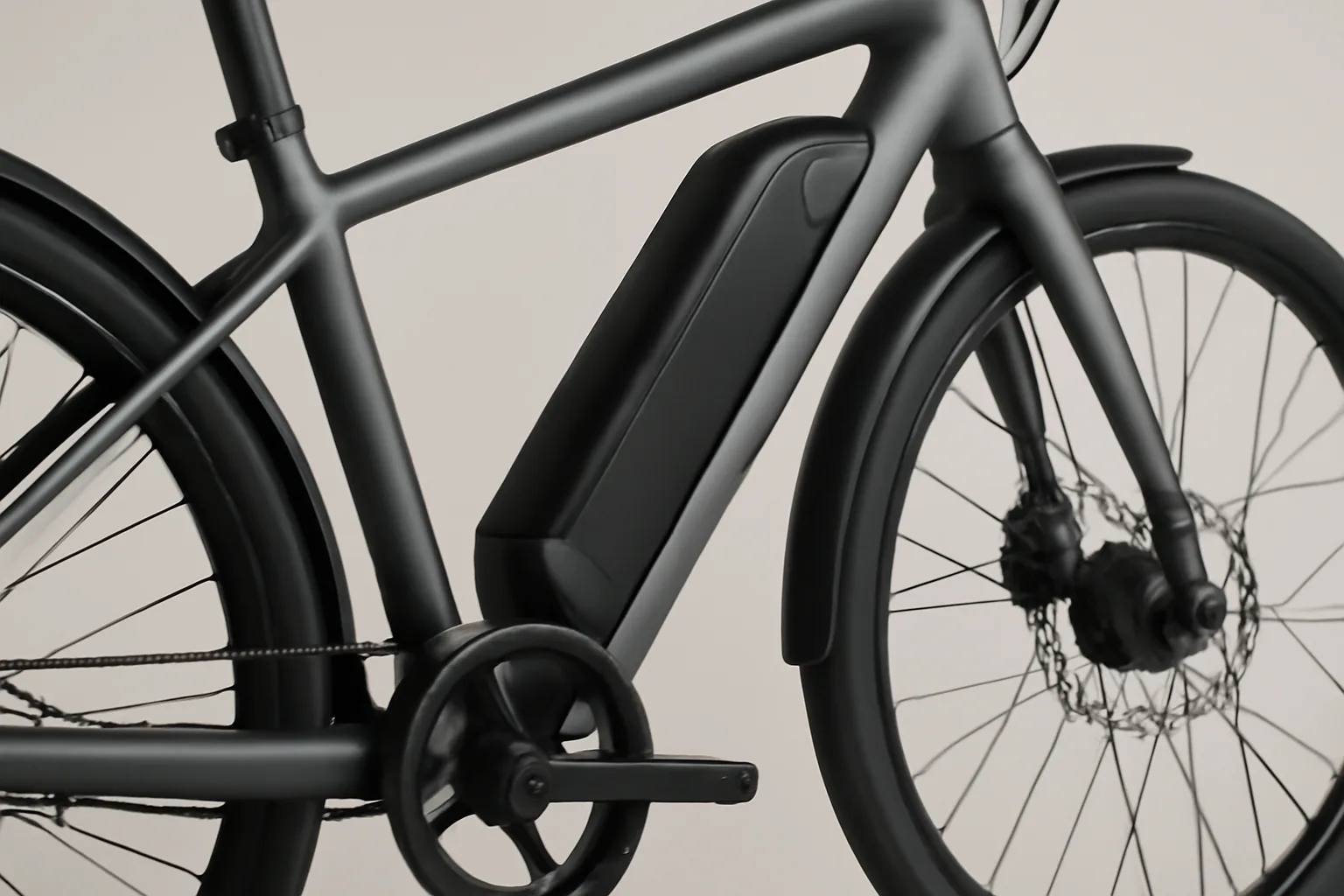
Spec sheets can make this comparison look simple: bigger battery wins, torque sensor beats cadence sensor, mid-drive beats hub motor. Real buying is less tidy. You need the right motor feel for your riding and enough range for your route with a margin.
Motor feel matters more than peak claims
Most legal UK e-bikes from these retailers use 250W-rated motors and cut assistance at 15.5mph. That keeps them within normal EAPC territory. Cycling UK’s EAPC regulations explainer is a useful plain-English check on what counts as a legal e-bike.
The bigger difference is how the motor responds:
- Cadence sensors: detect that you are pedalling and then add assistance. They can feel slightly on/off, but they are cheaper and fine for steady commuting.
- Torque sensors: respond to how hard you press the pedals. They feel more natural, especially on hills and in traffic.
- Rear hub motors: common, affordable and simple. Good for commuters, less natural than a well-tuned mid-drive.
- Mid-drive motors: better climbing feel and weight balance, but usually more expensive.
Decathlon’s stronger-value models can be appealing because some push towards more natural assistance at keen prices. Halfords’ Carrera range is often more familiar and easier to test locally, which matters because motor feel is hard to judge from a spec list.
Battery size is not the same as range
Battery watt-hours give a better clue than vague range claims. A 367Wh battery and a 504Wh battery are not the same, but rider weight, tyre pressure, hills, wind, temperature and assistance mode all change the result.
If your round trip is 16km, almost any decent mainstream e-bike should manage it with room to spare. If your round trip is 35-45km, buy more battery than the marketing range suggests. Cold January mornings and wet headwinds are not kind to optimistic range figures.
The watt-hours explainer goes deeper on comparing batteries. For this Halfords vs Decathlon decision, use a simple rule: if two bikes cost similar money, the one with the larger battery is not automatically better, but the one with a tiny battery needs a very good reason.
Brakes and tyres are part of value
Do not obsess over battery size and ignore the parts that keep you upright. Hydraulic disc brakes are worth paying for on a heavy commuter e-bike, especially in UK rain. Mechanical discs can be fine, but they need more adjustment and can feel weaker on loaded bikes.
Tyres matter too. A cheap fast tyre on a heavy e-bike can puncture at the worst possible moment. Budget £40-£90 for better puncture-resistant tyres if the supplied ones look flimsy. That upgrade can change the ownership cost more than a £50 difference in the headline price.
Build Quality, Servicing and Warranty Support
This is where Halfords has its strongest argument. A store nearby is not glamorous, but it is useful when a new e-bike needs a brake tweak, gear adjustment, loose mudguard fix or warranty conversation.
Halfords aftercare is the practical advantage
Halfords can build the bike, offer a collection option, sell locks and accessories in the same visit, and give many buyers a familiar place to go back to. That is valuable if you are not comfortable doing your own mechanical checks.
I would not assume every Halfords branch has the same e-bike expertise. Staff experience varies. Still, having a local counter and workshop is better than discovering your online bargain needs diagnosis and you have no idea where to start.
Halfords also has a broader ecosystem around Cycle2Work, servicing, repairs and replacement parts. For a first-time commuter, that can matter more than a slightly better derailleur or a larger battery on a rival bike.
Decathlon build quality is usually better than people expect
Decathlon gets dismissed by some bike snobs, unfairly. Its better bikes are often well thought through, and the brand is good at practical design. The value is especially clear when a bike includes mudguards, rack, lights or a sensible riding position without pushing the price too high.
The weaker point is not necessarily the bike. It is the support path. If your nearest Decathlon has strong workshop support, the gap narrows. If it is far away, or you are relying on delivery and online help, Halfords becomes the safer practical choice.
Warranty value depends on downtime
A warranty is only useful if the repair process fits your life. If an e-bike is your main commute transport, being without it for two weeks costs money and hassle. Train fares, petrol, parking or taxis can wipe out a saving quickly.
Before buying, ask:
- Who diagnoses electrical faults? The retailer, a store workshop, or a third-party service centre?
- Can replacement batteries be ordered easily? A cheap e-bike with poor battery availability is a risk.
- How long are typical repairs? Ask in store, not just through website promises.
- Can local bike shops work on the non-electrical parts? Some will service brakes and gears but avoid motors and batteries.
If those answers are vague, the headline deal is weaker than it looks.
Cycle to Work, Finance and Hidden Ownership Costs
Value changes once you include schemes, accessories and servicing. A £1,299 bike can be cheaper in real terms than a £999 bike if your employer’s Cycle to Work scheme, finance options or accessory needs line up better.
Cycle to Work can change the winner
Both retailers commonly support Cycle to Work schemes, but the details depend on your employer’s provider and spending cap. Some employers have £1,000 limits, which used to make e-bike buying awkward. Many now allow higher limits, but you need to check before falling in love with a £1,599.99 bike.
If your employer scheme works smoothly with Halfords and the store can supply the right size quickly, Halfords value improves. If your scheme works cleanly with Decathlon and you are choosing a well-specced Decathlon commuter, Decathlon may win.
Do the maths on final cost, not shelf price. A £1,299.99 Decathlon bike through salary sacrifice may cost less than a £999 cash purchase elsewhere, depending on tax band and scheme terms.
Budget for the bits you actually need
Most first e-bike buyers under-budget accessories. A heavy e-bike needs a serious lock and practical wet-weather kit. Allow roughly:
- Gold-rated D-lock or chain: £50-£120.
- Helmet: £35-£90.
- Waterproof jacket: £60-£160.
- Pannier bag: £35-£100.
- Better lights if not built in: £25-£80.
- First service or adjustment: often £30-£80 if not included.
This is where Halfords can be convenient because the accessory shelf is right there. It is also where you can overspend quickly. Do not let a salesperson load the basket with things you do not need on day one.
The best e-bike locks guide is worth reading before you spend £1,000-plus on a bike and secure it with a £20 cable lock. That is not economy. That is a donation.
Running costs are low, but maintenance is real
Electricity cost is tiny compared with public transport or petrol. The real ownership costs are tyres, brake pads, drivetrain wear, servicing and security. Heavy e-bikes wear brake pads faster than normal hybrids, especially on hilly routes.
The annual e-bike running cost guide covers the broader numbers. For this retailer comparison, assume the first year will need at least one proper check, one or two small adjustments, and possibly tyres or brake pads if you ride daily.
Which Retailer Offers Better Value for Each Rider?
The useful answer depends on the rider, not just the retailer. Here is where I would put the money.
Best for first-time commuters: Halfords
Halfords is the safer value pick for first-time commuters. You can test fit, ask basic questions without feeling silly, sort accessories, and go back if something rubs or rattles. That matters when the bike is for work rather than weekend novelty.
Look at Carrera or Pendleton models around £799-£1,200 first, then compare against Decathlon’s £999.99 and £1,299.99 options. If the Halfords bike fits properly and the local store seems competent, I would take that ownership support over a slightly better Decathlon spec.
Best for confident spec hunters: Decathlon
Decathlon is better for riders who know what they are looking at. If you understand battery size, frame fit, motor feel and servicing routes, Decathlon’s £999.99-£1,599.99 e-bikes can be very strong value.
The Elops LD500E at £1,299.99 is the kind of bike that makes sense for transport-minded riders who want more than a bare-bones budget e-bike. Decathlon also tends to be good at practical details such as racks, mudguards and comfortable riding positions.
Best for short urban hops: either, but do not overspend
If your journey is short, flat and urban, both retailers can work. Do not buy a big-battery bike just because the spec looks impressive. A lighter, cheaper e-bike with adequate range may be better for stairs, flats and station parking.
For short trips, a Halfords Carrera impel im-1.1 at £799 or a Decathlon £999.99 option could both be sensible. The deciding factor should be fit and local support, not brand loyalty.
Best for longer or hillier commutes: Decathlon on spec, Halfords on backup
For longer routes, Decathlon’s bigger-battery options deserve attention. A £1,299.99 or £1,599.99 Decathlon commuter can make more sense than a cheaper Halfords bike if the battery and motor feel suit your route.
That said, hills punish brakes, tyres and drivetrains. If you are not mechanically confident, Halfords’ service route may still be worth paying for. A better battery does not help if the bike sits unused because the rear brake keeps rubbing and you have no time to sort it.
Best for folding e-bikes: decide by folded size
Do not buy a folding e-bike without checking the folded dimensions and carry weight. The Decathlon BTWIN E-Fold 500 at £999.99 is attractive, but a folding e-bike can still be awkward if it is too heavy for your stairs, train platform or hallway.
Halfords folding options can also work, especially if you want store collection and adjustment. The folding electric bike guide is a better place to compare shapes and use cases before choosing by retailer.
Mistakes to Avoid Before You Buy
Most poor-value e-bike purchases come from rushing. The bike looks good online, the price feels like a deal, and nobody asks the boring ownership questions until the box arrives.
Mistake: buying by range claim alone
Range claims are best-case figures. They rarely mean “this bike will do that distance every day, in winter, with you, your laptop, a headwind and underinflated tyres”. Use claimed range as a comparison clue, not a promise.
Fix it by working backwards from your route. If your return commute is 24km, choose a bike that claims far more than 24km and still feels good to ride with lower assistance. The real-world e-bike range guide explains the calculation in more detail.
Mistake: skipping the test ride
An e-bike can look perfect and feel wrong in 30 seconds. The reach may be too long, the step-over height awkward, the motor surge too abrupt, or the saddle position odd. Test riding is not a nice extra; it is part of the value check.
Halfords has an advantage here if your local store has stock. Decathlon can be good too, but it depends on branch availability. If neither has the exact size to try, be careful. Guessing frame size on a 22kg e-bike is an expensive way to learn humility.
Mistake: ignoring battery replacement
Ask what a replacement battery costs and whether it is easy to order. A battery may be £250-£600 depending on system and capacity. That does not mean you will need one soon, but you should know the route before buying.
If the answer is vague, choose a different bike. E-bikes are not disposable gadgets. A good-value bike should have a plausible parts path.
Mistake: treating Halfords and Decathlon as one-size-fits-all brands
Both retailers sell strong and weak fits for different riders. Halfords is not automatically basic. Decathlon is not automatically better value. The right answer sits at the model level, in your size, for your route.
My final answer is simple: Halfords offers better all-round value for most first-time UK buyers because aftercare reduces risk. Decathlon offers better spec value for confident riders who know what they need and have a good support route. If you are unsure which group you are in, you are probably a Halfords buyer.
Frequently Asked Questions
Are Halfords electric bikes better value than Decathlon? For most first-time UK buyers, yes, because Halfords has stronger local support, build options and aftercare. Decathlon can be better value on specification if you are confident judging fit and maintenance.
Which is cheaper for electric bikes, Halfords or Decathlon? Both compete around £800-£1,600. Halfords had the Carrera impel im-1.1 at £799 when checked, while Decathlon listed several e-bikes at £999.99 and the Elops LD500E at £1,299.99.
Does Decathlon offer better e-bike specifications? Often, yes, especially in the £1,000-£1,600 range. Decathlon can be strong on battery size, practical accessories and transport-focused designs, but support access depends on your location.
Is Halfords better for e-bike servicing? Usually for mainstream buyers, because the store and workshop network is the big advantage. Quality still varies by branch, so ask about e-bike diagnosis, parts and repair times before buying.
Can I use Cycle to Work at Halfords or Decathlon? Often yes, but it depends on your employer’s scheme provider and spending limit. Always check the exact scheme route before choosing a bike by shelf price alone.
Which retailer should I choose for a first commuter e-bike? Choose Halfords if you want the safer ownership path. Choose Decathlon if you understand the spec, can test the bike properly and have a clear servicing route nearby.