You’re clipping along at 25 km/h on your new e-bike, feeling great, when a white van decides you don’t exist and pulls out of a side road two metres ahead of you. Your brakes work — just — and you’re left with a racing heart and an overwhelming sense that nobody on the road expected you to be there, let alone moving that fast. E-bikes change the equation. You’re faster than a traditional cyclist, quieter than a moped, and invisible to drivers who are only looking for cars. Riding safely in UK traffic takes specific skills that go beyond what you’d learn on a pushbike.
In This Article
- Why E-Bike Safety Is Different
- Road Positioning: Where to Ride
- Junctions and Roundabouts
- Dealing with Larger Vehicles
- Visibility and Being Seen
- Braking on an E-Bike
- Speed Management in Traffic
- Cycle Lanes and Shared Paths
- Weather and Road Conditions
- Essential Safety Gear
- Frequently Asked Questions
Why E-Bike Safety Is Different
An e-bike isn’t just a bicycle with a motor. The assisted speed changes your relationship with traffic in ways that catch new e-bike riders off guard.
You’re Faster Than Drivers Expect
Most drivers see a cyclist and unconsciously estimate their speed at 15-20 km/h. On an e-bike, you’re doing 25 km/h with minimal effort and potentially more downhill. Drivers pull out of junctions, turn across your path, or open car doors based on how fast they think a cyclist is moving — and they consistently underestimate e-bike speed.
You Accelerate Differently
From a standing start at traffic lights, an e-bike accelerates much faster than a traditional bike. This means you’re moving into traffic flow sooner than drivers expect, which can create conflicts at junctions. It also means you reach hazards faster after pulling away.
You’re Heavier
A typical e-bike weighs 20-25 kg compared to 10-12 kg for a road bike. That extra weight affects braking distance, handling at speed, and your ability to swerve suddenly. It’s not dangerous in itself, but it demands adjustment from anyone used to riding lighter bikes.
The Legal Framework
Under UK e-bike law, electrically assisted pedal cycles (EAPCs) are limited to 25 km/h motor assistance and 250 watts continuous power. You can pedal faster, but the motor cuts out at 25 km/h. You don’t need a licence, registration, or insurance — but you do need to be at least 14 years old. All the normal rules of the road apply.
Road Positioning: Where to Ride
Where you place yourself on the road is the single biggest factor in your safety.
The Primary Position
Ride in the centre of your lane — what cycling instructors call the “primary position.” This feels counterintuitive and even dangerous at first, but it’s the safest place to be in several situations:
- Narrow roads where cars can’t safely pass you anyway
- Approaching junctions where you need to be visible to turning traffic
- Passing parked cars where you need the door zone buffer
- On roundabouts where you need to control the lane
The Secondary Position
About 1 metre from the left kerb. This is your default riding position on wider roads where traffic can pass you safely. It gives you space to move left if needed while staying out of the gutter where drains, debris, and road damage accumulate.
The Door Zone
The most dangerous strip of road for any cyclist. Car doors extend about 1-1.2 metres from parked cars. Ride at least 1 metre outside this zone — which means riding about 2 metres from parked cars. At e-bike speeds, hitting an opening door is a serious impact. A driver checking their mirror won’t expect you to arrive as fast as you do.
When to Take the Lane
Take the primary position (centre of lane) when:
- The road narrows and there isn’t room for a car to pass safely
- You’re approaching a junction or roundabout
- You’re passing a line of parked cars with potential door openings
- There are road hazards (potholes, drains, debris) in the secondary position
- Traffic is moving at or near your speed anyway
Junctions and Roundabouts
Most cycling casualties in the UK happen at junctions. On an e-bike, the risks are amplified by your speed.
T-Junctions
The classic danger scenario: a car waiting to pull out from a side road. The driver glances left, sees a cyclist, estimates they’re 5 seconds away based on typical cycling speed — and pulls out. On an e-bike, you’re actually 3 seconds away. The gap that looked safe wasn’t.
Your Defence
- Make eye contact with the driver before passing the junction. If they’re not looking at you, assume they haven’t seen you
- Cover your brakes as you approach — fingers resting on the brake levers, ready to stop
- Move to the primary position before the junction so you’re in the driver’s line of sight
- Reduce speed if you can’t confirm the driver has seen you
Roundabouts
Roundabouts are high-risk for all cyclists, and e-bike speed makes them more complex. The key principles:
- Take the lane — ride in the centre of your lane, not on the edge where you’re invisible
- Signal clearly — indicate left when you’re taking your exit. Drivers behind you need to know your intentions
- Check behind before changing lane — your e-bike mirror is invaluable here
- Match traffic speed if possible — at 25 km/h you can often keep up with traffic on smaller roundabouts, which reduces the speed differential that causes accidents
Advanced Stop Lines (ASLs)
Those green boxes at traffic lights are for cyclists. Use them. They put you ahead of traffic and visible to drivers. On an e-bike, your fast acceleration from these boxes means you can establish yourself in the traffic flow before cars start moving.
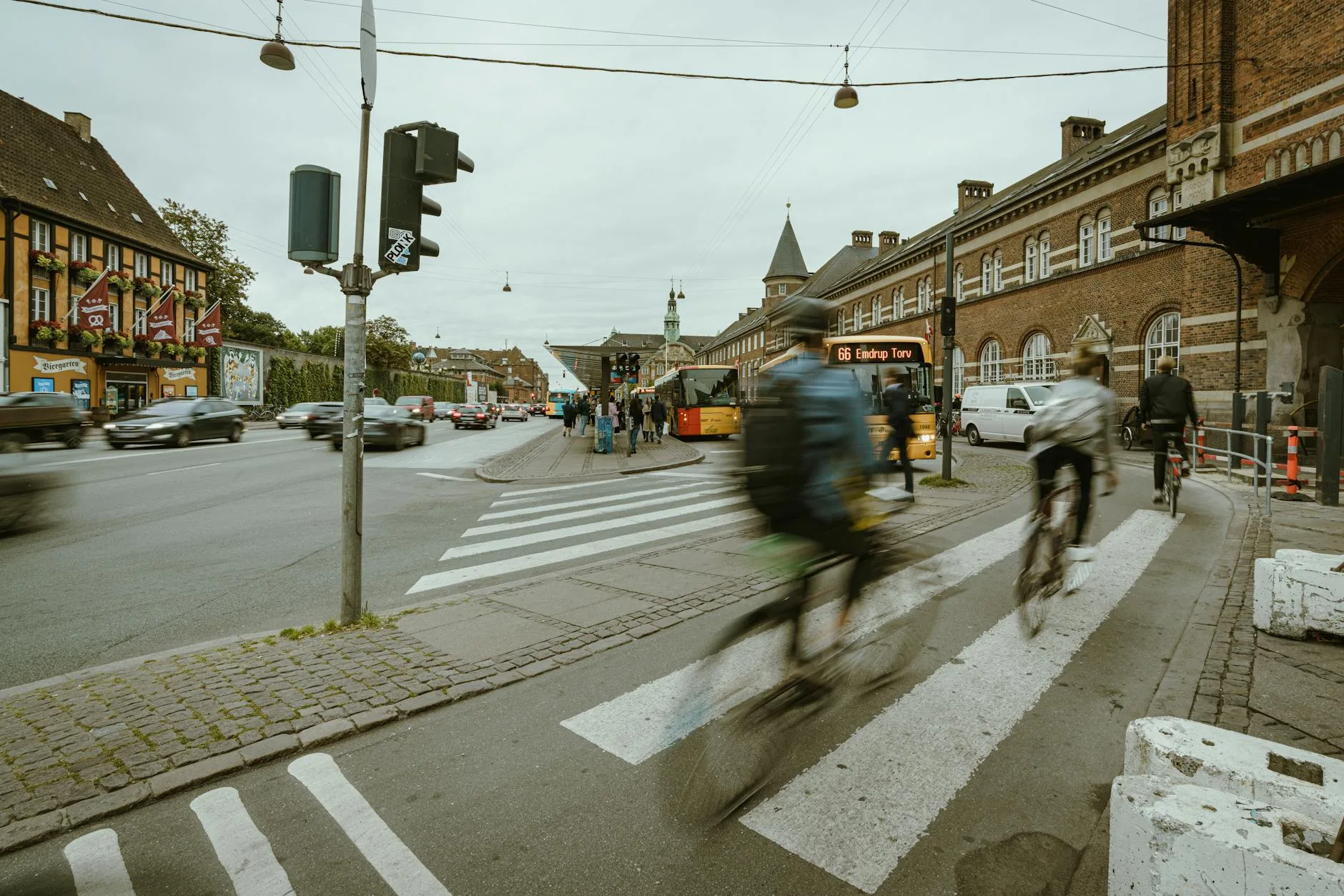
Dealing with Larger Vehicles
Buses and Lorries
Large vehicles have blind spots that can swallow you whole. The general rule: if you can’t see the driver’s mirrors, they can’t see you.
- Never ride up the left side of a large vehicle at a junction — this is the single most dangerous thing you can do on any bike. If the vehicle turns left, you’re trapped between it and the kerb
- Stay behind or get well ahead — don’t sit alongside. Either drop back where the driver can see you in their mirrors, or get far enough ahead to be clear
- Watch for left turns — a bus or lorry turning left swings wide first, then cuts in. The gap on the left closes fast
Taxis and Ride-Hails
Uber and taxi passengers open doors without looking. Delivery drivers stop without warning. Treat every taxi as though someone is about to jump out of it. Give them extra space and keep your speed manageable when passing.
Vans
Van drivers are often on schedules and may squeeze past you aggressively. Hold your line, stay visible, and don’t let yourself be pushed into the gutter. A solid road position is your best defence — a driver who has to wait to pass is safer than a driver who squeezes through a gap that doesn’t exist.
Visibility and Being Seen
Lights
Legally, you need a white front light and a red rear light after dark. But “legally required” and “enough to be safe” are different things. For e-bike commuting in UK traffic:
- Front light: 400+ lumens for urban riding, 800+ lumens for unlit roads
- Rear light: flashing mode visible from 200+ metres — Exposure and Lezyne make excellent rear lights
- Daytime running lights — a flashing front light during the day makes a measurable difference to driver awareness. Several studies show a 19% reduction in accidents for cyclists using daytime lights
High-Vis and Reflective Gear
High-vis helps in low light but its benefit in full daylight is debated. What does work is reflective material on moving parts — ankles, pedals, wheels. Drivers’ eyes are drawn to movement, and reflective ankle bands create a distinctive “pedalling motion” that’s instantly recognisable as a cyclist.
Your Bike’s Built-In Lights
Many e-bikes come with integrated front and rear lights powered by the main battery. These are convenient but check their brightness — some are too dim for safe urban riding, especially the rear light. Supplement with additional lights if needed.
Braking on an E-Bike
Why E-Bike Braking Is Different
Your e-bike weighs more, often travels faster, and the motor may still be assisting as you begin to brake (depending on your pedalling). Stopping distances are longer than on a lighter bike at the same speed. Understanding this is critical.
Braking Technique
- Use both brakes together — front brake provides about 70% of stopping power, rear brake provides stability. Using only the front risks going over the bars. Using only the rear risks skidding
- Progressive pressure — squeeze brakes gradually rather than grabbing. Sudden braking on a wet road is a recipe for a skid
- Shift your weight back — as you brake hard, your body weight shifts forward. Counter this by pushing your weight towards the rear of the saddle
Stopping Distance at Speed
At 25 km/h on dry tarmac, a typical e-bike needs about 8-12 metres to stop fully (including reaction time). In wet conditions, add 50% or more. Maintain a following distance from vehicles ahead that accounts for this — about 3-4 seconds of travel time.
Disc Brakes vs Rim Brakes
Most modern e-bikes come with hydraulic disc brakes, which provide much better stopping power than rim brakes — especially in the wet. If your e-bike has rim brakes, be extra cautious in rain. The e-bike maintenance schedule covers when to check and replace brake pads.
Speed Management in Traffic
When to Use Full Assist
Full motor assistance is useful for keeping up with traffic flow on main roads, pulling away from junctions, and climbing hills. In these situations, matching traffic speed is safer than being much slower.
When to Reduce Assist
Drop to a lower assist level or turn assist off in:
- Busy pedestrianised areas where you’re sharing space with walkers
- Residential side streets with parked cars and limited visibility
- School zones during drop-off and pick-up times
- Wet or icy conditions where traction is reduced
- Narrow cycle paths with oncoming cyclists or pedestrians
Reading the Traffic
Anticipation is your superpower. Look two or three vehicles ahead, not just at the car in front. Watch for brake lights, indicators, pedestrians stepping out, and car doors about to open. The earlier you spot a hazard, the more time you have to react — and at e-bike speeds, those extra seconds matter.
Cycle Lanes and Shared Paths
Cycle Lanes
Use them when they’re safe and well-maintained. Sadly, many UK cycle lanes are narrow, badly surfaced, full of glass and potholes, or end abruptly. You are not legally required to use a cycle lane — it’s always your choice. If the lane is unsafe, ride on the main road.
Shared-Use Paths
Paths marked for both cyclists and pedestrians require you to adjust your speed to suit pedestrians. At 25 km/h, you’re moving too fast for a shared path with dog walkers and pushchairs. Drop to 10-15 km/h and give audible warning when passing. The Highway Code advises cyclists to give way to pedestrians on shared paths.
Segregated Cycle Infrastructure
Dedicated cycle lanes separated from motor traffic — like those on some London and Manchester routes — are the safest option. Use them when available, but remain alert at junctions where cycle paths cross vehicle traffic.
Weather and Road Conditions
Wet Roads
Rain makes UK roads treacherous for e-bikes. The main risks:
- Reduced traction — painted road markings, manhole covers, and metal drain covers become ice-rink slippery when wet
- Longer stopping distances — add at least 50% to your dry-weather stopping distance
- Reduced visibility — spray from vehicles reduces how well drivers see you. Run lights in any rain
- Aquaplaning — standing water on roads can cause your front wheel to lose grip momentarily
Cold and Ice
Below 3°C, watch for ice — especially on bridges, shaded areas, and anywhere water drains across the road. E-bike tyres are typically wider than road bike tyres, which helps, but no tyre grips well on ice. Reduce speed and avoid sudden inputs.
Wind
Side winds affect e-bikes more than traditional bikes because of the extra weight (which is lower-mounted, providing some stability) and because riders tend to travel faster. Strong gusts when passing gaps between buildings or on exposed sections can push you sideways. Grip the bars firmly and be prepared.
Essential Safety Gear
Helmet
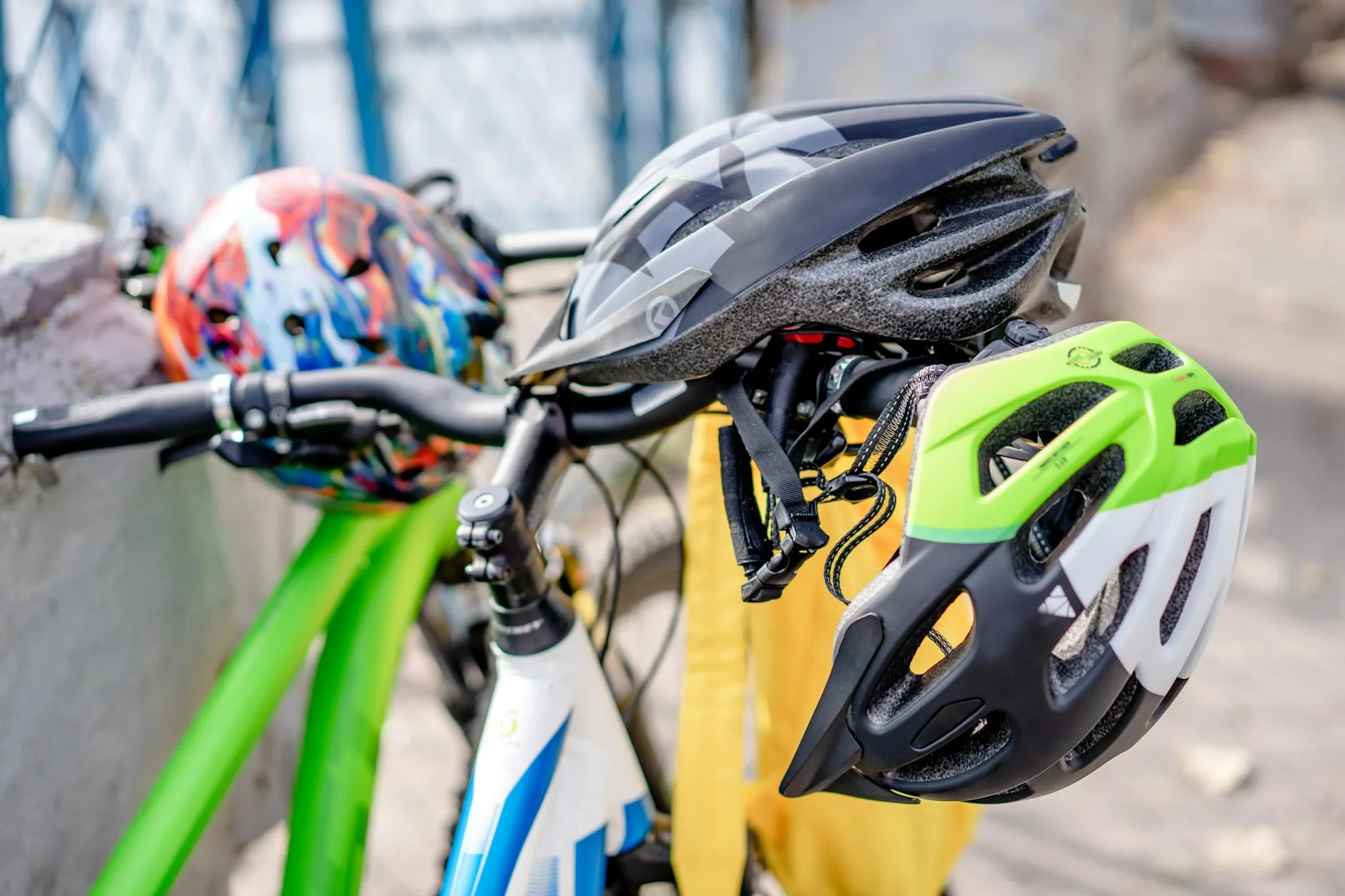
Not legally required in the UK for cyclists over 14, but strongly recommended — especially at e-bike speeds. Choose a helmet rated for speeds above 20 km/h. Some e-bike specific helmets (like those from Lumos or Thousand) include integrated lights and MIPS protection for rotational impacts. Budget about £40-80 for a good one from Decathlon, Halfords, or Evans Cycles.
Gloves
Padded cycling gloves improve grip on the bars and protect your hands in a fall. In winter, they also keep your fingers warm enough to operate brakes properly — cold fingers are slow fingers. Our e-bike gloves guide covers the best options for UK weather.
Eye Protection
Cycling glasses aren’t vanity — they keep road grit, insects, and rain out of your eyes. At 25 km/h, a speck of grit in your eye at a junction is a serious safety issue. Clear or yellow lenses work in low light, dark lenses for bright conditions.
Lock
Not strictly safety gear for riding, but getting your e-bike properly secured when you stop matters. A stolen e-bike is an expensive loss and a stressful experience.
Frequently Asked Questions
Do I need to wear a helmet on an e-bike in the UK? No — there’s no legal requirement for cyclists of any age to wear a helmet in the UK, including on e-bikes. However, at speeds of 25 km/h, the risk of a serious head injury in a fall is real. Most safety organisations and cycling charities strongly recommend wearing one.
Can I ride an e-bike in a cycle lane? Yes. Legal e-bikes (EAPCs — up to 250W, 25 km/h assisted) can use any road or cycle lane that a regular bicycle can use. You cannot ride on pavements or motorways. Shared-use paths require you to give way to pedestrians and adjust your speed accordingly.
Is it safe to ride an e-bike in the rain? Yes, with adjustments. Modern e-bikes are designed to handle wet conditions — the electrical components are sealed. The main risks are reduced traction and longer stopping distances. Run your lights, avoid painted road markings and metal drain covers, brake earlier, and reduce your speed.
What speed should I ride in traffic? Match the traffic flow where safe to do so, up to your motor’s 25 km/h limit. In slower-moving urban traffic, you’ll often match or exceed the speed of cars. On faster roads (40+ mph limits), you’re much slower than traffic — consider whether there’s a quieter parallel route or use any available cycle infrastructure.
Should I ride on the road or the pavement? Always the road (or cycle lanes/shared paths). Riding on the pavement is illegal in England, Wales, and Scotland, except on paths specifically marked as shared-use. Pavements are also more dangerous than roads for e-bikes — pedestrians are unpredictable and e-bike speeds are too high for pavement riding.