You’re on the platform at Clapham Junction, your train’s in three minutes, and you’re wrestling a full-size bike through the ticket barriers while commuters stream past looking annoyed. Or you’re trying to fit a regular e-bike in the boot of a Ford Focus and it’s not happening without removing a wheel, scratching the bumper, and losing your patience.
Folding e-bikes solve both of these problems — in theory. In practice, some of them fold into a package roughly the size of a suitcase and weigh about the same as a small child, while others “fold” into a shape that’s technically smaller but still won’t fit under your desk or in a train luggage rack. The difference between a good folder and a bad one is the difference between a commute that works and an expensive ornament in your hallway.
This guide is about the three things that actually matter when choosing a folding e-bike for UK use: how much it weighs, how small it folds, and how far the battery genuinely takes you. Not the manufacturer’s claim of 60 miles on a flat road with a tailwind and a 55kg rider — the real number, in Britain, with hills and headwinds and a rucksack. For a deeper look at how batteries perform in UK conditions, see our e-bike battery guide.
Weight: The Number That Matters Most
Here’s the uncomfortable truth about folding e-bikes: they’re heavy. A standard non-electric folding bike — a Brompton or a Dahon — weighs 11-13kg. Add a motor and a battery and you’re looking at 16-24kg, depending on the model. That’s a significant amount of weight to carry up stairs, onto a train, or through an office.
Why does this matter so much? Because the whole point of a folding bike is portability. If you can’t comfortably carry it from the platform to the train, fold it, stow it, and reverse the process at the other end, you’ve bought the wrong bike.
Under 18kg — Manageable for most adults. You can carry it up a flight of stairs, though you’ll feel it. This is the Brompton Electric territory.
18-20kg — Awkward but doable for short carries. Fine if you’re wheeling it folded (some fold into a shape you can roll) but heavy for lifting. You’ll want to avoid stairs where possible.
Over 20kg — Not really a carry-anywhere bike. These work if your commute is door-to-door cycling with occasional car boot transport, but don’t expect to carry one up three flights to a flat.
Think about your specific commute. If there’s a lift at the station, 20kg is fine. If you’re hauling it up the steps at an older London Underground station, every kilogram matters. Be honest with yourself about what you’ll actually carry — buying the one with the biggest battery is pointless if it ends up being too heavy to use as a folder. It’s also worth checking the UK e-bike laws before you buy, as any model over 250W or with an unrestricted throttle won’t be legal on cycle paths or trains.
Fold Size: Will It Actually Fit?
A bike can technically fold and still be too bulky to be practical. What matters is the folded dimensions and whether they fit in the specific spaces you need.
Here’s where things get real:
Train luggage racks: The standard overhead luggage shelf on a UK train is about 60cm deep. National Rail’s cycling policy allows folding bikes on all services without restrictions, provided they’re folded. Most folding e-bikes fit in the dedicated luggage areas at the end of carriages, but fitting one in the overhead rack depends on the model. The Brompton is one of very few that manages it. Others need the floor-level luggage space or the area behind seats.
Car boots: A typical family hatchback boot (Focus, Golf, Corsa) is about 80cm wide and 60cm deep with the parcel shelf in place. Smaller folders fit with room for shopping; larger ones will need the rear seats down.
Under a desk: If this is part of the plan, you need a compact fold — realistically, that means a Brompton Electric or nothing. Most other folding e-bikes are too tall or too wide to slide under a standard office desk (about 70cm clearance).
Folded dimensions to look for: – Very compact: Under 65 x 60 x 30cm (Brompton Electric territory) – Medium: About 80 x 65 x 40cm (Tern Vektron, some Dahons) – Large: Over 85 x 70cm or bigger (budget folders that technically fold but aren’t much smaller than a regular bike)
The fold mechanism itself matters too. Some bikes fold in under 20 seconds with a couple of quick-release levers. Others need you to undo bolts, remove the seatpost, and fiddle with latches. If you’re folding and unfolding twice a day, every second counts. Try the fold in person before buying if you possibly can — Brompton Junction in London, your local Halfords, or a specialist dealer.
Battery Range: The Honest Numbers
This is where manufacturers are the least truthful. The range figure on the box is almost always measured under perfect conditions: flat terrain, no wind, light rider, eco mode, warm weather. In the UK — where the terrain is rarely flat, the wind is rarely absent, and the temperature is rarely warm — expect 60-75% of the claimed range.
What affects range in real life:
- Hills — The biggest drain. A commute with a steep hill each way might halve the flat-road range.
- Rider weight — Manufacturers test with a 70-75kg rider. If you’re 90kg+, subtract 15-20% from the claimed range.
- Wind — A steady headwind on an exposed stretch uses motor power constantly. British commuters know this well.
- Temperature — Batteries lose capacity in cold weather. A winter commute in January might give you 20% less range than the same route in July.
- Assist level — Running on max power is fun but drains the battery fast. Eco mode really extends range by 40-60%.
- Tyre pressure — Soft tyres increase rolling resistance. Check them weekly with a track pump.
Rule of thumb for UK commuters: Take the manufacturer’s claimed range, multiply by 0.65, and use that as your realistic figure. If they say 50 miles, budget for 30-35 in typical conditions. If your commute is 10 miles each way, you want a bike that claims at least 30 miles of range.
Can you charge at work? If there’s a plug socket under your desk, even a compact charger will top up a battery during the working day. This effectively doubles your usable range and means you can get away with a smaller (lighter) battery.
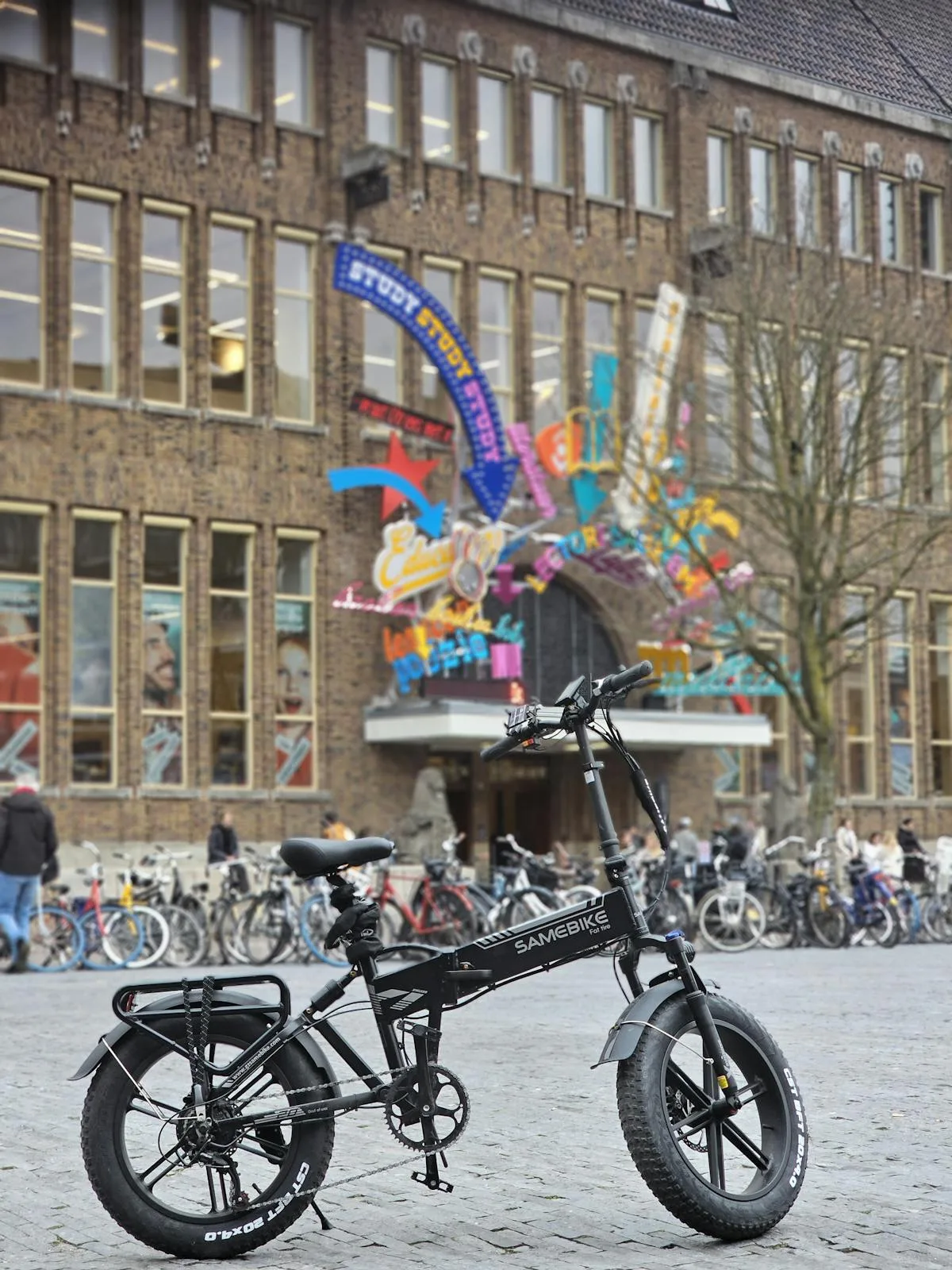
The Models: Three Folders Worth Considering
Brompton Electric C Line Explore
Price: About £3,000-£3,250 depending on spec Weight: 16.6kg (with battery) Folded dimensions: 58.5 x 56.5 x 27cm Claimed range: 40-70km (25-45 miles) Realistic UK range: 25-35 miles
After comparing the leading models side by side, the Brompton remains the benchmark for folding bikes, full stop. Nothing else folds as small or as neatly. The electric version adds a 300Wh battery mounted on the front luggage block and a 250W motor in the front hub. At 16.6kg, it’s one of the lightest folding e-bikes available, and the fold — which takes about 20 seconds once you’ve done it a few times — produces a package you can truly carry with one hand for short distances.
The motor assistance is subtle rather than powerful. It senses your pedalling torque and adds help proportionally — no throttle, no jerky power delivery. On flat ground, it feels like a tailwind. On hills, it takes the sting out but doesn’t turn you into a mountain goat. This isn’t the bike for someone who wants maximum power; it’s for someone who wants a Brompton that makes commuting less sweaty.
The downsides? The price is steep — £3,000+ is a lot for a bike with small wheels and a front hub motor. The range is the lowest of the three bikes here, partly because the battery is compact (it has to be, to fit the Brompton’s fold). And the ride, while nimble in traffic, is less stable at speed than a bigger-wheeled folder. If your commute involves long, fast stretches, you’ll notice the difference.
Buy if: Your commute involves trains, stairs, small spaces, or carrying the bike. Nothing else matches the fold.
Tern Vektron S10
Price: About £3,300-£3,600 Weight: 22.1kg Folded dimensions: 79 x 66 x 38cm Claimed range: Up to 100km (62 miles) with the 400Wh battery Realistic UK range: 35-50 miles
The Vektron is a different proposition to the Brompton. It’s heavier, doesn’t fold as small, and you won’t be carrying it up stairs comfortably. But it rides like a proper bike. 20-inch wheels give it stability at speed, the Bosch Active Line Plus motor is a proven mid-drive system with excellent torque sensing, and the 10-speed Shimano Deore drivetrain means you’ve got gears for every gradient.
Where the Vektron shines is the commute that’s mostly cycling with occasional car boot or train travel. The fold is easy — flip the frame latch, drop the handlebars, lower the seatpost — and the folded package, while larger than a Brompton, fits in most car boots and the luggage areas at the ends of train carriages. It also folds flat enough to stand against a wall in a hallway. For related guidance, see our Brompton Electric vs Tern Vektron: Folding E-Bike Head-to-Head guide.
The Bosch motor system is arguably the best in the business for mid-drives. Smooth power delivery, reliable in rain (important in the UK), and the display shows range, speed, and assist level clearly. Battery charges to 100% in about 4.5 hours. Tern’s build quality is excellent — these bikes last.
The weight is the trade-off. At 22.1kg, this is a bike you wheel around when folded, not carry. If your commute involves lifting the bike at any point — steps without a ramp, a narrow staircase — think carefully.
Buy if: You want a folding e-bike that rides like a full-size e-bike and you don’t need to carry it. Best all-round riding experience of the three.
Fiido X
Price: About £1,200-£1,500 Weight: 19.2kg Folded dimensions: 82 x 68 x 37cm Claimed range: Up to 130km (80 miles) Realistic UK range: 35-50 miles For related guidance, see our E-Bike Weight Limits: How Much Can They Carry? guide.
The Fiido X is the budget contender, and it’s a surprisingly good one. It has a bigger battery (417.6Wh) than the Brompton, a torque-sensing motor (not cadence-sensing, which matters — cadence sensors feel jerky), and a clean design that doesn’t look like a budget folding bike.
The ride is decent for the money. The carbon fibre front fork keeps weight down and absorbs road buzz, though the rear is stiffer. 20-inch wheels give better stability than the Brompton’s 16-inch, and there are seven gears — enough for most urban commutes. The claimed range of 130km is the most optimistic number on this page, but even at 60% of that, you’re looking at 50 miles or so, which beats the Brompton comfortably.
Where the Fiido falls behind is in the details. The fold is less refined — more latches, more fiddling, and the folded shape isn’t as neat as the Tern or the Brompton. After-sales support in the UK isn’t as established as Brompton (who have service centres across London) or Tern (distributed by a well-known UK importer). If something goes wrong, you might be dealing with a warranty process that involves shipping parts from China.
The build quality is good for the price but not exceptional. Cables, brakes, and the folding mechanism all feel a tier below the premium bikes. That’s expected at this price point — you’re paying a third of the Brompton price. For related guidance, see our How to Extend E-Bike Range in Hilly Areas guide.
Buy if: Budget is the primary concern and you want the most bike for the money. Solid choice for commutes that don’t involve carrying the bike on public transport daily.
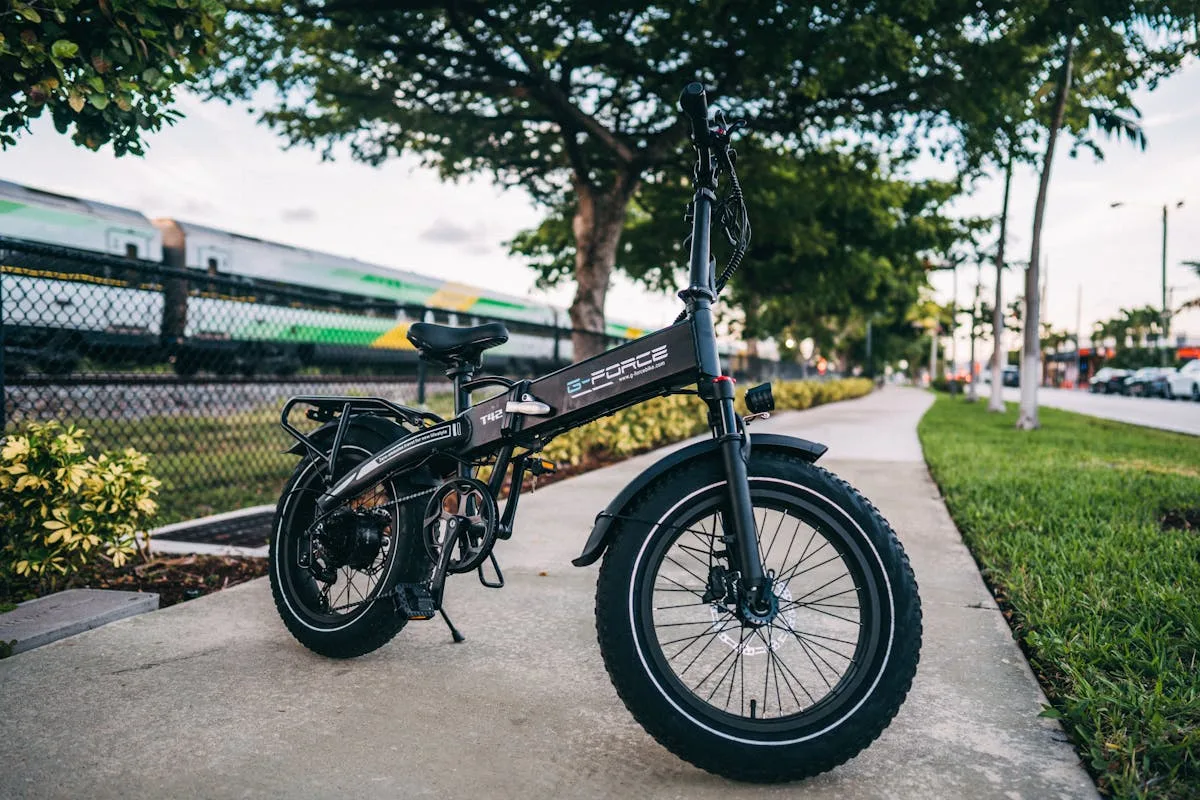
Quick Comparison
| Feature | Brompton Electric | Tern Vektron S10 | Fiido X |
|---|---|---|---|
| Price | £3,000–£3,250 | £3,300–£3,600 | £1,200–£1,500 |
| Weight | 16.6 kg | 22.1 kg | 19.2 kg |
| Folded size | 58.5 × 56.5 × 27 cm | 79 × 66 × 38 cm | 82 × 68 × 37 cm |
| Battery | 300 Wh | 400 Wh | 417.6 Wh |
| Realistic range | 25–35 miles | 35–50 miles | 35–50 miles |
| Motor type | Front hub | Bosch mid-drive | Rear hub (torque) |
| Wheel size | 16 inch | 20 inch | 20 inch |
| Best for | Train commuters | Best ride quality | Budget riders |
The UK Commuting Reality
Before you buy, map your exact commute and think about these specific scenarios:
Train commuters: Check your train operator’s folding bike policy. Most UK train companies allow folding bikes at all times without restrictions, provided they’re folded. This is a genuine advantage over full-size bikes, which are often banned during peak hours. But “folded” means fully folded — not just the handlebars dropped. A guard who’s having a bad day will enforce this. The Brompton is the safest bet here because nobody questions whether it’s properly folded.
Cycle-to-work scheme: All three of these bikes are eligible for the cycle-to-work scheme, which saves you 25-39% depending on your tax bracket. For a £3,000 Brompton, that’s a saving of £750-£1,170. Ask your employer about the scheme limit — the old £1,000 cap was lifted in 2019 but some schemes still have their own limits. Green Commute Initiative and Cyclescheme both cover higher-value bikes.
Security: Folding e-bikes have a theft problem. They’re valuable and relatively easy to carry away. The Brompton has an advantage here — you fold it and take it inside. If you’re locking a Tern or Fiido outside, invest in a serious lock (Sold Secure Gold minimum — Kryptonite New York or Abus Granit). Budget £60-100 for a lock and don’t use a cable lock. Ever. For wider safety context, London Fire Brigade lithium battery guidance is a useful reference.
Weather: It rains in Britain. All of these bikes are fine in the rain mechanically, but disc brakes (Tern and Fiido) stop better in the wet than the Brompton’s rim brakes. Mudguards are a must — the Brompton comes with them, the others may need them as accessories. Budget £30-40 for mudguards if they’re not included.
Maintenance: E-bike-specific maintenance is minimal — keep the chain lubed, the brakes adjusted, and the tyres inflated. The battery and motor rarely need attention. For general servicing, any bike shop can work on the mechanical parts. For motor and electrical issues, a Brompton dealer is the easiest (there are dozens across the UK); Tern has a network of Bosch-certified dealers; Fiido you may need to source parts yourself or find an independent shop willing to work on it.
What I’d Buy
If I commuted by train in London and needed to carry a bike up and down stairs daily, I’d buy the Brompton Electric without hesitation. Nothing else comes close for portability, and the premium is justified by the daily convenience.
If my commute was mostly cycling with occasional car boot transport, I’d choose the Tern Vektron. The ride quality is superior, the Bosch motor is the best system here, and the range is enough for any realistic UK commute. For wider safety context, Cycling UK maintenance guidance is a useful reference.
If budget was the deciding factor and I didn’t need the tiniest fold, I’d go with the Fiido X. At a third of the Brompton’s price, it offers more range and a perfectly decent ride. Just go in with your eyes open about the support and build quality trade-offs.
The worst thing you can do is buy a folding e-bike based on specs alone, without thinking about whether you’ll actually fold it. If it’s too heavy to carry, too fiddly to fold, or too big to stow, it’ll end up being used as a regular e-bike that happens to have hinges. And at that point, you’d have been better off buying a standard e-bike for less money and getting a better ride.
Test ride if you can. Brompton Junction on Borough High Street in London has every model on the floor. Tern dealers will let you try the Vektron. For the Fiido, you may need to order online and use the return window, but the 14-day distance-selling return right means you can send it back if it doesn’t suit your commute.
Your commute is unique. The right folder is the one that fits it — not the one with the best spec sheet.
Frequently Asked Questions
How long does an e-bike battery last? Most quality e-bike batteries last 500-1,000 full charge cycles. In normal UK commuting, that is often three to five years before range noticeably drops.
Should I charge an e-bike battery after every ride? You do not need to fully charge after every short ride. For storage, keep the battery around 40-70% and avoid leaving it flat or permanently at 100%.
How can I get more range from an e-bike? Use lower assistance on flat roads, keep tyres inflated, avoid carrying unnecessary weight and charge indoors in cold weather before longer rides.
What should I check first with How to Choose a Folding E-Bike: Weight, Fold Size & Range? Start with the real use case, then check size, compatibility, running costs and maintenance. A product that looks good on paper can still be the wrong fit if it does not suit the room, routine or budget.
How do I avoid wasting money on How to Choose a Folding E-Bike: Weight, Fold Size & Range? Avoid buying on one headline feature alone. Compare the practical details, read the warranty or returns terms, and choose the option that solves your main problem rather than the one with the longest specification list.