You’re standing in a bike shop, eyeing a £2,000 e-bike. The spec sheet says “maximum rider weight: 120kg” but you weigh 95kg and want to carry a loaded pannier bag for commuting — laptop, lunch, change of clothes. That’s another 8-10kg. Plus the bike itself weighs 25kg. Are you over the limit? Under it? Does the limit even include the bike? Nobody in the shop seems entirely sure, and the manufacturer’s website is no help.
E-bike weight limits are one of those topics where the official numbers, the practical reality, and what you actually need to know are three different things. After riding e-bikes at and above their stated limits and talking to mechanics who service them, here’s the honest picture. For related guidance, see our Dual Battery E-Bikes: Are They Worth the Extra Weight? guide. For related guidance, see our How to Choose a Folding E-Bike: Weight, Fold Size & Range guide.
In This Article
- What the Weight Limit Actually Means
- Typical Weight Limits by E-Bike Type
- What Happens If You Exceed the Weight Limit
- Rider Weight vs Total System Weight
- How Weight Affects Battery Range
- How Weight Affects Motor Performance
- Carrying Cargo on an E-Bike
- E-Bikes with the Highest Weight Limits
- Weight Limits and UK Law
- How to Check Your Total Weight
- Bottom Line
- Frequently Asked Questions
What the Weight Limit Actually Means
Every e-bike has a maximum weight limit — called the Gross Vehicle Weight (GVW) or Maximum System Weight. This number appears in the spec sheet and typically ranges from 100-170kg depending on the bike.
Here’s the critical detail most people miss: the weight limit includes everything. The bike itself, the rider, the battery, any cargo, panniers, child seats, trailers — all of it. A bike with a 120kg limit that weighs 25kg leaves 95kg for the rider and everything they’re carrying.
Why the Limit Exists
The limit is set by the weakest component in the system — usually the frame, wheels, or fork. It’s the weight at which the manufacturer is confident the bike will perform safely and reliably. Below the limit, everything works as designed. Above it, stress on components increases and the likelihood of failure — cracked frame, broken spokes, snapped seatpost — goes up.
Is It a Hard Limit?
Not exactly. A bike rated to 120kg doesn’t collapse at 121kg. Manufacturers build in a safety margin, typically 10-20%. But exceeding the rated limit voids the warranty, accelerates wear on components, and increases the risk of mechanical failure. The further over the limit you go, the greater the risk.
Typical Weight Limits by E-Bike Type
Different e-bike categories are built for different loads:
City and Commuter E-Bikes
- Typical limit: 120-130kg total system weight
- Bike weight: 20-27kg
- Effective rider + cargo capacity: 93-110kg
- Examples: VanMoof S5 (120kg), Cowboy 4 (120kg), Ribble Hybrid AL e (136kg)
These are built for one rider with light cargo — a rucksack, laptop bag, or small pannier.
Hybrid and Touring E-Bikes
- Typical limit: 130-150kg total system weight
- Bike weight: 22-28kg
- Effective rider + cargo capacity: 102-128kg
- Examples: Cube Touring Hybrid ONE (150kg), Trek Verve+ (136kg), Specialized Turbo Vado (136kg)
Designed for longer rides with loaded panniers. The frames, wheels, and racks are specced for carrying gear.
Cargo E-Bikes
- Typical limit: 150-200kg+ total system weight
- Bike weight: 30-50kg
- Effective rider + cargo capacity: 100-170kg
- Examples: Tern GSD (200kg), Urban Arrow Family (250kg), Babboe Curve-E (180kg)
Purpose-built for heavy loads — children, shopping, commercial deliveries. Reinforced frames, heavy-duty wheels, and powerful motors.
E-Mountain Bikes
- Typical limit: 120-135kg total system weight
- Bike weight: 22-27kg
- Effective rider + cargo capacity: 93-113kg
- Examples: Specialized Turbo Levo (135kg), Trek Rail (136kg), Canyon Spectral:ON (120kg)
Lower limits than you might expect, because mountain bike components face much greater impact forces. Jumps, drops, and rough terrain multiply the effective load on the frame and wheels.
For a full comparison of e-bike types available in the UK, our best electric bikes guide covers every category.
What Happens If You Exceed the Weight Limit
Short Term
Nothing dramatic. The bike still works. The motor still assists. You won’t notice an immediate difference riding 5-10kg over the rated limit. This is why many people don’t take the limits seriously — the immediate consequences are invisible.
Medium Term (3-12 Months)
Components wear faster:
- Spokes break more frequently — additional load creates higher tension on every spoke. Instead of replacing one broken spoke per year, you might replace three or four.
- Tyres wear faster — more contact pressure means quicker tread wear. Budget for replacing tyres 30-50% sooner.
- Brake pads wear faster — heavier bikes need more braking force. Disc brake pads that last 2,000 miles on a lighter rider might last 1,200 miles.
- Chain and cassette stretch faster — increased drivetrain load accelerates wear. Expect to replace the chain 20-30% sooner.
Long Term (1-3 Years)
This is where the real risks appear:
- Frame fatigue — aluminium and steel frames develop stress cracks over time when loaded beyond their design spec. A hairline crack in a chainstay or seatpost junction can develop into a catastrophic failure.
- Wheel failure — rims can crack around spoke holes or develop rim braking surface wear (on rim-brake bikes). Wheel rebuilds become necessary rather than optional.
- Fork failure — overloaded forks develop play in the steerer tube or stress cracks in the crown. On a carbon fork, this can fail suddenly and without warning.
The Warranty Angle
Every e-bike manufacturer’s warranty excludes damage caused by exceeding the weight limit. If your frame cracks at 18 months and you’re 15kg over the limit, the warranty claim will be rejected. This alone is worth respecting the number.
Rider Weight vs Total System Weight
This distinction confuses a lot of people:
Maximum Rider Weight
Some manufacturers quote this separately — it means the weight of the rider only, before adding the bike or cargo. A “max rider weight: 120kg” bike with a 25kg bike weight has a total system weight of 145kg.
Maximum Total System Weight / GVW
This is the all-in number: rider + bike + battery + cargo + accessories. This is the more useful number because it tells you the absolute limit.
How to Calculate Your Setup
- Weigh yourself (in the clothes and shoes you’d ride in)
- Add the bike weight (check the manufacturer’s spec — it usually includes the battery)
- Add cargo weight (panniers, bags, shopping, child seat, etc.)
- Compare the total to the bike’s GVW
Example:
- Rider: 90kg
- Bike: 24kg
- Loaded pannier: 8kg
- Water bottle, lock, lights: 2kg
- Total: 124kg — fits within a 130kg limit with 6kg headroom
How Weight Affects Battery Range
Heavier loads drain the battery faster. The motor has to work harder to assist a heavier rider, especially on hills. Here’s roughly what to expect:
The Rule of Thumb
For every 10kg above the bike’s “test weight” (usually based on a 75kg rider), expect 8-12% less range from the battery. This varies with terrain — flat routes are less affected than hilly ones.
Practical Example
A bike with a claimed range of 80km (tested with a 75kg rider on flat terrain):
- 90kg rider, flat terrain: ~70-75km (6-12% reduction)
- 90kg rider + 10kg cargo, flat terrain: ~62-68km (15-22% reduction)
- 90kg rider + 10kg cargo, hilly terrain: ~45-55km (30-45% reduction)
For detailed information on maximising your range, our e-bike battery guide covers everything from charging habits to riding technique.
Higher Assist Levels Amplify the Effect
Heavier riders using Turbo/High assist drain the battery faster than the same rider on Eco mode. If range matters, drop one assist level — the motor still helps, but the battery lasts noticeably longer.
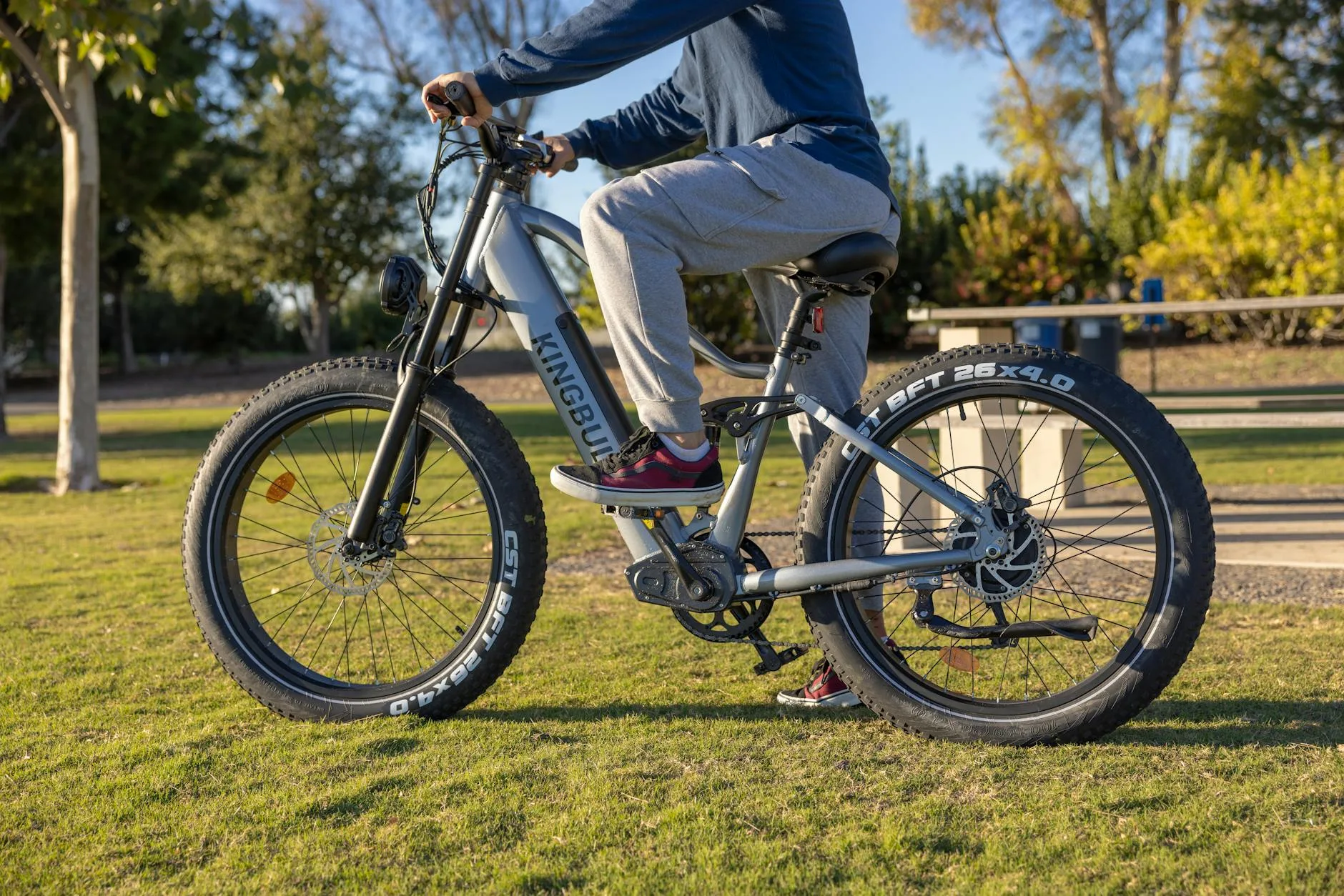
How Weight Affects Motor Performance
Hub Motors
Rear hub motors (common on budget and commuter e-bikes) struggle more with weight than mid-drive motors. They deliver power directly to the wheel without mechanical advantage from the gears. A heavier rider on a steep hill may notice the motor labouring — slower speed, more noise, and higher battery drain.
Mid-Drive Motors
Mid-drive motors (Bosch, Shimano, Brose) power through the gears, so they adapt better to heavy loads. They deliver consistent torque regardless of rider weight, as long as you’re in an appropriate gear. This is why cargo e-bikes and heavy-duty touring bikes almost always use mid-drives.
Motor Overheating
All e-bike motors have thermal limits. Sustained climbing at high loads and high assist can cause the motor to overheat and temporarily reduce power (called thermal throttling). This affects heavy riders more because the motor works harder for longer periods. Dropping to a lower assist level during long climbs prevents this.
Carrying Cargo on an E-Bike
If you plan to carry loads regularly, set up your bike to distribute weight properly:
Rear Racks and Panniers
The most common cargo setup. A quality rear rack rated to 25-30kg handles commuter loads easily — laptop, change of clothes, lunch. Keep weight low and close to the axle for stability.
- Rack weight limit: typically 15-30kg per rack
- Total pannier weight: keep both sides roughly equal to avoid handling imbalance
- Don’t exceed the rack limit even if the bike’s overall limit has headroom — the rack and its mounting points are separate failure points
Front Baskets and Bags
Add 5-10kg of carrying capacity without affecting rear balance. Best for lightweight items — shopping, books, a laptop sleeve. Heavy front loads make the steering feel sluggish.
Trailers
For heavy or bulky loads (shopping runs, children), a trailer distributes weight to its own wheels rather than loading the bike. Trailers add 5-15kg of their own weight but can carry 30-50kg of cargo.
Backpacks
The simplest option but the worst for comfort and handling. A loaded rucksack raises your centre of gravity, makes the bike less stable, and puts all the load through the saddle and handlebars. Keep backpack loads under 5kg if possible.

E-Bikes with the Highest Weight Limits
If you need a high-capacity e-bike, these are the UK-available options worth considering:
For Heavy Riders (130-170kg GVW)
- Cube Touring Hybrid ONE — 150kg GVW. A touring-focused hybrid with Bosch mid-drive.
- Riese & Müller Supercharger — 160kg GVW. Premium build, dual battery option for extended range.
- Tern HSD — 170kg GVW. Compact frame with serious load capacity.
For Heavy Cargo (170-250kg GVW)
- Tern GSD — 200kg GVW. The benchmark cargo e-bike. Carries two child seats, a full shop, or commercial loads.
- Urban Arrow Family — 250kg GVW. A front-loading box bike designed for families. Carries 2-3 children plus shopping.
- Babboe Curve-E — 180kg GVW. A classic bakfiets (box bike) design.
Weight Limits and UK Law
Under UK law (the Electrically Assisted Pedal Cycles (EAPC) regulations), an e-bike must meet specific criteria to be ridden legally without a licence:
- Maximum continuous motor power: 250W
- Maximum assisted speed: 15.5mph (25 km/h)
- Pedal-assist only (no throttle, with limited exceptions for walk-mode)
- Rider must be 14 or older
There is no legal weight limit for the rider in EAPC regulations. The manufacturer’s weight limit is a product specification, not a legal requirement. Exceeding it doesn’t break any law — but it does void your warranty and increase mechanical risk.
Insurance Implications
If you have e-bike insurance and submit a claim for frame damage while riding over the manufacturer’s weight limit, the insurer may reject the claim on the basis that you weren’t using the bike as intended.
How to Check Your Total Weight
The Simple Method
- Stand on bathroom scales in your riding clothes and shoes: rider weight
- Check the bike’s spec sheet for the stated weight: bike weight
- Weigh your loaded panniers on kitchen scales: cargo weight
- Add all three. Compare to the bike’s GVW.
The Precise Method
If you want an exact number, stand on bathroom scales holding the loaded bike. Subtract the scales reading without the bike. The difference is your bike + cargo weight. Add your body weight for the total.
What If You’re Close to the Limit?
If your total is within 5kg of the GVW:
- You’re probably fine for casual use on good roads
- Upgrade your wheels to heavy-duty spoked wheels rated for higher loads
- Service more frequently — check spokes, brakes, and tyres every 500 miles instead of every 1,000
- Avoid kerb drops and rough terrain — impacts multiply the effective load on the frame
Bottom Line
E-bike weight limits matter more than most people think — not because the bike will immediately fail if you’re over the number, but because exceeding them accelerates wear, voids your warranty, and increases the risk of component failure over time.
For most UK commuters and leisure riders, a standard e-bike with a 120-130kg GVW handles a rider up to about 95kg with commuter cargo comfortably. If you’re heavier or carry significant loads, look for touring or cargo-specific e-bikes with 150kg+ GVW ratings and mid-drive motors that handle the extra load more gracefully.
Check your total system weight before buying, build in at least 10kg of headroom, and you’ll have an e-bike that performs well and lasts as long as it should.
Frequently Asked Questions
What is the weight limit on a typical e-bike? Most city and commuter e-bikes have a total system weight limit of 120-130kg, which includes the rider, bike, battery, and cargo. Touring e-bikes allow 130-150kg, and cargo e-bikes handle 150-250kg.
Does the e-bike weight limit include the bike itself? Usually yes — the total system weight (GVW) includes everything: bike, rider, battery, and cargo. Some manufacturers quote a separate “max rider weight” which excludes the bike. Check which number is being used.
What happens if I exceed my e-bike’s weight limit? Short term, nothing noticeable. Over months, components wear faster — spokes break, tyres wear, brake pads deplete quicker. Long term, frame and fork fatigue increases the risk of cracking. Exceeding the limit also voids the warranty.
How much does rider weight affect e-bike battery range? Roughly 8-12% less range for every 10kg above the test weight (usually 75kg). A 90kg rider with 10kg of cargo on a hilly route might see 30-45% less range than the manufacturer’s stated figure.
Are there e-bikes for heavier riders? Yes. The Tern GSD (200kg GVW), Riese and Müller Supercharger (160kg), and Cube Touring Hybrid ONE (150kg) all offer higher-than-average weight limits. Cargo e-bikes like the Urban Arrow Family handle up to 250kg total.