You’ve just bought an e-bike, you’re buzzing about your first ride, and then someone at work says “aren’t those illegal if they go over 15 miles an hour?” — and suddenly you’re not sure what the rules actually are. Or maybe you’re shopping for one and the listing says 750W motor and 28mph top speed, and you’re wondering whether that’s fine or whether you’ll get pulled over.
From our research into the UK e-bike market, the law around e-bikes is simpler than most people think, but the confusion comes from two things: the sheer number of non-compliant bikes sold online with no warnings, and the fact that the rules are different from the US, the EU, and most of what you see on YouTube. This is UK law. If you’re riding in England, Scotland, or Wales, this is what applies.
What Counts as a Legal E-Bike in the UK
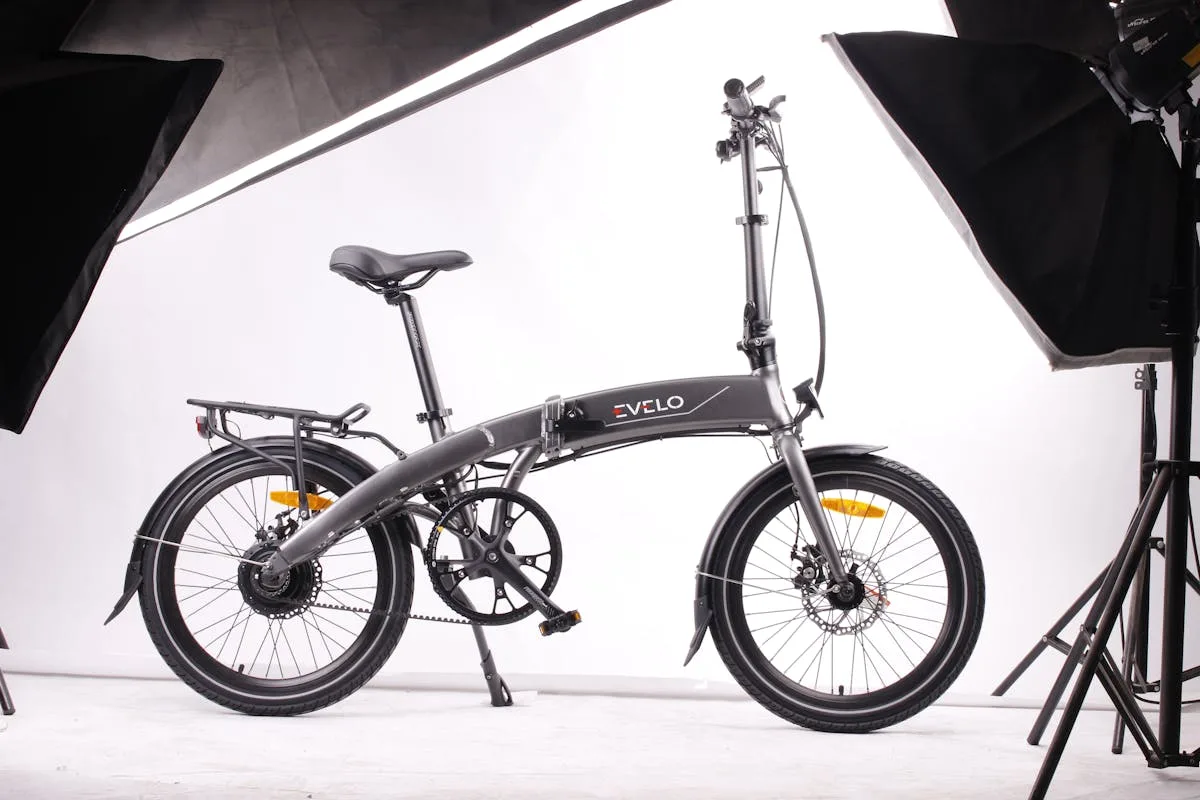
In UK law, as defined by the government’s official e-bike rules, a legal e-bike is called an EAPC — an Electrically Assisted Pedal Cycle. If your bike meets the EAPC definition, it’s treated the same as a regular bicycle. No licence, no registration, no insurance required. You can ride it anywhere a normal bicycle can go.
To qualify as an EAPC, your bike must meet all of these criteria:
- The motor must not exceed 250 watts continuous rated power. This is the nominal rating, not the peak. Many motors briefly peak higher than 250W but are rated at 250W continuous — that’s fine.
- The motor must cut out at 15.5mph (25km/h). The motor can assist you up to 15.5mph. Above that speed, the motor must stop helping. You can pedal faster than 15.5mph under your own power — that’s perfectly legal. The motor just can’t help you do it.
- The motor must only provide assistance when you’re pedalling. Twist throttles that power the bike without pedalling are only legal up to 3.7mph (6km/h) — effectively a walk-assist mode to help you push the bike up a steep hill or get started from standstill. Above 3.7mph, you must be pedalling for the motor to operate.
- The bike must have pedals that can propel it. It can’t be a moped with vestigial pedals that don’t actually drive the wheel.
- The bike must display either a sticker or plate showing the manufacturer, motor power output, and battery voltage. In practice, most reputable brands include this.
- The rider must be 14 or over. There’s no upper age limit. Under-14s cannot legally ride an EAPC on public roads or paths.
That’s it. Meet all six criteria and your e-bike is legally a bicycle. No paperwork, no test, no annual MOT. You ride it like any other bike.
The 15.5mph Limit: What It Actually Means
This is the most misunderstood rule. The 15.5mph limit doesn’t mean you can’t go faster than 15.5mph on an e-bike. It means the motor must stop assisting at 15.5mph. You can completely pedal beyond 15.5mph under your own steam — gravity on a downhill, a sprint on the flat, whatever. There’s nothing illegal about an e-bike travelling at 20mph if the rider is providing all the power above 15.5.
The motor cuts out gradually on most quality e-bikes — the assistance tapers off between about 14 and 15.5mph rather than cutting dead. It feels natural. On cheaper bikes, the cutoff can be abrupt and a bit jarring.
Why 15.5mph? It’s the EU standard (25km/h), which the UK adopted before Brexit and has kept. There have been discussions about raising it — some campaigners argue that 20mph would match urban traffic speed limits and be safer for everyone — but as of 2026, 15.5mph remains the legal cutoff.
Can you derestrict an e-bike to go faster? Technically, yes — there are “tuning” devices available online that trick the motor into providing power above 15.5mph. But doing this makes your bike non-compliant. It’s no longer an EAPC. It becomes a motor vehicle in the eyes of the law, with all that entails (see the section on non-compliant bikes below). Some bike shop mechanics will refuse to service a derestricted bike because of liability concerns.
Age Restrictions
14 and over: You can ride an EAPC on any public road, cycle lane, or cycle path without a licence.
Under 14: It’s illegal to ride an EAPC on a public road or public place. On private land with the landowner’s permission, there’s no age restriction.
There’s no requirement for a helmet at any age (though wearing one is strongly recommended), and no requirement for a cycling proficiency certificate or any kind of test. An 80-year-old and a 14-year-old have exactly the same legal standing on an EAPC.
No driving licence needed. This is a key difference from mopeds and motorcycles. Because an EAPC is legally a bicycle, you don’t need a provisional or full driving licence. You don’t need CBT (Compulsory Basic Training). You don’t need L plates.
Where You Can Ride
Because an EAPC is a bicycle in law, you can ride it anywhere a bicycle is allowed:
Roads
All public roads, including A-roads (though you’d probably rather not). The same rules of the road apply as for any cyclist — ride on the left, obey traffic signals, use lights after dark (white front, red rear — required by law), and don’t ride on the pavement.
Cycle Lanes and Cycle Paths
All cycle lanes (on-road) and shared-use cycle paths (off-road paths marked for both pedestrians and cyclists) are fine. The new segregated cycle lanes in cities like London, Manchester, and Birmingham are obviously fine too.
Bridleways
This is where it gets interesting. In England and Wales, cyclists have a right to ride on bridleways, and because an EAPC is legally a bicycle, you can ride your e-bike on a bridleway. The same applies to restricted byways and byways open to all traffic (BOATs).
However, you must give way to walkers and horse riders on bridleways. The motor doesn’t change this, but the fact that you might be going faster with less effort means you need to be extra courteous. Slow down, give a friendly “hello” or ring a bell, and pass wide.
Footpaths (public rights of way for walkers only) are off-limits. You cannot legally cycle — on any bike, electric or not — on a footpath. Don’t confuse footpaths with shared-use paths, which are signed for both pedestrians and cyclists.
Canal Towpaths
Canal & River Trust manage most towpaths in England and Wales. You need a free permit to cycle on their towpaths — available from their website. It takes two minutes to register. This applies to all bicycles, not just e-bikes. Once you’ve got the permit, you can ride your EAPC on towpaths. Keep your speed down — towpaths are narrow, shared with walkers and anglers, and the surface is often loose gravel or mud.
Pavements
No. Cycling on the pavement is illegal under Section 72 of the Highway Act 1835 (yes, 1835). This applies to all bicycles including EAPCs. The fixed penalty is £50, though it’s rarely enforced for adults and almost never for children. Regardless, don’t do it — it’s antisocial and dangerous for pedestrians, particularly elderly people and those with visual impairments.
Parks and Green Spaces
Depends on the specific park’s bylaws. Most Royal Parks (Hyde Park, Richmond Park, etc.) allow cycling on designated paths. Local council parks vary — some have cycling paths, some ban cycling entirely. Check the signage at entrances.
Scotland
Scottish access rights under the Land Reform (Scotland) Act 2003 are more permissive than England and Wales. You have a right to cycle on most paths and tracks, including many that would be walkers-only south of the border. The same EAPC rules apply for the bike itself. For related guidance, see our How to Ride an E-Bike Safely in Traffic: UK Tips guide.
Insurance: Not Required, But Worth Considering
Because an EAPC is a bicycle, there’s no legal requirement to insure it. No third-party insurance, no thorough cover, nothing. You can ride it completely uninsured and you’re not breaking any law.
That said, e-bikes are expensive to replace if stolen (most decent ones are £1,500-£3,000+), and you could be held personally liable if you cause injury to a pedestrian or damage to property while riding.
Options to consider:
- Home insurance: Some home contents policies cover bicycles, including e-bikes, for theft and accidental damage — often up to a limit of about £500-£1,000 unless you specify a higher value. Check with your insurer. Many require a Sold Secure lock for theft claims.
- Specialist cycling insurance: Companies like Laka, Cycleplan, and PedalSure offer dedicated policies covering theft, accidental damage, third-party liability, and personal injury. Expect to pay about £100-£200 per year for a bike worth £2,000-3,000. Third-party liability is the key cover here — it pays out if you injure someone or damage property while riding.
- British Cycling membership: Includes third-party liability insurance up to £15 million as part of the membership (about £47/year). Doesn’t cover theft or damage to your own bike, but the liability cover is excellent and cheap.
If you can only afford one type of cover, third-party liability is the priority. Replacing a bike is painful but manageable. Being sued for £50,000 because you knocked over a pedestrian who broke their hip is life-altering.
Non-Compliant E-Bikes: What Happens
Here’s where things get serious. If your e-bike doesn’t meet the EAPC requirements — the motor is more than 250W, it goes above 15.5mph under motor power, it has a throttle that works above 3.7mph, or it doesn’t have functioning pedals — it’s not a bicycle in UK law. It’s a motor vehicle.
What that means in practice:
- You need to register it with the DVLA and display a number plate.
- You need at least third-party insurance (same as a car or motorcycle).
- You need a driving licence (at minimum a provisional with CBT for moped-class vehicles).
- You need to wear an approved helmet (motorcycle standard, not a cycling helmet).
- The vehicle needs to meet type approval (construction and use regulations), which most e-bikes from Chinese marketplaces spectacularly fail.
- You cannot ride it in cycle lanes, on cycle paths, on bridleways, or on towpaths. It must be ridden on the road only, as a motor vehicle.
What happens if you’re caught riding a non-compliant e-bike?
The police can stop you and check your bike. If it fails to meet EAPC requirements, you can be charged with:
- Riding a motor vehicle without insurance — 6-8 penalty points and an unlimited fine. If you don’t have a driving licence, this doesn’t apply in the same way, but you can still be prosecuted.
- Riding a motor vehicle without a licence — up to £1,000 fine.
- Riding a motor vehicle without registration — up to £1,000 fine.
- The bike can be seized under Section 165A of the Road Traffic Act 1988.
These aren’t theoretical consequences. Police forces across the UK — particularly the Met in London, Greater Manchester Police, and West Midlands Police — have been seizing non-compliant e-bikes and e-scooters with increasing frequency since 2023. Operation Headlight in London specifically targets illegal e-bikes and has seized hundreds. For related guidance, see our E-Bike Weight Limits: How Much Can They Carry? guide.
Common non-compliant bikes:
The bikes that fall foul of these rules are typically sold on Amazon, eBay, or AliExpress with specs that are clearly over the EAPC limits. Anything listing a 500W, 750W, or 1000W motor is not EAPC-compliant. Anything with a top speed above 15.5mph under motor power is not compliant. Bikes with full-power throttles (not just walk-assist) are not compliant.
Some sellers market these as “off-road only” in tiny print, but if you ride one on a public road, path, or cycle lane, you’re breaking the law regardless of what the listing says.
What about e-bike conversion kits? The same rules apply. If you fit a motor to a regular bicycle, the finished bike must meet all the EAPC requirements. A 250W rear hub motor with a 15.5mph cutoff and pedal assist sensor is legal. A 1000W mid-drive with a throttle is not — even if it’s fitted to a lovely old Raleigh.
Specific Scenarios
“My e-bike has a throttle — is it legal?” Only if the throttle cuts out at 3.7mph (6km/h). This is a walk-assist function. If the throttle powers the bike above 3.7mph without pedalling, the bike is not EAPC-compliant.
“I bought a bike that was sold as legal but it goes over 15.5mph on motor power.” The retailer has sold you a non-compliant vehicle. You have consumer rights under the Consumer Rights Act 2015 — the product isn’t as described. You can seek a refund. But while you own it, riding it on public roads as-is is illegal. For related guidance, see our How to Choose a Folding E-Bike: Weight, Fold Size & Range guide.
“Can I ride a non-compliant e-bike on private land?” Yes. On private land with the landowner’s permission, vehicle regulations don’t apply. This includes purpose-built tracks and private estates. But the moment you ride it on any public road, path, or bridleway, the law applies.
“Are e-scooters the same?” No. E-scooters are currently illegal to ride on public roads, cycle lanes, and pavements in the UK — with the exception of specific rental trial schemes in certain cities (still running in some areas as of early 2026). Privately owned e-scooters have no legal route to road use. This might change, but it hasn’t yet.
“What about Northern Ireland?” The EAPC regulations in Northern Ireland are broadly the same as the rest of the UK, though some enforcement details differ. The same 250W/15.5mph rules apply.
The Rules in Plain English
If you buy a standard e-bike from a reputable brand — Brompton, Specialized, Trek, Giant, Cube, Tern, Ribble, Raleigh — it will be EAPC-compliant. If you’re still deciding which model to go for, our best electric bikes 2026 guide covers UK-legal models we’ve tested. These manufacturers build to the standard because they have to: retailers like Halfords, Evans Cycles, and independent bike shops won’t stock non-compliant bikes.
Ride it like a bicycle. Follow the Highway Code. Use lights after dark. Don’t ride on pavements. Be considerate on shared paths. Wear a helmet (not legally required, but a solid idea). Get some form of insurance, especially third-party liability.
The law is on your side as an e-bike rider. You have the same rights and responsibilities as any cyclist. The 15.5mph motor limit is the trade-off for that freedom — no licence, no registration, no MOT, no road tax, access to cycle lanes and paths. It’s a good deal.
Just make sure the bike you buy actually qualifies for it.
Frequently Asked Questions
What is the UK speed limit for an e-bike? A road-legal UK e-bike must stop motor assistance at 15.5 mph. You can ride faster under your own power, but the motor must not keep helping above that speed.
Do you need insurance for an e-bike in the UK? Not for a legal electrically assisted pedal cycle. Insurance is still sensible for theft and liability, especially for expensive commuter or cargo bikes.
Can you ride an e-bike on cycle paths? Yes, if it meets UK EAPC rules. More powerful throttle-only bikes may be classed as mopeds and cannot use cycle paths like normal bicycles.
What should I check first with E-Bike Laws Explained: Speed Limits, Age & Where You Can Ride? Start with the real use case, then check size, compatibility, running costs and maintenance. A product that looks good on paper can still be the wrong fit if it does not suit the room, routine or budget.
How do I avoid wasting money on E-Bike Laws Explained: Speed Limits, Age & Where You Can Ride? Avoid buying on one headline feature alone. Compare the practical details, read the warranty or returns terms, and choose the option that solves your main problem rather than the one with the longest specification list.