You’ve spent weeks reading reviews, comparing motors, and narrowing down your budget — then the checkout page asks you to pick a frame size and suddenly you’re staring at S/M/L options with zero confidence. Pick wrong and you’re stuck with knee pain after 10 minutes, numb hands on longer rides. Cycling UK’s bike fit guide covers the fundamentals of proper sizing, or that horrible feeling of reaching for the pedals like a child on a grown-up’s bike. Getting the frame size right matters more than the motor, more than the battery, and arguably more than the brand.
This guide walks you through exactly how to choose the right e-bike frame size, from measuring your body at home to understanding the quirks that make e-bike sizing different from regular bikes. No jargon without explanation, no “consult your local dealer” cop-outs.
Why E-Bike Frame Size Matters More Than You Think
On a regular bike, a slightly wrong frame size is annoying. On an e-bike, it’s a proper problem. E-bikes are heavier — typically 20-27 kg versus 10-12 kg for an acoustic bike — so wrestling with an ill-fitting frame at traffic lights or trying to mount and dismount gets tiring fast. The motor encourages you to ride further and faster than you would otherwise, which amplifies any discomfort from poor positioning.
A frame that’s too large forces you to overextend your arms and strain your lower back. Too small and your knees come up too high, your back hunches, and you lose efficient pedalling form — which means the motor works harder and your battery drains faster. Either way, what should be enjoyable turns into something you quietly stop doing after a few weeks.
The other thing people don’t expect: e-bike frames aren’t always sized identically to their non-electric equivalents, even from the same manufacturer. The battery integration, motor placement, and reinforced tubing can all shift the geometry slightly. So your “I’m always a Medium” assumption from your old road bike? Worth double-checking.
The Two Measurements That Actually Matter
Forget all the complicated geometry charts for now. Two numbers get you 90% of the way to the right frame size.
Your Inside Leg (Inseam)
This is the single most important measurement. Stand with your back against a wall, feet about 15 cm apart, in socks. Place a hardback book between your legs, spine up, and press it firmly against your crotch — as if you’re sitting on a saddle. Get someone to measure from the top of the book spine to the floor. Write it down in centimetres.
Why inside leg and not height? Because two people who are both 178 cm tall can have wildly different leg-to-torso ratios. Height gives you a rough starting bracket, but inside leg tells you whether you can actually straddle the frame comfortably — which is non-negotiable for safe stops.
Your Height
Still useful as a secondary check, especially when comparing across brands that size differently. Measure without shoes, standing straight. Most manufacturer size charts use a combination of height and inseam, so you need both.
Quick reference for typical e-bike frame sizing:
- Height 152-165 cm / Inseam 68-75 cm — Small (usually 38-44 cm frame) or XS on some brands
- Height 165-175 cm / Inseam 75-82 cm — Medium (usually 44-50 cm frame)
- Height 175-185 cm / Inseam 82-88 cm — Large (usually 50-56 cm frame)
- Height 185-195 cm / Inseam 88-93 cm — XL (usually 56-60 cm frame)
- Height 195+ cm / Inseam 93+ cm — XXL where available (60+ cm frame)
These ranges vary between manufacturers and e-bike types. A step-through city bike sizes differently from a hardtail e-MTB. Always check the specific brand’s chart — these are starting points, not gospel.
Step-Through vs. Crossbar: How Frame Style Affects Sizing
This catches people out regularly. Step-through (low-entry) frames and traditional crossbar frames from the same manufacturer in the same “size” don’t always feel identical.
Step-through frames have a lower standover height by design, so you get more clearance when stopping. This makes them more forgiving if you’re between sizes — you can sometimes size up without the standover becoming a problem. They’re popular with commuters, older riders, and anyone who values easy mounting, but they’re slightly less rigid than crossbar designs, which you might notice on rough surfaces.
Crossbar (diamond) frames give you a stiffer, sportier ride but demand more precise sizing. If the standover height is wrong, you’ll know about it the first time you brake hard and slide forward off the saddle. Measure your inseam carefully and subtract about 2-3 cm for safe clearance.
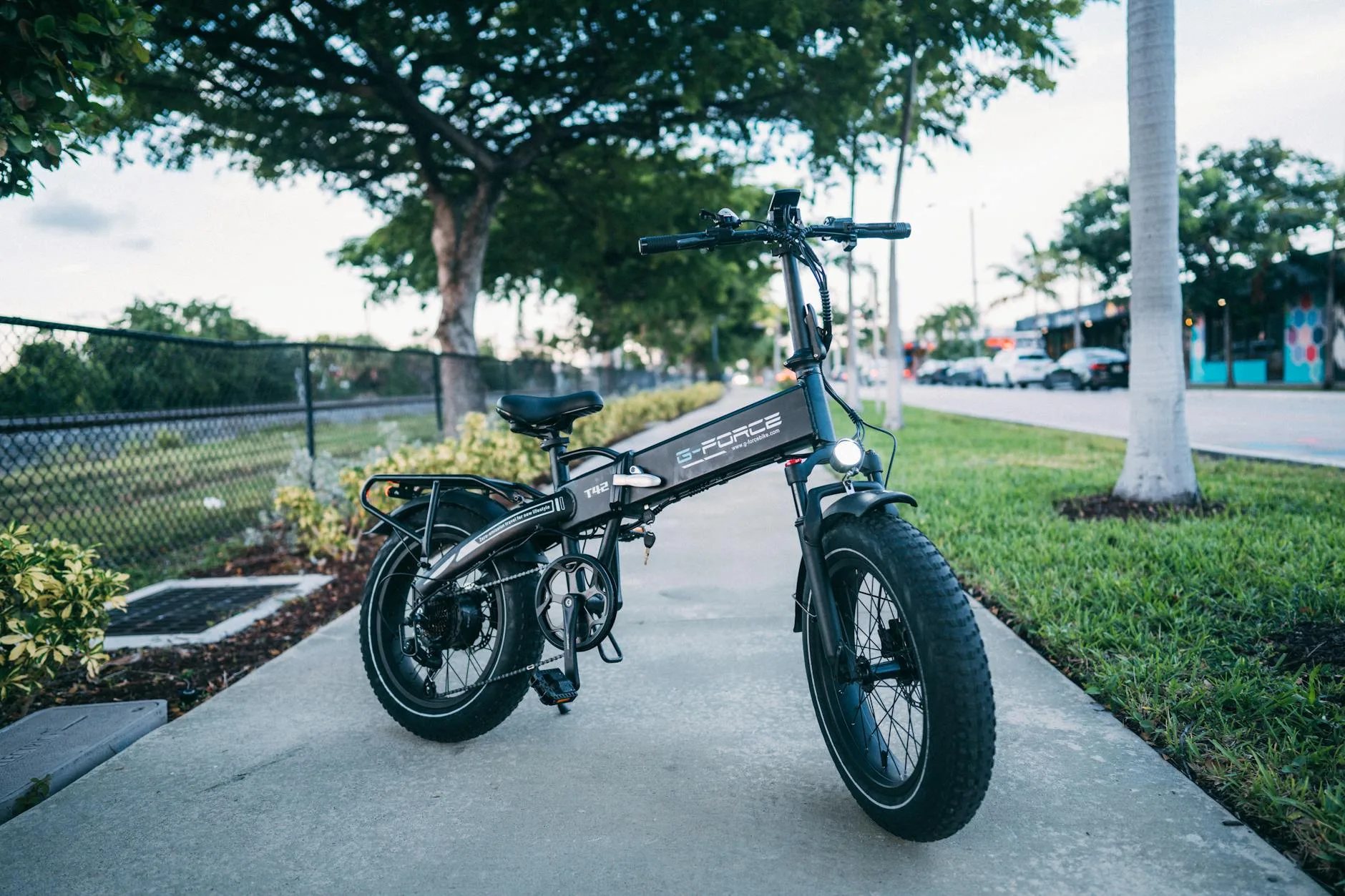
If you’re choosing a folding e-bike, sizing works differently again — most folding frames are one-size with an adjustable seatpost and stem, so your concern shifts to whether the adjustment range covers your measurements. Check the maximum and minimum saddle height in the specs, not the frame size label.
How to Use a Manufacturer’s Size Chart (Without Getting Confused)
Every decent e-bike brand publishes a size chart. The problem is they’re all slightly different, and none of them explain which number actually matters.
Here’s how to read one properly:
Step 1: Find your inseam measurement on their chart first, not your height. If they only list height ranges (some budget brands do this), use that, but know it’s less precise.
Step 2: If you fall between two sizes, consider your riding style. Prefer a more upright, comfortable position? Go larger. Want something nimbler and sportier? Go smaller. For commuting and general riding, erring slightly larger is usually the better call because you can always lower the saddle, but you can’t lengthen a frame that’s too compact.
Step 3: Check the standover height specifically. This is the measurement from the ground to the top tube. Subtract this from your inseam — you want at least 2 cm of clearance, preferably 3-5 cm. On an e-bike, this matters more than on a regular bike because you may need to put your feet down quickly when the extra weight shifts unexpectedly at low speeds.
Step 4: Look at the reach and stack measurements if they’re published. Reach is the horizontal distance from the bottom bracket to the head tube — it determines how stretched out you’ll feel. Stack is the vertical distance — it affects how upright your riding position is. Higher stack and shorter reach = more comfortable upright position. Lower stack and longer reach = sportier, faster position.
Brands That Get Sizing Right
Some brands make this easier than others. Cube, Canyon, and Giant publish detailed geometry tables with reach, stack, and standover for every size. Ribble’s online fit calculator is solid. On the budget end, brands like Eskute and Engwe tend to run slightly small — if you’re on the boundary, go up.

The E-Bike-Specific Sizing Quirks
Standard bike sizing advice gets you close, but e-bikes have a few peculiarities worth knowing about.
Battery and Motor Weight Distribution
A mid-drive motor keeps weight central and low, which feels more natural and makes the bike handle closer to its non-electric equivalent. Hub motors shift weight to the front or rear wheel, which can make smaller frames feel twitchy at speed and larger frames feel sluggish to steer. If you’re looking at a rear hub motor bike, don’t size down — the rear-heavy weight distribution already makes the front end lighter than you’d expect.
Integrated Batteries Change the Frame
Bikes with batteries built into the downtube (Bosch PowerTube, Shimano, most modern setups) have chunkier frames than their dimension charts might suggest. The downtube is wider, which can affect knee clearance on smaller frame sizes. If you’ve got longer legs relative to your height and you’re looking at a small frame with an integrated battery, try to test ride or at least check user reviews mentioning knee clearance. For wider safety context, Cycling UK maintenance guidance is a useful reference.
Heavier Means Harder to Adjust
On a 10 kg road bike, you can compensate for a slightly wrong frame with stem length, saddle position, and handlebar changes. On a 25 kg e-bike, the stakes are higher because adjustability has limits and the consequences of poor fit are amplified over distance. Getting the frame right first time saves you the hassle and cost of swapping stems and seatposts trying to fix what should have been the correct size from the start.
What If You Can’t Test Ride?
Buying online is the reality for most e-bike purchases in the UK, especially if you’re looking at direct-to-consumer brands that offer better value. Halfords has a reasonable range you can try in store, and some Decathlon locations keep popular models on the floor. But if your chosen bike only exists online, here’s how to make it work.
Measure twice, order once. Get your inseam and height measured properly — not a rough guess. Use a wall, a book, and a tape measure. Then cross-reference with the brand’s chart AND independent reviews that mention the reviewer’s height and which size they chose.
Check the return policy. Most online e-bike sellers offer 14-30 day returns. Some — like Ribble, Canyon, and Decathlon — are genuinely no-hassle about sizing exchanges. Others charge restocking fees or make you pay return shipping on a 25 kg box, which can cost £50-80. Know before you buy.
Use the bike fit tools available. Canyon’s PPS (Perfect Positioning System) is free to use even if you don’t buy from them — it gives you a recommended stack and reach based on your measurements. Competitive Cyclist’s fit calculator is another option. Run your numbers through these and compare the output to the geometry chart of whatever bike you’re actually buying.
Ask the brand directly. Email or live chat with your exact measurements. Most reputable brands respond within a day and will recommend a specific size. They’d rather help you pick right than process a return. Budget brands are less responsive here, but it’s worth trying.
Adjustments You Can Make After Buying
Even with the right frame, some fine-tuning is normal. Here’s what’s adjustable and what isn’t:
- Saddle height — the most impactful adjustment. Your leg should be almost fully extended (slight bend at the knee) at the bottom of the pedal stroke. Too low and your knees take punishment; too high and your hips rock side to side
- Saddle fore/aft position — slides the saddle forward or back on its rails. Affects knee-over-pedal position. Small changes here make a noticeable difference
- Handlebar height — on bikes with adjustable stems, you can raise or lower the bars by 3-5 cm typically. Some e-bikes have adjustable-angle stems that give even more range
- Stem length — swapping the stem (the bit connecting handlebars to the steerer tube) changes your reach. A shorter stem brings the bars closer; longer pushes them away. Costs about £15-30 for a decent alloy stem
- Handlebar width — less commonly adjusted, but if the bars feel too wide (common on e-MTBs for shorter riders), they can be cut down
What you can’t fix with adjustments: a frame that’s fundamentally too big or too small. If your standover clearance is zero, no seatpost swap fixes that. If you’re maxing out the seatpost extension and still feel cramped, the frame’s too small. These are return-it situations.
Common Sizing Mistakes (and How to Avoid Them)
“I’ll size up for comfort.” Bigger doesn’t mean more comfortable — it means more stretched out. If you want a comfortable position, get the right size and look for bikes with shorter reach geometry and higher handlebars. Touring-style e-bikes are designed for exactly this.
“My old bike was a Large, so this one should be too.” Sizing isn’t standardised across brands or even across models within the same brand. A Large in Cube is different from a Large in Specialized, which is different from a Large in Eskute. Always check the actual measurements.
“I’m between sizes, I’ll just go with whatever’s in stock.” Understandable — waiting weeks for a restock is painful. But riding the wrong size for the next five years is worse. Ask the retailer about delivery timescales for your correct size before settling.
“Frame size doesn’t matter much for city riding.” It matters less if you’re only doing 2 km to the station, sure. But most e-bike owners end up riding further than they initially planned — that’s the whole point of having a motor assist. What feels fine for a 10-minute ride becomes a genuine problem at 45 minutes.
“I’ll get the same size as my partner/friend.” Unless you’re identical in height and leg length, this is a coin flip. Measure yourself independently.
Sizing for Specific E-Bike Types
City/Commuter E-Bikes
These tend to have relaxed geometry with shorter reach and higher stack. Sizing is usually more forgiving — if you’re between a Medium and Large, either will likely work with saddle adjustment. Popular models like the Cube Town Sport Hybrid or VanMoof have good size ranges. Budget options from Eskute and DYU tend to run small — check their geometry tables carefully.
E-Mountain Bikes
Sizing is more critical here because you need confident handling at speed on rough terrain. Modern e-MTBs have long reach and slack head angles, which means sizing up gives you stability but can feel sluggish in tight turns. Most e-MTB reviewers recommend the smaller size if you’re between two. The Bosch and Shimano EP8 equipped bikes from brands like Trek, Specialized, and Giant have well-documented sizing.
E-Road and Gravel Bikes
These follow traditional road bike sizing most closely. The rider position is more aggressive (lower and more stretched) so getting the reach right matters more than on a commuter. Ribble and Canyon both offer solid online fit tools for their e-road ranges. Expect to pay attention to stack and reach numbers rather than just S/M/L labels.
Cargo E-Bikes
A different beast entirely. Most cargo bikes come in one or two sizes with extensive seat and handlebar adjustment. The Tern GSD and Riese & Müller Packster both accommodate riders from about 150 cm to 195 cm through adjustable components. Your main concern is whether you can comfortably reach the ground when stopped, given the higher overall weight (often 30-40 kg before cargo).
The Test Ride Checklist
If you do get the chance to ride before buying — at Halfords, a local dealer, or a demo day — run through these checks:
- Standover: straddle the bike with both feet flat. You should have clear clearance above the top tube
- Seated reach: sit on the saddle with hands on the grips. Your arms should have a gentle bend at the elbow, not locked straight or scrunched up
- Pedalling: ride in a straight line. At the bottom of the pedal stroke, your knee should be slightly bent — not fully locked, not deeply bent
- Low-speed control: weave slowly through a car park. The bike should feel manageable, not like steering a barge. Weight distribution matters here — if the front or rear feels overly heavy, that won’t improve with more riding
- Stop and start: pull up to a kerb and stop, then start again. Can you get a foot down confidently? Can you push off without wobbling? With 25 kg of bike, this needs to feel natural
- Shoulder check: turn your head to look behind you while riding. If this pulls you off line, the reach might be too long for your torso
Frequently Asked Questions
What e-bike frame size do I need for my height? For riders 152-165 cm, look at Small frames (38-44 cm). 165-175 cm typically fits Medium (44-50 cm). 175-185 cm suits Large (50-56 cm). 185-195 cm needs XL (56-60 cm). Always check the specific brand’s size chart and use your inseam measurement for a more accurate fit.
How do I measure my inseam for an e-bike? Stand against a wall in socks with feet 15 cm apart. Place a hardback book between your legs, spine up, pressed against your crotch. Measure from the top of the book spine to the floor in centimetres. This simulates sitting on a saddle and gives you the most accurate reference for frame sizing.
What if I’m between two e-bike frame sizes? Consider your riding style: for upright, comfortable commuting, size up. For sportier, nimbler handling, size down. For most casual and commuter riders, the larger size is the safer bet because you can lower the saddle, but you can’t stretch a frame that’s too short.
Are e-bike sizes the same as regular bike sizes? Not always. E-bikes may have slightly different geometry due to integrated batteries, motor placement, and reinforced tubing. Even the same brand may size their e-bike model differently from the acoustic equivalent. Always check the specific e-bike’s geometry chart rather than assuming your usual size carries over.
Can I adjust an e-bike frame that doesn’t fit perfectly? You can adjust saddle height, saddle position, stem length, and handlebar angle to fine-tune the fit. However, if the frame is fundamentally too big or too small — no standover clearance, or seatpost maxed out and still cramped — adjustments won’t fix it. The frame size needs to be in the right ballpark first.
Picking the Right Size: The Short Version
Measure your inside leg. Check it against the brand’s size chart. Verify the standover height gives you at least 2-3 cm clearance. If you’re between sizes, think about how you ride — comfort favours slightly larger, agility favours slightly smaller. For most riders buying their first e-bike, getting the frame right is the single best thing you can do to make sure the bike actually gets used rather than gathering dust in the garage.
Don’t overthink it, but don’t skip it either. Five minutes with a tape measure and a size chart saves months of regret — or worse, an expensive return. E-bikes are brilliant when they fit. When they don’t, they’re just heavy bikes you resent riding.