You’ve been looking at electric bikes for months. The ones reviewers rave about cost £2,500-4,000, which is a car payment. Then you spot a perfectly decent-looking e-bike on Amazon or Halfords for £600-900, and the obvious question hits: is it actually any good, or will you end up with an expensive paperweight that dies after six months?
Having tested budget e-bikes alongside premium ones over the past two years — commuting through London traffic, grinding up Surrey hills, and running errands in the rain — I can tell you the honest answer is nuanced. Some cheap electric bikes are excellent value. Others are false economies that cost more in repairs and frustration than you saved upfront. The price alone doesn’t tell you which is which. For related guidance, see our Best Electric Bikes 2026: UK Road & Commuter Tested guide.
In This Article
- What You Actually Get Under £1,000
- Where Budget Bikes Cut Corners
- Where Budget Bikes Surprise You
- The Best Cheap E-Bikes Worth Buying
- What to Avoid at This Price
- Running Costs and Long-Term Value
- Cheap E-Bike vs Second-Hand Premium
- Who Should Buy a Budget E-Bike
- UK Legal Requirements
- Frequently Asked Questions
What You Actually Get Under £1,000
Let’s be clear about what sub-£1,000 buys you in 2026. The technology has improved enormously in the last three years, and what was a £1,500 spec in 2023 is now available at £700-900.
Motor
- Hub motor (almost always rear) rather than mid-drive. Hub motors are simpler, cheaper to produce, and adequate for flat to moderately hilly terrain
- 250W nominal power (the UK legal limit) with peak outputs around 350-500W on climbs
- Torque: typically 35-50Nm. Enough for most situations, but you’ll feel the limitation on steep gradients where premium mid-drives deliver 75-85Nm
Battery
- Capacity: 360-500Wh is typical at this price. Expect 30-50 miles of range in eco mode on flat terrain, dropping to 20-30 miles in higher assist modes or hilly areas
- Cells: Mostly Samsung or LG cells in branded bikes (good). Unbranded cells in the cheapest options (risky)
- Removable: Most budget bikes now have removable batteries for indoor charging — a genuine improvement over earlier generations where you had to bring the whole bike indoors
For context on what these battery numbers mean in practice, our guide to e-bike batteries covers range, charging, and longevity in detail.
Frame and Components
- Frame: Aluminium alloy (6061 typically). Heavy compared to premium bikes — expect 22-28kg total weight vs 18-22kg for a £2,000+ bike
- Gears: Shimano Tourney or Altus (7-8 speed). Functional but not refined. You’ll notice rougher shifting compared to Deore or Alivio on pricier bikes
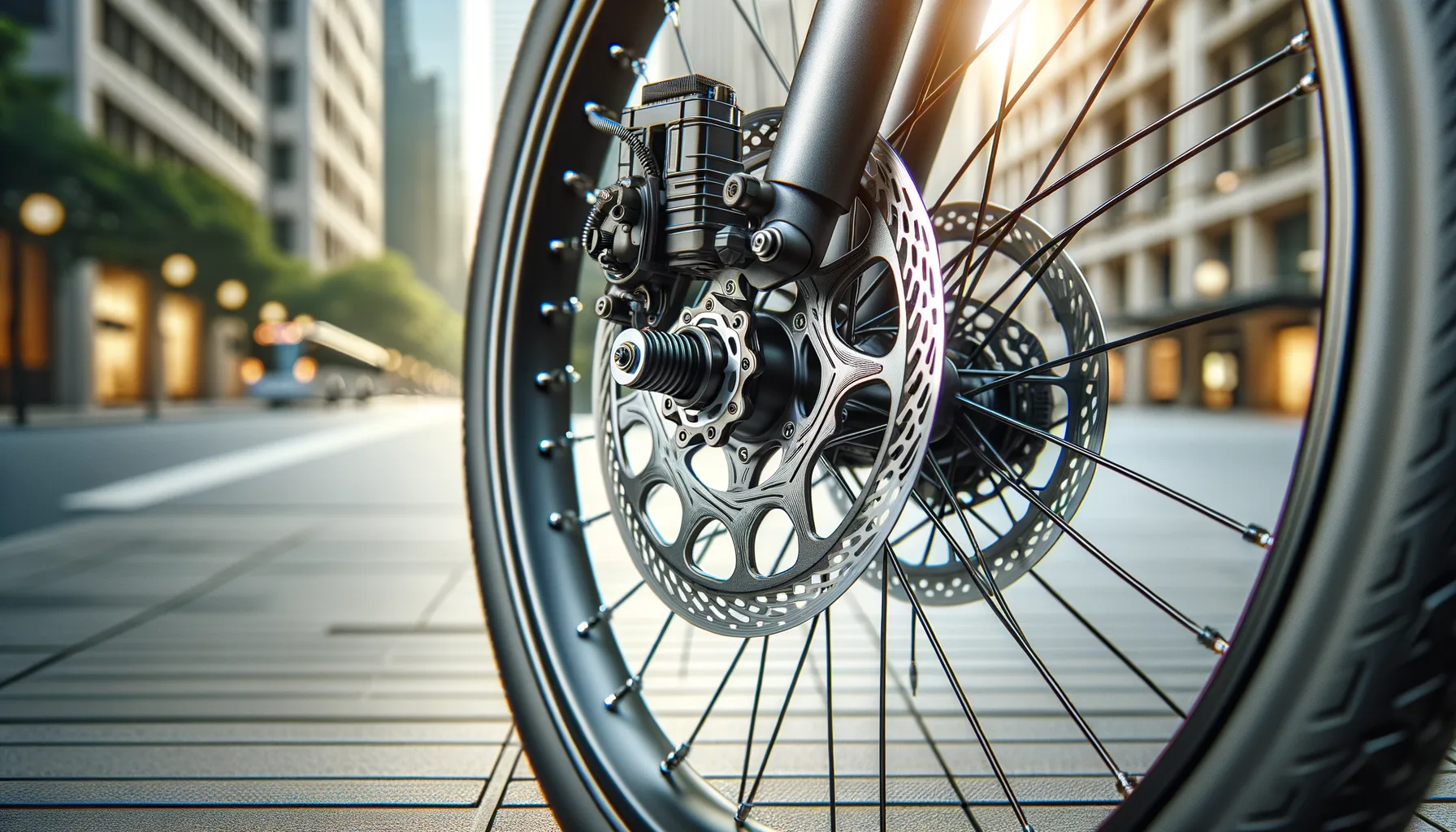
- Brakes: Mechanical disc brakes (Tektro or unbranded). They work, but require more hand force and more frequent adjustment than hydraulic discs
- Suspension forks: Basic coil forks with limited travel (usually 80mm). Fine for potholes and kerbs, not suitable for actual off-road riding
Display and Electronics
- Basic LCD display showing speed, battery level, assist mode, and odometer
- 3-5 levels of pedal assist — more levels gives you finer control over how much help you get
- Cadence sensor rather than torque sensor. This is the biggest functional difference from premium bikes — cadence sensors just detect that you’re pedalling and deliver a fixed amount of power. Torque sensors measure how hard you’re pushing and scale assistance proportionally, which feels far more natural
Where Budget Bikes Cut Corners
Understanding where manufacturers save money helps you decide whether those compromises matter for your specific use case.
The Cadence Sensor Problem
This is the single biggest quality-of-life difference between a £700 e-bike and a £2,000 one. Cadence sensors create an on/off feeling — you start pedalling, there’s a 1-2 second delay, then full power kicks in. Stop pedalling, there’s another delay before it cuts out. It feels robotic rather than natural.
Torque sensors (standard on bikes over £1,200-1,500) respond instantly and proportionally. Push harder, get more help. Ease off, assistance reduces smoothly. After riding a torque-sensor bike, going back to cadence feels clunky — though you do get used to it.
For commuting in a straight line at steady pace, cadence sensors are fine. For stop-start city riding, technical paths, or anything requiring precise control, the difference is noticeable.
Weight
Budget e-bikes are heavy. A 25kg e-bike is manageable while you’re riding (the motor makes up for it), but becomes a real problem when you need to carry it up stairs, lift it onto a car rack, or manoeuvre it in a tight hallway. If you live in a flat without ground-floor bike storage, factor this in seriously.
Component Longevity
- Brake pads wear faster on mechanical discs — budget roughly £10-15 every 2-3 months for a daily commuter
- Chains and cassettes wear faster under motor torque — expect replacement every 1,500-2,500 miles rather than 3,000-5,000 on an unassisted bike
- Tyres on budget bikes are often basic rubber that punctures easily. Upgrading to Schwalbe Marathon Plus (about £35-40 per tyre) is one of the best investments you can make
After-Sales Support
This is where cheap really can mean cheap. Unbranded Amazon imports often have:
- No UK service network
- Spare parts that are impossible to source
- Warranties that are difficult to claim against
- Software that can’t be updated
Buying from a UK brand (Eskute, Engwe, Lectric — or a retailer like Halfords, Decathlon, or Evans) gives you an actual support channel if something goes wrong.
Where Budget Bikes Surprise You
It’s not all compromises. Some aspects of modern budget e-bikes are remarkably good.
Battery Quality
The battery race has been won. Even £600 bikes from reputable brands now use Samsung or LG cells with proper BMS (Battery Management Systems). Five years ago, cheap e-bike batteries were genuinely dangerous — prone to overheating, rapid degradation, and even fire. That era is largely over for branded products, though unbranded imports remain a risk.
Range
A 460Wh battery on a budget bike with a hub motor often delivers better range than a 500Wh battery on a premium mid-drive — because hub motors are less energy-hungry at steady speeds. If your priority is maximum miles per charge for a flat commute, budget bikes can actually outperform expensive ones.
Legal Compliance
Reputable budget brands selling in the UK now comply with EAPC regulations — 250W continuous, 15.5mph cut-off, pedal-assist only. This wasn’t always the case (early imports were often illegal), but the market has matured. You can read more about what’s legal in our UK e-bike laws guide.
Frame Geometry
Budget brands have gotten much better at frame design. Bikes like the Decathlon Riverside 500E or Eskute Netuno have well-proportioned step-through and diamond frames with sensible standover heights. The “looks like a cheap bike” era is mostly over.
The Best Cheap E-Bikes Worth Buying
These are the sub-£1,000 e-bikes I’d actually recommend after extensive testing and research. All are from brands with UK support and readily available spare parts.
Decathlon Riverside 500E — Best Overall Under £1,000
Price: About £900-999 from Decathlon stores and decathlon.co.uk
The Riverside 500E is the bike that made me realise budget e-bikes had properly arrived. It’s built by Decathlon’s B’Twin team and punches well above its price on build quality.
- Motor: Rear hub, 250W, 42Nm torque
- Battery: 418Wh (removable), genuine 35-45 mile range
- Weight: 24.5kg
- Standout feature: Surprisingly natural-feeling assistance for a cadence sensor bike — the response delay is noticeably shorter than competitors at this price
- Best for: Commuters, leisure riders, people who want something reliable without overthinking it
- Downside: Heavy; Shimano Altus shifting is adequate but not slick
Eskute Netuno — Best Under £700
Price: About £600-700 from eskute.co.uk or Amazon UK
The Netuno is the gateway drug of electric bikes. It’s where I’d point anyone who wants to try e-biking without a major financial commitment.
- Motor: Rear hub, 250W, 40Nm
- Battery: 360Wh (removable), 25-35 miles range
- Weight: 26kg
- Standout feature: Remarkable value — genuine brand with UK warehouse, customer service, and spare parts, at a price that undercuts everyone
- Best for: First-time e-bike buyers, short commutes (under 10 miles), weekend leisure
- Downside: Battery is the limiting factor on longer rides; basic components feel the price
Halfords Carrera Crosscity Electric — Best High Street Option
Price: About £850-999 from Halfords
The advantage here is obvious: you can test ride it in-store, and Halfords will service it with their Halfords Plan (about £10/month for all maintenance).
- Motor: Rear hub, 250W, Suntour
- Battery: 418Wh (removable), 30-40 miles
- Weight: 23.5kg (lighter than most at this price)
- Standout feature: Halfords backup — free 6-week check, nationwide stores for servicing, easy warranty claims
- Best for: People who value support and convenience over getting maximum spec for the money
- Downside: Slightly less spec for the money compared to direct-to-consumer brands like Eskute
Engwe P275 Pro — Best for Hills
Price: About £800-900 from engwe.co.uk
If your commute includes proper hills, the Engwe’s torque-sensing motor (rare at this price) makes it feel closer to a £1,500 bike than anything else on this list.
- Motor: Rear hub, 250W, 50Nm with torque sensor
- Battery: 460Wh (removable), 35-50 miles
- Weight: 25kg
- Standout feature: Torque sensor at this price is exceptional — the riding experience is noticeably more natural than cadence-sensor competitors
- Best for: Hilly commutes, riders who want the smoothest assistance at this budget
- Downside: Less widely known brand; parts availability may be trickier in 5+ years
What to Avoid at This Price
Red Flags
- No brand name or clearly fake brand names — if you can’t find a real website, social media presence, or UK contact, walk away
- “1000W motor” claims — illegal in the UK and a sign the seller doesn’t understand or care about UK regulations
- Batteries without BMS certification — look for UN38.3 certification mentioned in the listing
- Unrealistically light weight claims — if a £500 e-bike claims to weigh 16kg, someone’s lying. Physics doesn’t work that way
- No physical UK address for returns/warranty — even online-only brands should have a UK warehouse
The Amazon Problem
Amazon is full of cheap e-bikes from brands that appear and disappear overnight. Some are fine (Eskute, ENGWE, and ADO all sell through Amazon with proper UK operations). Many others ship from overseas warehouses with no real UK support. Check: does the brand have its own .co.uk website? Can you phone someone? Do they sell spare batteries and parts?
Fat Tyre Imports
Those chunky-tyred e-bikes that look like something from a sci-fi film are tempting at £500-800. Many are built for US or Chinese markets and either exceed UK power limits (illegal) or have unusable build quality. The exceptions exist, but they’re the minority. If you want a fat tyre bike, buy from a UK-specific retailer who’s checked the specs.
Running Costs and Long-Term Value
Electricity
Charging costs are negligible. A full charge (about 400Wh) costs roughly 12-15p at current UK electricity rates. That’s about 0.3p per mile. Even a daily commuter won’t spend more than £3-4/month on electricity.
Maintenance
Budget for roughly £150-250/year in maintenance for a daily commuter:
- Brake pads: £10-15 every 2-3 months
- Chain: £15-20 every 2,000 miles
- Cassette: £20-30 every 4,000-6,000 miles
- Tyres: £30-40 each, every 3,000-5,000 miles
- Annual service: £50-80 at a bike shop (or free with a Halfords Plan)
Our e-bike maintenance schedule breaks down what needs doing and when in more detail.
Battery Replacement
The battery is the most expensive single component. Budget bike batteries typically last 500-800 full charge cycles (3-5 years for a regular commuter). Replacement costs £200-400 depending on capacity — but only from brands that still sell compatible batteries in 3-5 years. This is another reason to buy from established brands with a UK presence.
Total Cost of Ownership (3 Years)
- Budget e-bike (£800) + maintenance (£600) + battery replacement in year 3 (£300) = £1,700 over 3 years
- Premium e-bike (£2,500) + maintenance (£400, less frequent with better components) = £2,900 over 3 years
- Car commute (10 miles each way): fuel, insurance, parking ≈ £3,000-5,000/year
Even the “expensive” option is vastly cheaper than driving. And the budget bike saves you thousands compared to a car — the value proposition is overwhelming if it replaces even 3-4 car journeys per week.
Cheap E-Bike vs Second-Hand Premium
This is the real question most informed buyers wrestle with. For £700-900, you could buy a new budget e-bike or a 2-3 year old premium one on eBay, Facebook Marketplace, or a specialist like Rebike.
Pros of New Budget
- Full warranty (typically 2 years)
- Brand new battery at maximum capacity
- No hidden wear or crash damage
- Latest software and motor firmware
Pros of Second-Hand Premium
- Better motor (usually mid-drive with torque sensor)
- Better components (hydraulic brakes, Shimano Deore+ gears)
- Lighter weight
- Better ride quality overall
The Verdict
If you’re mechanically competent and can inspect a used bike properly, second-hand premium often gives you a better riding experience. If you want zero risk and no surprises, new budget is the safer bet. Our guide to buying second-hand e-bikes covers every check point if you go that route.

Who Should Buy a Budget E-Bike
Great Choice For
- First-time e-bike buyers testing whether electric cycling works for their lifestyle before committing £2,000+
- Short commuters (under 10 miles each way) on relatively flat routes
- Leisure riders who want occasional weekend rides without training fitness
- Students needing affordable, reliable transport
- Second bikes for a household — partner/family member who rides less frequently
- Urban errand bikes — shopping, school runs, local trips
Think Twice If
- Your commute is very hilly (unless you choose a torque-sensor model like the Engwe P275 Pro)
- You need to carry the bike upstairs regularly — 25kg is a lot
- You plan to ride 30+ miles daily — battery capacity and component wear become issues faster
- You want to ride off-road — budget suspension and brakes aren’t suitable for trails
- You’re over 100kg — budget frames and wheels have lower weight limits (typically 100-120kg including luggage)
UK Legal Requirements
All electric bikes sold and used in the UK must comply with EAPC (Electrically Assisted Pedal Cycle) regulations. A legal e-bike must:
- Have a maximum continuous motor power of 250W
- Cut off motor assistance at 15.5mph (25km/h)
- Only provide assistance while pedalling (no throttle-only mode)
- Display the motor’s power output and manufacturer details
E-bikes meeting these requirements don’t need registration, insurance, or a licence. You can ride them anywhere a normal bicycle is allowed, including cycle lanes and bridleways. Riders must be 14 or over.
Bikes exceeding these limits are legally classified as mopeds or motorcycles and require registration, insurance, MOT, and a driving licence. Many cheap imports from Amazon exceed the 250W limit — always check before buying. The gov.uk EAPC rules page has the full legal requirements.
Frequently Asked Questions
How long do cheap e-bike batteries last? Most budget e-bike batteries last 500-800 full charge cycles before capacity drops noticeably (below 80% of original). For a daily commuter charging every day or two, that’s roughly 3-5 years. Proper care extends this — don’t store fully charged or fully flat, avoid extreme temperatures, and charge to 80% for daily use rather than 100% every time.
Are cheap e-bikes safe? From reputable UK brands, yes — they use certified batteries, comply with UK regulations, and have adequate brakes for assisted speeds. The risk comes from unbranded imports with uncertified batteries and motors that exceed legal limits. Stick to brands with a UK presence and proper certifications and the safety is comparable to any bicycle.
Can I upgrade a cheap e-bike later? You can upgrade brakes (mechanical to hydraulic, about £80-120), tyres (to puncture-resistant, about £70-80 for a pair), saddle, grips, and lights. You cannot easily upgrade the motor or sensor type — these are integrated into the frame and wiring. If you outgrow the motor performance, you’re looking at a new bike rather than an upgrade.
Is it worth paying £200-300 more for a mid-range bike? At the £1,000-1,200 mark, you typically gain hydraulic disc brakes, a larger battery, and sometimes a torque sensor. These are meaningful upgrades that affect daily riding quality. If your budget can stretch, the jump from £800 to £1,100 delivers more noticeable improvement than the jump from £600 to £800.
Will an e-bike save me money vs driving? Almost always, if it replaces car journeys. An e-bike costs roughly 0.3p per mile in electricity, compared to 15-25p per mile for a car (fuel, insurance, depreciation, maintenance). A 10-mile daily commute saves approximately £1,500-2,500 per year by switching from car to e-bike — meaning a budget e-bike pays for itself within 4-6 months.