The best place to keep a folding e-bike in a small flat is not the cleverest-looking corner; it is the spot you can use every day without blocking the door, dragging road grit through the room, or charging a battery where you would need to escape in a fire. Good folding e-bike storage ideas for a small flat start with boring measurements and end with a setup you will actually stick to after a wet commute.
In This Article
- Start With the Route In and Out
- Hallway, Cupboard or Living Room: Where the Bike Actually Fits
- Wall Mounts, Floor Stands and Vertical Storage
- Battery and Charging Safety in a Flat
- Keeping Dirt, Water and Chain Marks Under Control
- Security, Insurance and Shared-Building Rules
- What I Would Buy for a Small-Flat Folding E-Bike Setup
- Frequently Asked Questions
Start With the Route In and Out
A folding e-bike only works in a flat if the whole route works: front door, lift or stairs, hallway turn, storage spot, charging socket, and the route back out again. A folded bike that technically fits behind the sofa is still annoying if you have to lift 18kg over a shoe rack twice a day.
Measure the folded bike, not the marketing photo
Before buying storage kit, measure the bike in the folded position you actually use. Include pedals, bars, mudguards, rack, lights and any bag mount. A Brompton-style fold is compact, but an electric model is still heavy. Brompton lists the Electric C Line from 17.3kg with battery and 13.8kg without it. Tern’s Vektron is bigger but more stable when folded, with some UK retailer listings giving folded dimensions around 41 x 86 x 61cm.
If you are still choosing the bike, start with eBikeGeek’s guide to how to choose a folding e-bike and the best folding electric bikes for UK commuters. Storage should influence the bike choice, not be solved later with wishful thinking and a wall hook.
The daily-use test
Put a cardboard box, laundry basket or suitcase in the proposed storage space for two days. If you keep moving it to make tea, open the front door or reach a cupboard, the folded e-bike will become a household argument.
The storage spot needs to pass five checks:
- Clear exit: it must not narrow your route to the front door.
- Stable parking: the folded bike should not topple if brushed by a bag or coat.
- Socket logic: charging should not mean trailing a cable across a walkway.
- Wet-weather tolerance: the floor needs to cope with drips and grit.
- Lift effort: you should not need a deadlift warm-up to store it.
My rule is simple: if the bike is used most weekdays, it belongs near the door. If it is used at weekends, it can live deeper in the flat.
Hallway, Cupboard or Living Room: Where the Bike Actually Fits
Most small flats have three realistic storage zones: hallway, utility/cupboard space, or a living-room corner. Bedrooms can work, but only if the bike is clean and you do not mind turning a sleeping space into a bike shed with nicer cushions.
Hallway storage
The hallway is convenient but risky. It is often the narrowest part of a UK flat and may be part of your escape route. If the folded bike blocks the door, sits beside the only stairs, or forces you to step over a charger cable, move it.
Hallway storage works best when the bike sits flat against a side wall, under a coat rail, or in a recessed area that does not reduce the walkway. A clear plastic floor runner costs about £8-£20 from Amazon UK, Dunelm or DIY shops and is easier to clean than carpet. Add a small boot tray, around £6-£15, under the wheels if you ride through winter spray.
Cupboard storage
A cupboard is the neatest answer if the folded bike fits without crushing cables or controls. Remove one low shelf, add a rubber mat, and keep the charger in a separate basket so it does not get buried under helmets, locks and random Christmas decorations.
Cupboards are poor charging spots if they are packed with coats, paper bags or cleaning products. The UK government battery safety advice for e-cycle users says not to charge where a fire would stop you safely leaving your home. That is the test, not whether the bike looks tidy.
Living-room storage
Living-room storage sounds like defeat until you accept that some flats do not have spare hallway depth. A folded e-bike can sit beside a bookcase, under a console table, or behind an armchair if it is stable and does not mark the wall.
The trick is to make the storage deliberate. A £3 IKEA DIMPA bag can cover a Brompton-style folded bike for dust and light scuff control. A proper folding-bike cover or transport bag is usually £25-£80, depending on padding and whether it lets the bike roll while covered. I prefer a washable mat plus a simple cover over trying to pretend the bike is furniture.
Wall Mounts, Floor Stands and Vertical Storage
Wall storage can save floor space, but folding e-bikes are awkward because they are heavier than normal folders and not every wall fixing is suitable. In rented flats, it may be a non-starter unless your landlord is relaxed about drilled masonry and you can make good the wall later.
Wall hooks
Basic hooks are cheap. A Halfords-style bike wall hook is usually around £10-£15 and often rated for about 23kg. That sounds enough for many folding e-bikes, but check the actual bike weight with battery, accessories and lock. Also check the wall, because a strong hook in weak plasterboard is still a bad idea.
Hooks work better in a utility cupboard, sturdy brick hallway wall or private garage store than in a narrow flat corridor. If the bike sticks out at shoulder height, it is not space-saving. It is just a shin-height problem moved upwards.
Minimal wheel mounts
The Hornit CLUG is a tidy option for normal bikes, with the Roadie version listed at £12.99 and other sizes available for wider tyres. It works with the floor taking much of the bike’s weight, so it is less dramatic than fully hanging a bike. The catch is tyre fit and pressure. If the tyre slowly deflates, the bike can sit badly.
For a folding e-bike, I would only use this kind of mount if the folded shape and tyre position suit it. Many folders do not present a clean front-wheel-to-wall position once folded, so measure before buying.
Floor stands and trays
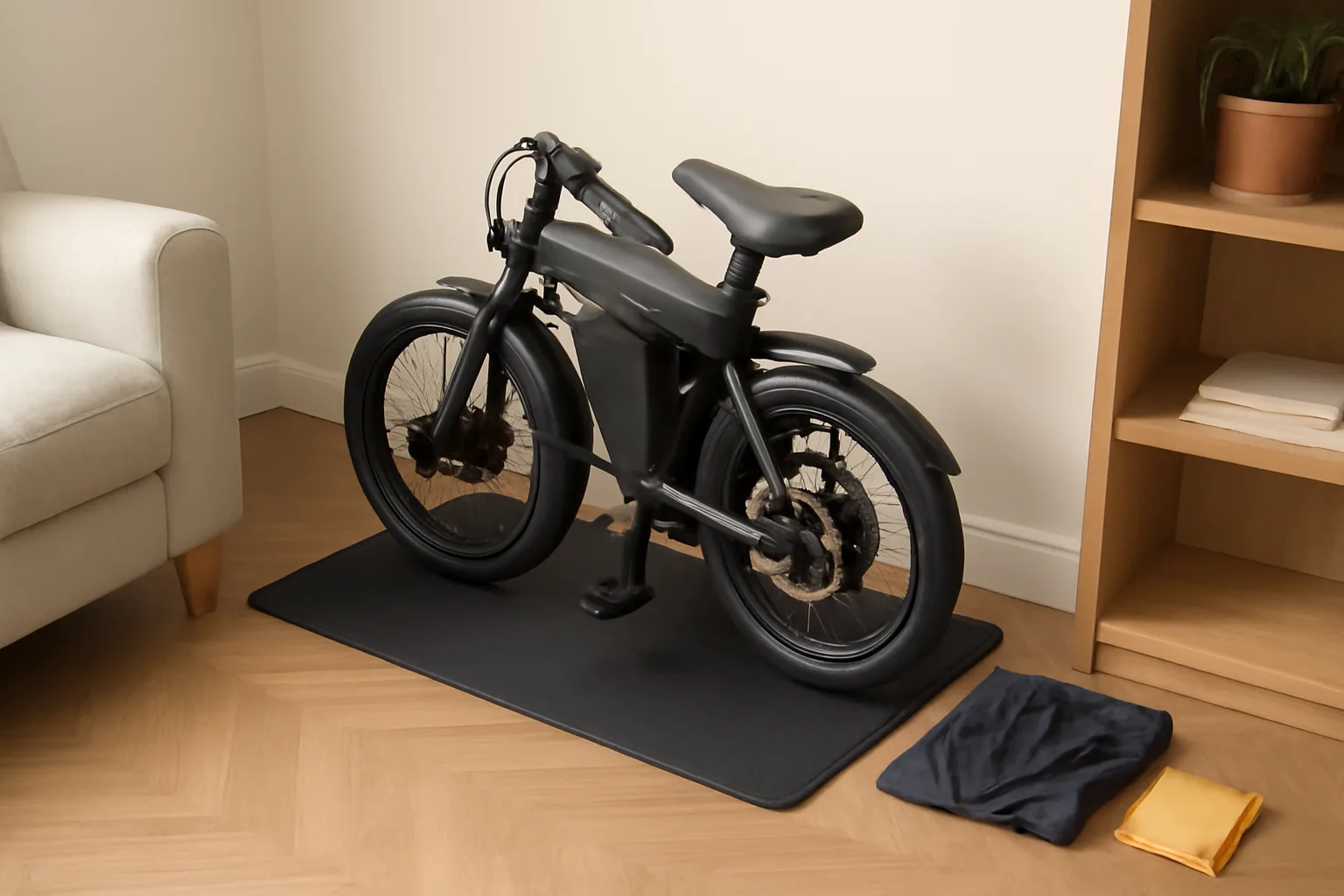
For renters, a floor solution is usually safer. A heavy-duty rubber mat, boot tray or low wheeled dolly avoids drilling and lets you move the bike for cleaning. Expect about £15-£35 for a decent rubber mat and £20-£60 for a small furniture dolly or rolling platform that can take the weight.
A vertical stand can work for non-folding e-bikes, but it is often overkill for a folder. Folding the bike and parking it on a mat is usually less faff.
Battery and Charging Safety in a Flat
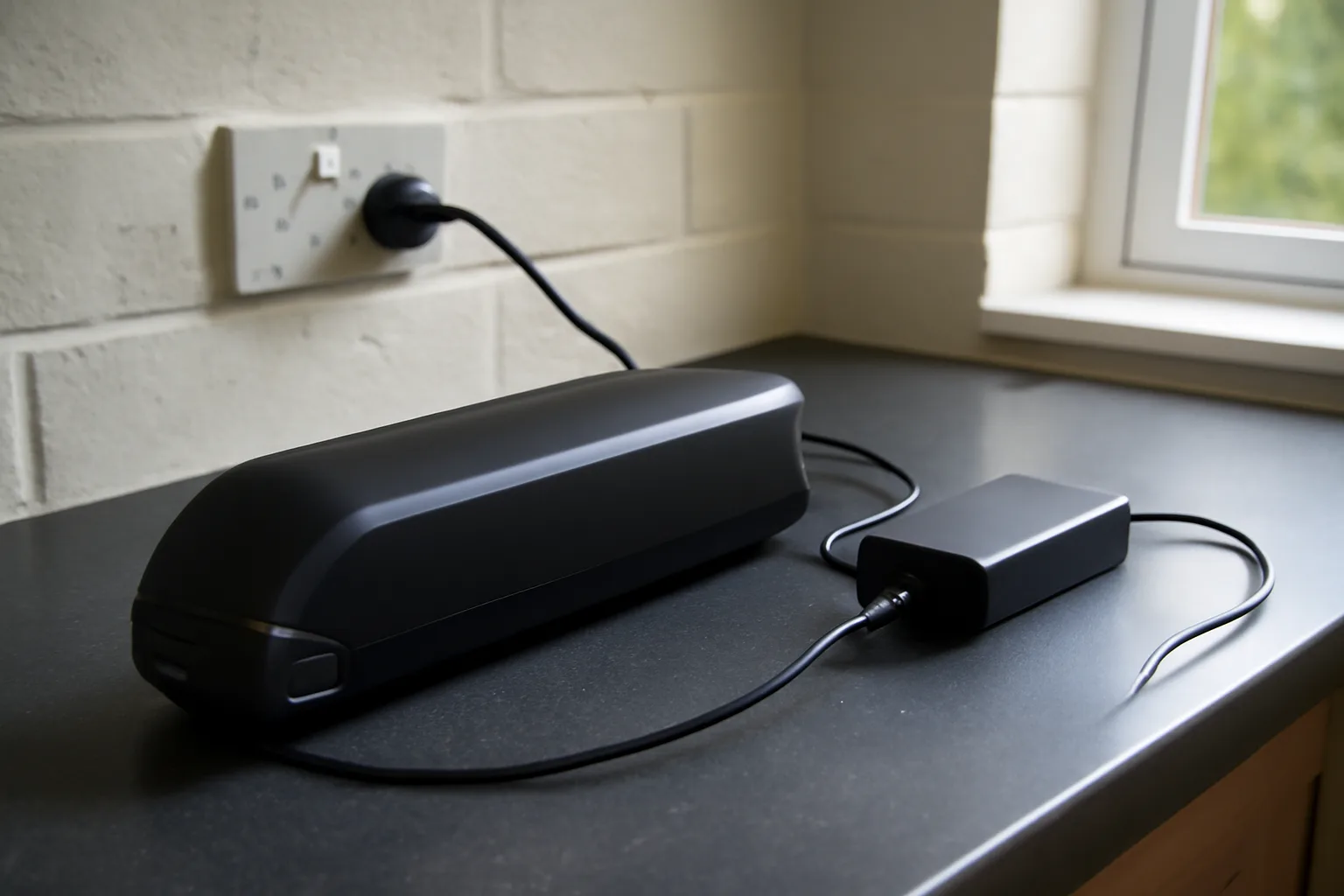
This is the section to take seriously. Small-flat storage is not just about making space. E-bike batteries are lithium-ion packs, and poor charging habits can turn a convenient commuter into a fire risk.
Where to charge
Charge where you can see the bike, unplug it when finished, and keep it away from piles of coats, paper, curtains or soft furnishings. Do not charge on your only escape route. Do not charge in a communal hallway. Do not charge overnight because it is convenient.
The National Fire Chiefs Council e-bike and e-scooter fire safety guidance advises using the manufacturer-approved charger, not covering chargers or battery packs, avoiding overcharging, and keeping charging away from combustible materials. That is especially relevant in flats, where one bad charging spot can affect more than one household.
Battery off or battery on?
If your bike has a removable battery, storing the bike folded and charging the battery separately can make the space easier to manage. It also reduces the weight if you need to lift the bike into a cupboard. A removable battery is not automatically safer, though; it still needs a sensible charging position on a hard surface with airflow.
Use the original charger. If it is lost or damaged, buy the official replacement, even if the generic version is £25 cheaper. The same logic applies to batteries. A cheap marketplace battery for a £2,000 e-bike is not a saving I would gamble on indoors.
For broader battery care, see eBikeGeek’s guides to charging an e-bike at home and e-bike battery bags. In a flat, a bag is a transport/storage accessory, not permission to charge in a risky place.
Keeping Dirt, Water and Chain Marks Under Control
The storage setup that looks neat in July can be miserable in November. UK commuting adds wet tyres, road grit, chain oil and brake dust. Deal with that at the door or it spreads through the flat.
The two-minute arrival routine
Keep a small kit near the storage spot:
- Microfibre cloth: £3-£6 for a pack, used for frame and handlebar drips.
- Old towel or washable mat: free if you already have one, £8-£20 if buying new.
- Soft brush: about £4-£8 for dried mud around tyres and hinge areas.
- Chain wipe: a rag and basic degreaser, usually £5-£10, to stop black marks on walls and hands.
Wipe the tyres before folding if your bike brings the wheels close to the frame. On some folders, the dirty side of the tyre ends up exactly where your trouser leg, sofa or hallway wall would rather it did not.
Covers and bags
A cover is useful when the bike lives in a living space, but do not put a wet bike straight into a sealed bag. You will trap moisture and encourage rust, smells and brake contamination. Let the bike drip on a mat first, then cover it once it is dry.
The cheap IKEA DIMPA option is popular because it is big, light and around £3. It is not padded, lockable or beautiful, but it keeps casual scuffs and dust down. A proper folding-bike bag at £40-£100 is better if you regularly take the bike into taxis, trains or offices.
If you carry a laptop, keep that bag separate from the dirty side of the bike. The eBikeGeek guide to carrying a laptop on an e-bike is worth reading if your storage corner also becomes your work-bag dumping ground.
Security, Insurance and Shared-Building Rules
The nice thing about a folding e-bike is that you can bring it inside. The annoying thing is that everyone else in the building may also have opinions about where it goes.
Do not rely on communal areas
Avoid storing your folding e-bike in a shared hallway, bin room or stairwell unless your building rules clearly allow it. It can block access, annoy neighbours, and create insurance problems if it is stolen or involved in an incident.
If your lease or tenancy says no bikes in communal areas, assume that includes folded e-bikes. A folder is still a bike. It just has better manners.
Locking indoors
Indoor storage reduces theft risk, but it does not remove it. If tradespeople, flatmates, cleaners or building staff can access the area, use a lock. A decent Sold Secure-rated D-lock or compact chain is often £40-£100. For higher-value bikes, I would rather have one good lock indoors than three decorative cable locks.
The eBikeGeek guide to best e-bike locks covers lock choice, and the e-bike insurance guide is useful because some insurers care where and how the bike is stored. Read the wording before assuming “kept inside” is enough.
Legal basics
Storage does not change the legal status of the bike, but small-flat owners often buy folders for trains and mixed commuting, so it is worth checking the rules. If the bike is used on UK roads, it needs to meet EAPC requirements. The eBikeGeek UK e-bike laws guide explains the speed, power and age rules without turning this storage article into a law lecture.
What I Would Buy for a Small-Flat Folding E-Bike Setup
For most small flats, I would not start with a wall mount. I would start with a mat, a cover, a charging position and one good lock. Once you have lived with the bike for a few weeks, you will know whether a drilled bracket is worth it.
Budget setup: about £25-£45
This is enough for a Brompton-style folder or compact e-bike that parks neatly near the door:
- Floor protection: boot tray or rubber mat, £8-£20.
- Simple cover: IKEA DIMPA at £3, or a basic folding-bike cover around £15-£25.
- Cleaning cloths: £3-£6.
- Cable tidy: adhesive clips or a Velcro strap, £3-£8.
That setup is not glamorous, but it solves the daily problems: wet tyres, wall marks and charger cables.
Better setup: about £80-£160
If the bike is worth £1,500-£3,500, the storage should be better than a towel by the radiator. I would buy:
- Heavy rubber mat: £20-£35.
- Quality folding-bike cover or bag: £40-£100.
- Small shelf or basket for charger and lock: £10-£25.
- Indoor lock: £40-£100 if anyone else can access the storage area.
Only add wall hardware if the daily route is still awkward. For a brick utility wall, a Halfords-style hook or hanger at roughly £10-£25 can be good value. For a living-room solution, a small wheel mount such as a CLUG can look tidier, but only if the folded bike shape suits it.
My pick
For a small rented flat, I would use a rubber mat, simple cover, charger shelf and indoor lock. No drilling, no blocked exit, no theatre. For an owned flat with a solid side wall, I would consider a low wall hook or wheel support only after testing the folded bike’s position for a fortnight.
The boring answer wins because it survives real life. You come home wet, tired and carrying shopping. The storage setup has to work on that day, not just in the tidy photo you took after installing it.
Frequently Asked Questions
Can I store a folding e-bike in a hallway? Yes, but only if it does not block your exit route, narrow a shared corridor or leave charger cables across the floor. A recessed private hallway spot is much better than the space directly behind the front door.
Is it safe to charge an e-bike battery in a flat? It can be, but charge on a hard surface, use the original charger, keep it away from combustible materials and do not charge where a fire would stop you leaving the flat.
Can I hang a folding e-bike on the wall? Sometimes. Check the bike weight, wall type and bracket load rating first. Many folding e-bikes are 17-23kg before locks and accessories, so weak plasterboard fixings are not enough.
What is the cheapest useful folding e-bike storage setup? A rubber mat, simple cover, cloths and cable tidy can cost about £25-£45 and solve most small-flat problems without drilling.
Should I remove the battery before storing the bike? Remove it if that makes the bike lighter or easier to position, but store and charge the battery safely on a hard surface with airflow. Do not bury it in a cupboard full of coats.
Can I keep a folding e-bike in a communal hallway? Usually no unless your building rules clearly allow it. Communal hallways are often escape routes, and storing a bike there may breach tenancy, lease or fire-safety rules.