Recycling an old e-bike battery in the UK usually means taking it to the bike retailer, battery brand, an approved collection point or a council recycling centre that accepts high-capacity lithium batteries. Do not put it in your household bin, do not post it casually, and do not leave a tired battery sitting fully charged in a shed for months.
In This Article
- Recycle Old E-Bike Battery UK: The Short Answer
- Check Whether the Battery Is Safe to Handle
- The Best UK Recycling Routes
- What Shops, Dealers and Councils Will Usually Ask
- What Not to Do With an Old E-Bike Battery
- Costs, Replacement Prices and When Recycling Beats Repair
- Step-by-Step: Getting It Recycled This Week
- Frequently Asked Questions
Recycle Old E-Bike Battery UK: The Short Answer
The safest route is to take the battery back to the retailer or brand that supplied the e-bike, or to a recycling point that specifically accepts e-bike lithium-ion batteries. A normal supermarket AA-battery tube is not the right place for a 400-750Wh e-bike pack. Those small bins are built for household portable batteries, not chunky packs from a Bosch, Shimano, Yamaha, Fazua, Bafang or own-brand e-bike system.
For a normal old battery that is not swollen, hot, leaking, crushed or smoking, start with three routes:
- Your original bike shop or online retailer: best if the battery came with a recognised e-bike system.
- The manufacturer or authorised dealer network: useful for Bosch, Shimano, Specialized, Giant, Cube, Trek and similar brands.
- A local recycling locator or council site: only if it clearly accepts e-bike or high-capacity lithium batteries.
Many take-back routes are free at the point of drop-off. Halfords, for example, says its battery recycling service can be used even if you have not bought anything, and its wider recycling pages list electric bike batteries among cycling items it handles. Some independent bike shops can also take batteries, but they may only accept packs from brands they sell or systems covered by their recycling scheme.
If the battery is damaged, stop. That is a different job. eBikeGeek already has a separate guide on how to dispose of a damaged e-bike battery safely, and it is the one to read if the pack is swollen, smells odd, has been dropped hard, or shows heat marks.
Check Whether the Battery Is Safe to Handle
Before you think about recycling routes, check the battery itself. The answer changes if you are dealing with a tired battery versus a risky one.
Normal old battery signs
A normal end-of-life e-bike battery is usually just weak. It charges, the bike turns on, but range has fallen badly. Maybe your old 500Wh pack now feels like a 250Wh pack. Maybe it cuts out on hills or drops from 40% to 10% in a few minutes. Annoying, yes. Emergency, usually no.
That kind of battery can often be transported to a dealer or approved recycling point with sensible care:
- Keep it cool and dry: room temperature is fine; avoid hot cars, radiators and direct sun.
- Cover exposed terminals: if the terminals are accessible, use electrical tape or the original terminal cover.
- Do not fully charge it for storage: a mid-level charge is safer for short-term storage before drop-off.
- Use the original key/rail if needed: some integrated batteries need the bike or key to remove them safely.
If you are unsure whether the battery is simply worn out, the guide to when to replace an e-bike battery explains the usual symptoms and replacement cost triggers.
Warning signs that change the plan
Do not walk into a shop with a suspect battery in a rucksack and hope someone at the till will know what to do. Call first if you notice:
- Swelling or bulging: the casing no longer sits flat or looks distorted.
- Heat: the pack feels warm when it has not been charging or used recently.
- Leaking, smell or smoke: treat this as urgent and keep away from anything flammable.
- Cracked casing: especially after a crash, water ingress or a drop onto concrete.
- Burn marks: any melted plastic, dark marks or damaged terminals.
For those cases, use professional advice. Contact the retailer, manufacturer, council waste team or local fire service guidance route before moving it. A £0 recycling drop-off is not worth turning your boot into a lithium battery problem.
Remove it from the bike properly
If the pack is removable, take it off the bike using the normal key or latch. Do not lever it out with a screwdriver. If the battery is built into the frame and you are not confident removing it, ask a bike shop to remove it. Paying a shop £20-£40 for labour is better than damaging the pack or bending the frame latch.
Keep the charger separate. Chargers and batteries are recycled through different streams, although the same shop may take both. If the charger is dead too, label it clearly and ask whether it should go with small electricals rather than the battery pack.
The Best UK Recycling Routes
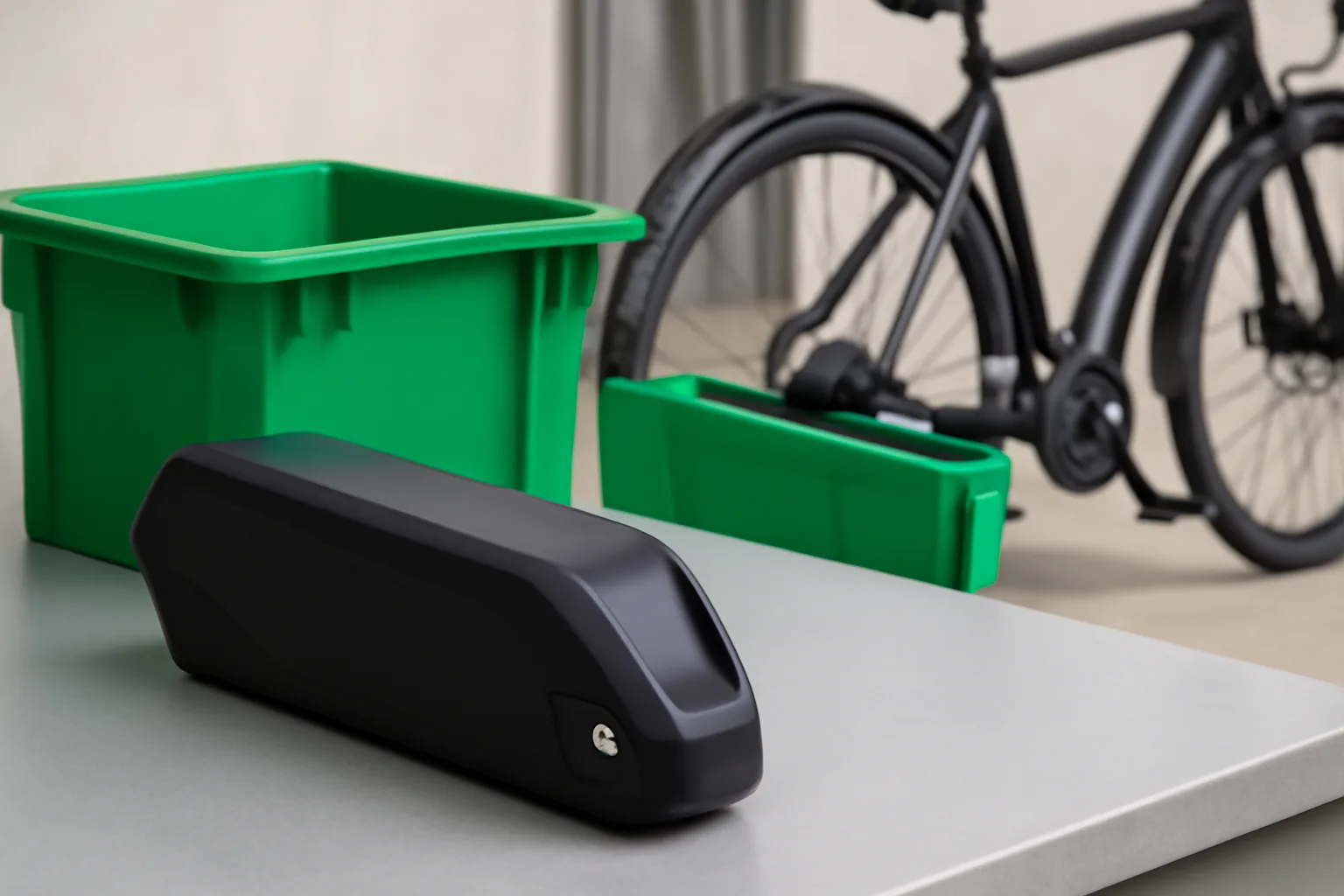
The best route depends on the battery brand, condition and where you live. Start with the route that gives the recycler the most context about the pack.
Route 1: Take it back to the e-bike retailer
This is normally the cleanest option. The retailer can identify the battery chemistry, brand, model and risk level. A decent e-bike dealer will know whether it can be accepted in-store, sent through a distributor scheme, or redirected to the brand.
UK battery regulations matter here. The GOV.UK waste batteries guidance says distributors and retailers selling more than 32kg of portable batteries per year must provide a take-back service for waste portable batteries. E-bike packs are not as simple as AA cells, but the rule explains why proper retailers have take-back responsibilities rather than leaving every rider to improvise.
Call the shop first and ask three questions:
- Do you accept e-bike batteries from my brand? Some schemes only cover participating brands.
- Do I need to bring the whole bike? Integrated systems may need a diagnostic check or safe removal.
- Is there a charge? Many drop-offs are free, but removal, diagnostics or courier handling may cost extra.
If the original seller has closed down, try an authorised dealer for the same motor system. A Bosch-certified dealer, for example, is usually a better starting point for a Bosch PowerTube or PowerPack than a generic electrical recycling bin.
Route 2: Use a recognised e-bike battery scheme
Some brands and retailers use dedicated e-bike battery recycling schemes. The Battery Network’s e-bike programme says participating retailers can act as drop-off sites and that riders can return batteries from accepted participating brands. That brand limitation matters. A random grey-import battery or heavily modified pack may not be accepted.
This is where cheap online e-bikes can become awkward. If the seller has no UK support, no brand take-back route and no clear battery paperwork, recycling becomes harder. That is one reason the bargain bike is not always a bargain over its full life.
The eBikeGeek guide to e-bike battery types is useful if you are trying to work out what kind of pack you have before calling around.
Route 3: Check Recycle Your Electricals and council sites
The Recycle Your Electricals locator is a good place to search for electrical recycling points near your postcode. It covers items with a plug, battery or cable, but do not assume every listed point will accept an e-bike battery. Use it to find candidates, then check the location’s details or call.
Council household recycling centres vary. Some accept e-bike and e-scooter batteries at hazardous waste points; others explicitly do not. The phrase to look for is “e-bike batteries”, “lithium-ion batteries over X Wh”, “high-capacity batteries” or “household hazardous waste”. If the website only mentions household batteries, assume that means small batteries until confirmed.
This is boring admin, but it prevents wasted trips. A 3kg battery pack bouncing around your footwell for a second journey is exactly what you were trying to avoid.
Route 4: Use a high-street recycler where accepted
Halfords says its battery recycling service is available even without a purchase, and its recycling information includes electric bike batteries in cycling recycling categories. That makes it a useful first call for many UK riders, especially if you did not buy from a specialist dealer.
Still phone the specific branch. Staff may need to confirm the pack type, condition and whether that store can handle it. A small store may not have the same back-of-house process as a larger cycling branch.
What Shops, Dealers and Councils Will Usually Ask
The easier you make the handover, the more likely the first place you call will say yes.
Details to gather before calling
Have these ready:
- Bike brand and model: for example Cube Reaction Hybrid, Trek Verve+, Carrera Subway E or Specialized Turbo Vado.
- Battery brand: Bosch, Shimano, Yamaha, Fazua, Giant, Bafang, Samsung-cell own-brand, or unknown.
- Capacity: often printed as Wh, Ah and V, such as 36V 13.4Ah or 500Wh.
- Condition: normal old battery, water-damaged, crash-damaged, swollen, hot, leaking or unknown.
- Removable or integrated: whether you can safely take it out of the bike.
Do not worry if you cannot decode every label. A photo of the battery label and bike model plate is enough for most shops to point you in the right direction.
How to transport it
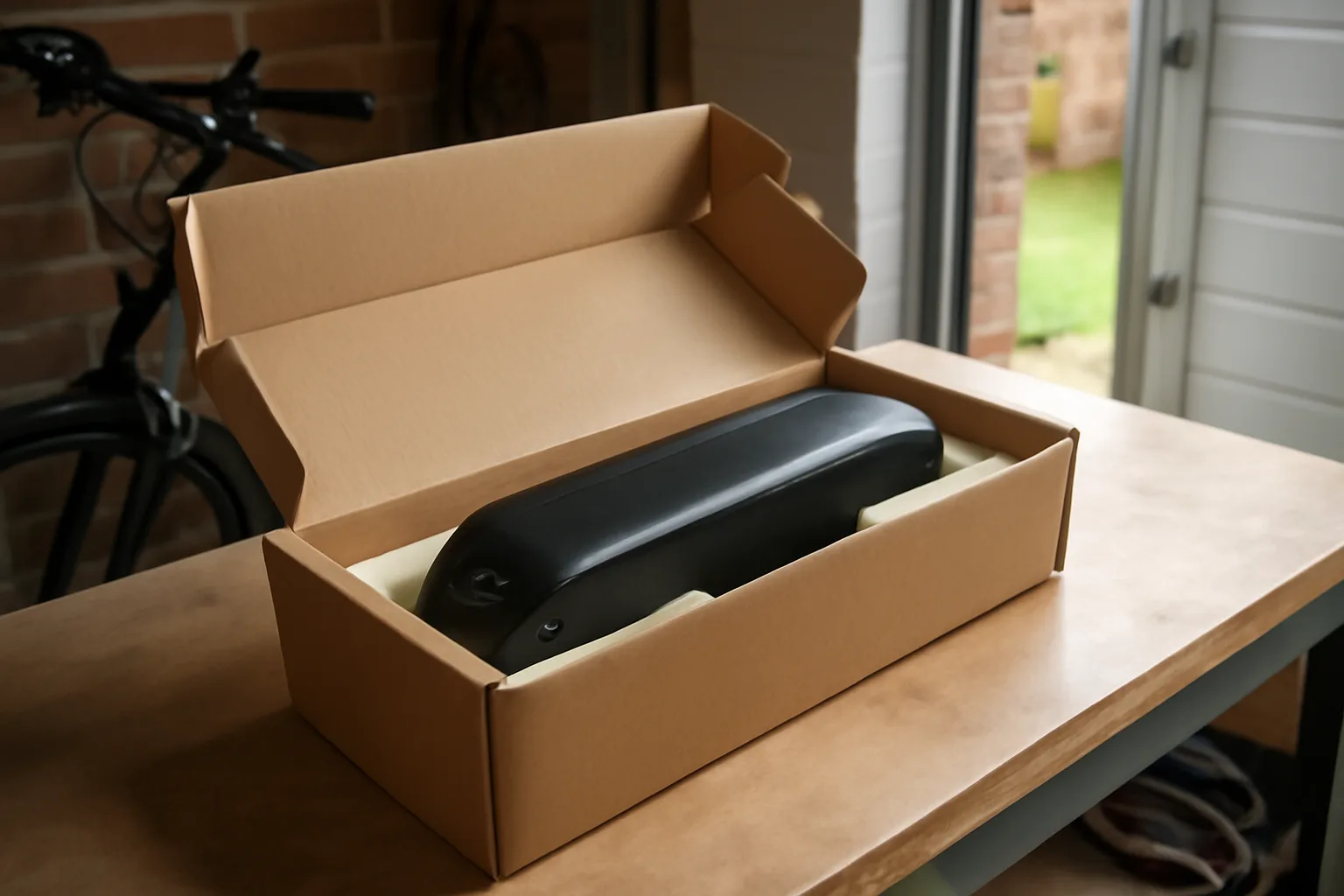
For a normal old battery, keep the terminals protected, do not pack it with metal tools, and stop it sliding around. A cardboard box with padding is fine for a short car trip if the battery is stable and undamaged. A fire-resistant e-bike battery bag can add containment for storage and transport, but it is not magic armour.
Basic fire-resistant e-bike battery bags on Amazon UK often sit around £20-£35. Better-known larger bags can cost £50-£100+. If you already own one, use it. I would not buy an expensive bag purely for one calm 15-minute trip to a dealer unless the shop asks you to.
If you usually store batteries indoors, the guide on where to store an e-bike battery overnight covers the day-to-day safety side. Recycling day is only one part of the battery’s life.
What the shop may refuse
A shop may refuse:
- Unknown aftermarket packs: especially if there is no label or certification.
- Modified batteries: opened, rebuilt or tampered-with packs are harder to handle.
- Damaged packs: they may need a specialist hazardous route rather than normal in-store storage.
- Non-participating brands: some schemes only cover brands that paid into the recycling system.
Do not take refusal personally. The shop is dealing with fire risk, insurance rules and waste paperwork. Ask where they recommend next and write it down.
What Not to Do With an Old E-Bike Battery
Most bad outcomes come from people treating a high-capacity battery like ordinary household clutter.
Do not put it in the bin
Never put an e-bike battery in general waste or household recycling. A lithium battery crushed in a bin lorry or waste facility can start a fire. That is not dramatic language; waste fires caused by batteries are a real industry problem.
Do not hide it inside the old bike either. If you are donating or recycling the whole bike, tell the receiver there is an e-bike battery and charger with it. A charity bike project may accept the bike but not the battery.
Do not use small battery tubes without checking
Supermarkets, DIY shops and libraries often have small battery recycling tubes. They are useful for AA, AAA, button cells and similar batteries. They are usually not intended for a large e-bike pack.
If a store advertises e-bike battery recycling, fine. If it only has a small household battery tube by the door, do not wedge a 500Wh pack beside it and walk off. That is not recycling; that is making your problem someone else’s hazard.
Do not post it casually
Shipping lithium batteries has restrictions. Couriers may need correct labelling, packaging, state-of-charge limits and documentation. If a manufacturer or retailer asks you to return a battery by courier, they should give you instructions. Follow those exactly.
Do not stick an old battery in a random parcel and hope for the best. Apart from being unsafe, it can breach courier rules and leave you liable if something goes wrong.
Do not try a DIY rebuild
There are people who rebuild e-bike battery packs. Some know what they are doing. Many YouTube-comment-section heroes do not. Opening a lithium-ion pack means dealing with spot-welded cells, battery management systems, insulation, balancing and short-circuit risk.
If the pack is from a quality system and the case is sound, a specialist assessment may be worth asking about. But for most UK riders, DIY rebuilding is not the sensible answer. Recycle the old pack and buy a compatible replacement through a reputable channel.
Costs, Replacement Prices and When Recycling Beats Repair
Recycling is usually free at the drop-off point, but the surrounding costs can vary. Removal, diagnostics, replacement and safe storage are where money appears.
What recycling should cost
For a normal old battery, expect:
- Retailer or dealer drop-off: often £0, especially if they accept the brand and battery condition.
- Halfords battery recycling route: advertised as available without purchase; check e-bike battery acceptance with the branch.
- Council recycling centre: usually £0 for householders if they accept that battery type.
- Bike-shop battery removal: roughly £20-£40 labour if the pack is integrated or awkward.
- Diagnostic check: often £20-£60, depending on the dealer and motor system.
Those labour figures are normal bike-shop context rather than a recycling fee. If the battery is simple to remove and clearly accepted, you may pay nothing.
Replacement prices put the decision in context
Replacement e-bike batteries are expensive enough that people are tempted to keep bad packs too long. Current UK examples show the range. A Bosch PowerTube 500Wh replacement has been listed around £449.99 at e-bikeshop.co.uk, while other UK listings for Bosch PowerTube 500Wh batteries can sit around £650.57 depending on model, stock and system generation.
That does not mean every battery costs £650. Own-brand rear-rack batteries and common 36V packs can be cheaper, while premium integrated smart-system batteries can be more. For a quality commuter e-bike, £350-£700 is a realistic replacement battery range. For a no-name online e-bike, the hard part may be finding a safe compatible pack at all.
Use the eBikeGeek guide on battery range, charging and lifespan if you are deciding whether the old pack really is finished. If it still has useful capacity, recycling today may be premature. If it has become unreliable or unsafe, do not squeeze one more winter out of it for pride.
When repair or refurbishment makes sense
Professional refurbishment can make sense if:
- The casing is sound: no swelling, cracks, water ingress or heat marks.
- The battery is from a known system: parts, BMS compatibility and diagnostics are available.
- The bike is worth keeping: spending £300 on a battery for a £400 tired e-bike rarely adds up.
- The specialist gives a warranty: avoid anonymous cell swaps with no paperwork.
If a reputable dealer says the pack is beyond safe repair, recycle it. That is not wasteful. The materials still have value, and the risk of nursing a poor battery is not worth it.
Step-by-Step: Getting It Recycled This Week
The best way to recycle old e-bike battery UK riders can actually follow is a short sequence, not a research rabbit hole.
- Check the battery condition. If it is swollen, hot, leaking, burnt, cracked or crash-damaged, stop and use damaged-battery guidance before moving it.
- Find the battery details. Photograph the bike brand, battery label, Wh rating, voltage and charger label.
- Call the original retailer. Ask whether they accept that battery brand and whether you need an appointment.
- Try an authorised dealer. If the original seller is unavailable, contact a dealer for the same motor system or bike brand.
- Check a recycling locator or council site. Use Recycle Your Electricals or your council website, then confirm e-bike battery acceptance before travelling.
- Prepare the battery. Keep it cool, cover terminals if exposed, separate it from the charger and stop it moving in the car.
- Get a receipt or confirmation if offered. Useful if the battery came from a workplace Cycle to Work bike or business-owned fleet.
If you are replacing the battery at the same time, ask the dealer to handle the old pack during the visit. That is the neatest version: old battery out, replacement checked, waste route handled by someone with the right storage and paperwork.
For future batteries, buy from a retailer that can answer the end-of-life question before you pay. “What happens when the battery dies?” is not pessimistic. It is normal ownership. The same logic applies to chargers, displays and controllers, but the battery is the part where proper recycling matters most.
Frequently Asked Questions
Can I put an old e-bike battery in my household recycling? No. E-bike batteries should not go in general waste or household recycling because lithium batteries can cause fires if crushed or mishandled.
Will Halfords take an e-bike battery? Halfords advertises battery recycling and lists electric bike batteries in its recycling information, but you should phone your local branch first to confirm the pack type and condition.
Can my council recycling centre take an e-bike battery? Some can, some cannot. Check for specific wording such as e-bike batteries, high-capacity lithium batteries or hazardous waste before travelling.
Is recycling an e-bike battery free in the UK? Drop-off is often free when the battery is accepted, but you may pay for bike-shop removal, diagnostics or special handling if the battery is integrated or damaged.
Can I post an old e-bike battery back to the manufacturer? Only if the manufacturer or retailer gives you approved packaging and courier instructions. Do not send a lithium e-bike battery in ordinary post.
Should I recycle or refurbish an old e-bike battery? Recycle it if the pack is damaged, unknown, unsupported or no longer economical. Consider specialist refurbishment only for a known, undamaged pack with proper warranty and paperwork.