Testing an e-bike battery at home is mostly about spotting patterns, not pretending you have a dealer workshop on the kitchen table. You can check charging behaviour, range drop, visible damage, voltage clues and error messages. You should not open the battery case, bypass the battery management system or keep charging a pack that smells hot, swells, hisses or behaves oddly.
In This Article
- Test E-Bike Battery Health at Home: What You Can Check
- Safety Checks Before You Touch the Battery
- Step-by-Step Home Battery Health Test
- How to Read Range, Voltage and Charging Symptoms
- When You Need Dealer Diagnostics
- Tools, Costs and UK Replacement Prices
- Frequently Asked Questions
Test E-Bike Battery Health at Home: What You Can Check
The useful home test is a controlled comparison: what the battery used to do, what it does now, and whether the change is normal ageing or a warning sign. A two-year-old commuter battery losing a bit of winter range is normal. A battery that drops from 70% to 20% in ten minutes, cuts out on hills or refuses to finish charging needs proper attention.
At home, you can check:
- Visible condition: cracks, swelling, melted plastic, bent terminals, corrosion or water ingress.
- Charging behaviour: whether it reaches full charge, how long it takes, and whether the charger gets unusually hot.
- Range trend: distance from a full charge on the same route, rider weight, tyres and assistance level.
- Voltage clues: basic pack voltage with a multimeter if the battery has safe external terminals and you know what you are doing.
- System warnings: battery, charger or motor error codes shown on the bike display or app.
What you cannot do safely at home is test individual cells inside a sealed lithium-ion e-bike pack. That is not a YouTube afternoon job. Modern batteries contain welded cells, a battery management system, thermal protection and manufacturer-specific electronics. Opening the case can create a fire risk, void the warranty and leave you with a pack that no reputable shop wants to touch.
This article is deliberately narrower than our broader e-bike battery guide. It is about checking health symptoms at home, not choosing capacity, estimating theoretical range or comparing battery formats. If you already suspect the pack is near the end, our guide to when to replace an e-bike battery covers the replacement decision in more detail.
The short version: test e-bike battery health at home by inspecting first, charging safely, logging range on a known route, checking for sudden voltage or percentage drops, and stopping immediately if there are heat, smell, swelling or cut-out symptoms.
Safety Checks Before You Touch the Battery
Lithium-ion battery problems are rare compared with the number of e-bikes on UK roads, but the consequences can be serious. Treat the safety check as Step 1, not as something you do after the multimeter comes out.
The UK government’s statutory guidance on lithium-ion battery safety for e-bikes warns that damaged or unsafe packs can pose a fire risk through thermal runaway. London Fire Brigade also advises charging e-bikes and e-scooters on hard, flat surfaces, away from escape routes and combustible materials. That matters in normal UK homes where the easiest socket is often in a hallway, utility corner or shed.
Stop immediately if you see warning signs
Do not charge, ride or test the battery if you notice:
- Swelling or distortion: the case no longer sits flat or clips into the frame properly.
- Heat when idle: the pack feels warm when it has not just been charged or used.
- Unusual smell: sweet, solvent-like, burnt or chemical odours.
- Noise: hissing, crackling or popping from the battery or charger.
- Damage: cracked casing, crushed corners, exposed wires or wet terminals.
If any of those are present, move away, keep exits clear and contact the retailer, manufacturer or local fire service advice line. Do not put the battery in a cupboard and hope it calms down. That sounds obvious until you are staring at a £500 replacement bill and trying to convince yourself it is probably fine.
Set up a safe charging area
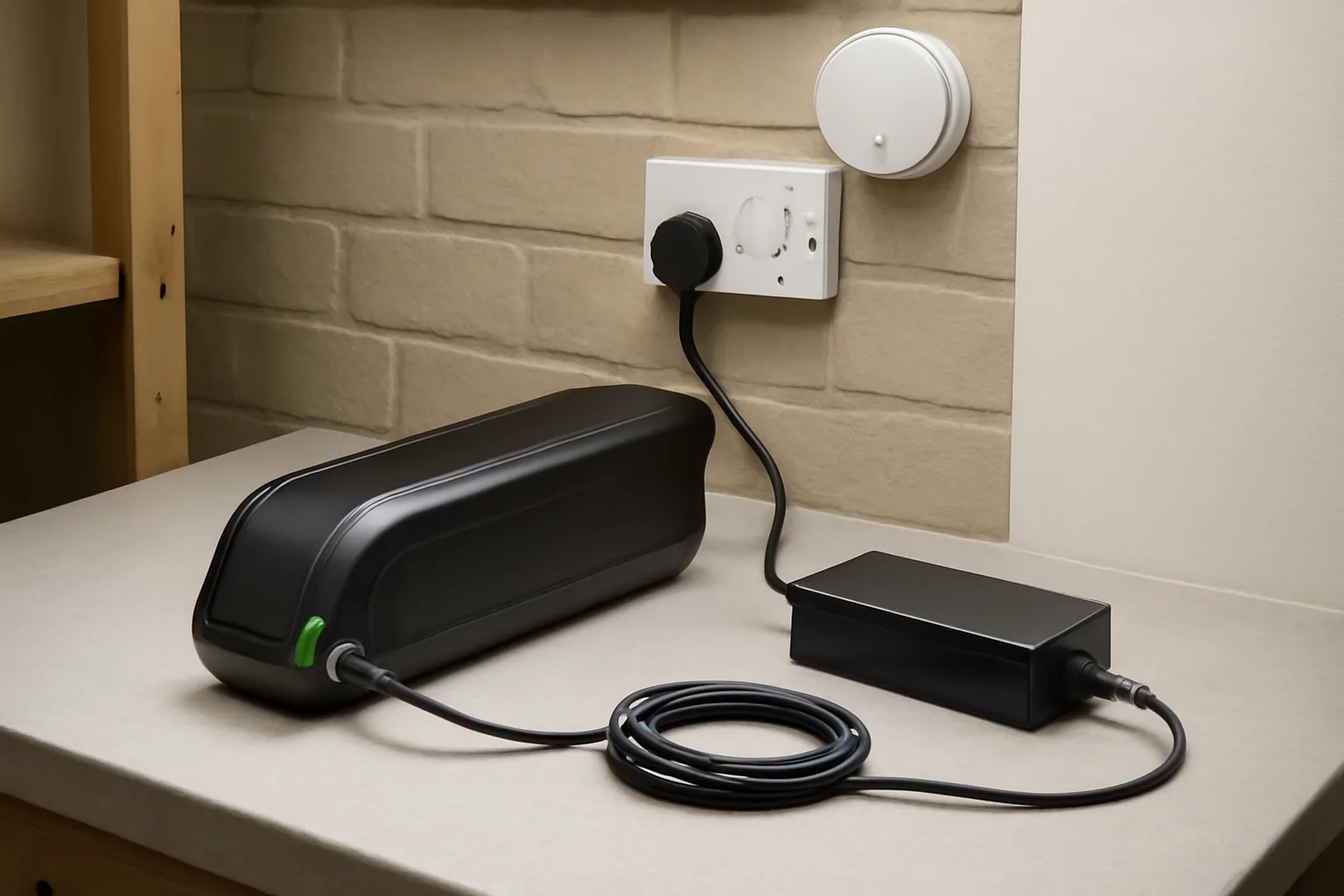
Use the original charger, or a manufacturer-approved replacement. A genuine Bosch, Shimano, Yamaha, Specialized or Giant charger usually costs about £70-£130 in the UK. Cheaper third-party chargers can be tempting at £25-£40, but I would not use one on an expensive lithium pack unless the bike brand explicitly approves it.
Charge on a hard surface with airflow around the charger. Avoid beds, sofas, piles of coats, cardboard boxes and extension leads coiled under furniture. If the bike lives in a shed or garage, make sure the socket is sound and protected from damp. Our separate article on where to store an e-bike battery overnight goes deeper on flats, sheds and garages; for testing, the main point is simple: keep the battery visible while charging.
Clean before judging
A dirty contact can look like battery failure. Before testing, remove the battery if the design allows it, switch everything off and wipe the external contacts with a dry microfibre cloth. Do not spray WD-40 into battery terminals. If there is green corrosion, damaged pins or water inside the mount, stop and use a bike shop.
Check the battery locks firmly into place. A loose rail or latch can cause intermittent cut-outs that feel like a dying battery. On rough roads, that fault can show up only when the bike vibrates.
Step-by-Step Home Battery Health Test
Use the same route, tyre pressure and assistance mode for every test. Random rides tell you very little because wind, hills, temperature, load and tyre pressure all change range.
- Start with a visual inspection. Look at the case, terminals, charger lead, display contacts and battery mount. Check for swelling, cracks, melted plastic, bent pins and water marks. If anything looks unsafe, stop.
- Record the battery details. Note the brand, model, watt-hours, voltage and age. A 500Wh Bosch-style battery at three years old should not be judged the same as a small 250Wh folding-bike pack that has done daily commuting for five winters.
- Charge to full under supervision. Use the approved charger and record how long it takes from a known starting percentage. A full charge taking far longer than usual, finishing too quickly, or never reaching 100% is useful evidence.
- Let the battery rest. After charging, leave it for 30-60 minutes in a safe place. If the percentage drops while idle, or the battery becomes warm without use, that is a warning sign.
- Ride a repeatable test loop. Use the same route, assistance level, rider, luggage and tyre pressure. A 10-15km local loop is enough for most checks. Log the starting percentage, ending percentage, distance, temperature and how the bike felt on hills.
- Watch for sudden drops. A smooth decline from 100% to 75% is normal. A jump from 60% to 25%, or a cut-out under load followed by the display recovering later, suggests the pack or battery management system is struggling.
- Repeat once. One odd ride can be wind, cold, soft tyres or a dragging brake. Two similar results on the same loop give you a better pattern.
- Compare against old range, not brochure range. Claimed range is optimistic. Compare today’s result with what your bike used to do on the same route.
The repeatability is the whole point. A battery that gives 45km one week and 42km the next on the same commute is probably normal. A battery that used to manage 45km and now cuts out at 18km in similar weather deserves investigation.
If you have a bike app, screenshot the battery health page, charge cycles or error code. Bosch, Shimano, Specialized, Giant, Tern and other systems vary in what they expose to riders, but any record helps the shop. Do not clear error codes before taking notes.
How to Read Range, Voltage and Charging Symptoms
Range loss is the symptom most riders notice first, but it is also the easiest to misread. Cold weather, low tyre pressure, winter clothing, headwinds, luggage and higher assist modes can all make a healthy battery look tired.
Range drop
As a rough home rule, compare like with like. If your 500Wh commuter bike used to cover 55km on mixed Eco/Tour riding and now covers 45-50km after two or three years, that is not shocking. Lithium-ion batteries age with time, cycles and storage habits. If it now covers 25km on the same route, something has changed.
Check simple non-battery causes first:
- Tyre pressure: soft tyres can steal range quickly, especially on heavy e-bikes.
- Brake rub: a slightly dragging disc brake wastes energy and feels like weak battery output.
- Chain condition: a dry or dirty drivetrain makes the motor work harder.
- Assist mode: Turbo/Boost drains a pack far faster than Eco.
- Temperature: cold UK mornings can reduce usable range until the battery warms during the ride.
Our range and battery-life guide covers those habits in more depth. For a health test, remove as many variables as possible before blaming the pack.
Voltage checks
A cheap digital multimeter costs about £10-£25 from Screwfix, Toolstation, Halfords or Amazon UK. It can tell you basic pack voltage if the battery design gives safe access to external terminals. It cannot tell you the full internal health of a sealed pack.
Only use a multimeter if you already know how to measure DC voltage safely. Do not short the terminals with probe tips. Do not poke through insulation. Do not test inside the casing. If the terminals are recessed, awkward or unlabelled, leave it.
Voltage depends on battery chemistry and cell count, so there is no single magic number for all e-bike batteries. A nominal 36V lithium-ion pack is usually higher when full and lower when depleted; a nominal 48V pack sits in a different range. The useful clue is not one reading in isolation. It is whether a fully charged pack reads far lower than expected for its system, or whether voltage collapses under load.
Charging symptoms
Charging behaviour is often more revealing than a one-off voltage reading. Watch for:
- Stops before full: the charger says done but the bike shows 80-90%.
- Cycles on and off: the charger repeatedly starts, stops and restarts.
- Excessive heat: charger or battery gets hotter than normal.
- Fast drop after full: battery falls several percentage points while sitting unused.
- Different charger result: a dealer charger behaves normally when yours does not, pointing to charger failure.
A replacement charger is much cheaper than a replacement battery, so do not assume the pack is dead until the charger has been ruled out. That said, do not keep trying random chargers. Use the correct voltage, connector and manufacturer approval.
When You Need Dealer Diagnostics
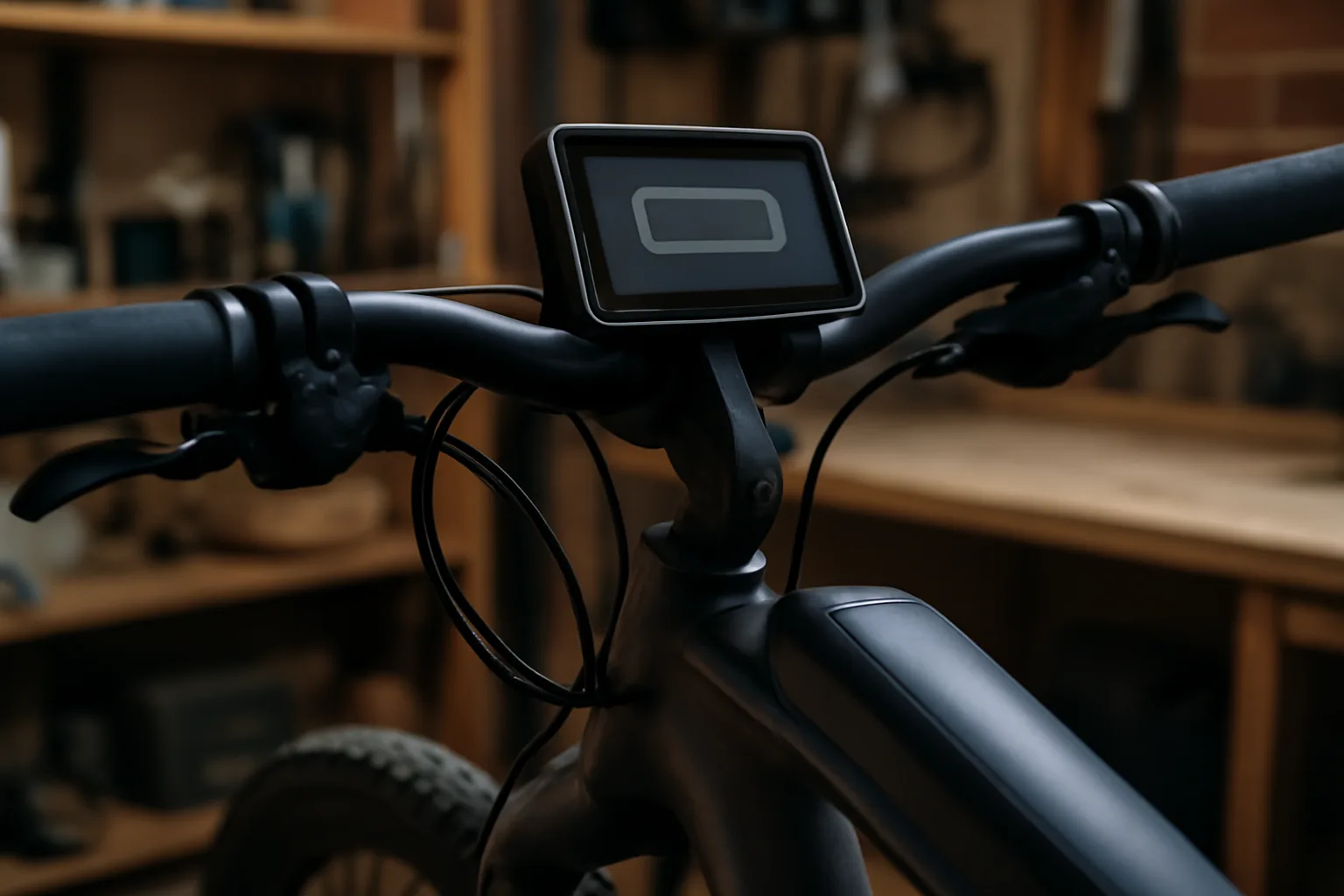
Home testing is good for symptoms. Dealer diagnostics are better for evidence. A proper shop can read battery management data, charge cycles, fault logs, cell imbalance warnings and firmware issues that the handlebar display may hide.
Use dealer diagnostics if:
- The bike is still under warranty: opening, probing or using non-approved chargers can weaken your claim.
- The battery cuts out under load: especially on hills or when charge drops below a certain percentage.
- The display shows recurring battery errors: record the code and take photos.
- The battery will not charge fully: after checking the charger, socket and contacts.
- You suspect water damage: especially after roof-rack transport, floodwater or outdoor storage.
- There are safety warning signs: heat, smell, swelling, crackling or visible damage.
Some shops charge about £20-£50 for diagnostics if the bike was not bought from them. Others include it if you bought the bike there or go ahead with repair. Bosch and Shimano system checks are common at good UK e-bike dealers, but availability depends on the bike brand and motor system.
Take evidence with you. A shop can act faster if you provide:
- Battery age and serial number from the label or purchase receipt.
- Charger model and whether it is original.
- Error code photos from the display or app.
- Range notes from the same test loop.
- Charging notes including time to full and any heat or cut-outs.
This also helps with warranty. Our e-bike warranty claims guide covers receipts, diagnostics and dealer visits, but the principle is the same here: vague complaints get vague answers; specific logs get better help.
Tools, Costs and UK Replacement Prices
You do not need many tools to test e-bike battery health at home. In fact, buying too much test gear can lead you into jobs you should not be doing.
Sensible home testing kit
The useful kit list is short:
- Digital tyre pressure gauge: about £8-£18, useful because soft tyres distort range tests.
- Digital multimeter: about £10-£25, only for safe external DC voltage checks.
- Notebook or phone notes: free, and often more useful than gadgets.
- Microfibre cloth: £3-£8, for dry cleaning external contacts and casing.
- Original charger: keep it labelled and separate from other household chargers.
I would not buy a cheap plug-in battery analyser from a random marketplace listing for a branded e-bike pack. It may not support your battery properly, and it can create more risk than clarity.
Replacement prices
UK e-bike battery replacement is expensive enough that it is worth testing properly before ordering anything. Typical prices:
- Small folding e-bike battery: roughly £250-£450.
- Mainstream 400-500Wh branded battery: roughly £450-£750.
- Large 625-750Wh battery: roughly £650-£950.
- Cargo bike or proprietary high-capacity pack: £800-£1,200+.
- Dealer diagnostics: often £20-£50 if not covered by the retailer.
Those prices make second-hand batteries tempting. Be careful. A used battery with no receipt, unknown charge history and no clear compatibility can be a false economy. If you are buying a used bike, follow the battery checks in our second-hand e-bike buying guide and confirm the cost of a replacement pack before handing over money.
Repair, rebuild or replace?
Some specialist firms rebuild e-bike batteries, but it depends on the casing, cell type, electronics and brand. For mainstream Bosch, Shimano, Giant, Specialized and similar systems, a manufacturer-approved replacement is usually the cleaner route. For older generic bikes, a rebuild may be possible, but you need a reputable UK specialist with proper battery testing and warranty.
Do not choose a repair purely because it is cheaper. A £180 rebuild that fails or becomes unsafe is not a saving. A £600 original pack hurts, but it may be the right answer if the bike is valuable and you rely on it for commuting.
The best home decision is usually this: if the battery looks safe but range has slipped, log a repeatable test and compare it with old performance. If it shows safety symptoms or electronic errors, stop testing and use a dealer. If it is simply old, weak and out of warranty, price the replacement before spending money on accessories, upgrades or another service.
Frequently Asked Questions
Can I test an e-bike battery with a multimeter? You can check basic DC voltage on safe external terminals, but a multimeter cannot fully test the internal health of a sealed e-bike battery.
How do I know if my e-bike battery is failing? Warning signs include sudden range loss, cut-outs under load, failure to charge fully, unusual heat, swelling, smell, error codes or rapid percentage drops.
Is it safe to open an e-bike battery at home? No. Do not open a sealed lithium-ion e-bike battery. It can create fire risk, electric shock risk and warranty problems.
How much does an e-bike battery test cost in the UK? Dealer diagnostics often cost about £20-£50 if not included by the retailer. Some shops waive the fee if you bought the bike there.
How long should an e-bike battery last? Many quality e-bike batteries last several years, but lifespan depends on charge cycles, storage, temperature, usage and battery size.
Should I replace the charger before replacing the battery? If the charger is suspect, have it checked or try a correct approved charger through a dealer first. A charger is usually much cheaper than a battery.