The right e-bike helmet is the one you will wear on a wet Tuesday commute, not the one that looks fastest in a product photo. For most UK riders choosing between commuter helmets and speed-pedelec-style options, that means a bright, well-fitting MIPS lid with proper rear coverage, room for a cap in winter, and no faff at the straps. If I were buying one helmet for daily riding in 2026, I would start with the Giro Escape MIPS LED at about £89.99 on sale, then move up to the ABUS Pedelec 2.0 MIPS if I wanted deeper coverage and a more e-bike-specific shell.
In This Article
- Quick Answer: The Best E-Bike Helmet for Most UK Commuters
- UK Law and Helmet Standards
- Helmet Types for E-Bike Commuting
- Best E-Bike Helmets 2026 UK
- Fit, Comfort and Visibility Checks
- Speed Pedelec Buying Notes
- Common Buying Mistakes
- Frequently Asked Questions
Quick Answer: The Best E-Bike Helmet for Most UK Commuters
The best overall pick for most e-bike commuters is the Giro Escape MIPS LED, currently about £89.99 direct from Giro UK when discounted from its usual £149.99. It is not the cheapest helmet here, but the built-in front and rear lights, MIPS liner, urban shape and sensible ventilation make it feel made for the ride most people actually do: 20-45 minutes through traffic, in mixed light, with a laptop bag on the back.
My budget pick is the Specialized Align II MIPS, about £45 from Sigma Sports, Cycles UK and other UK bike shops. It gives you MIPS at a price where many helmets are still plain foam shells. The downside is that it feels more like a road/leisure helmet than a purpose-built commuter lid, so you may still want separate lights and a reflective band.
For faster, heavier or more road-exposed riding, I would look at the ABUS Pedelec 2.0 MIPS, roughly £136.60-£137.60 on Amazon UK depending on size and colour. It has the deeper urban coverage and built-in light that suit e-bike commuting better than a featherweight road helmet.
The quick decision looks like this:
- Best value: Specialized Align II MIPS, about £45, if you want proper protection on a tight budget.
- Best for normal commuting: Giro Escape MIPS LED, about £89.99 on sale, because the lights and shape suit daily traffic.
- Best e-bike-specific option: ABUS Pedelec 2.0 MIPS, about £137, for deeper coverage and a more urban shell.
- Best NTA-style alternative: Lazer Urbanize NTA MIPS, around £107.99 from UK price-comparison listings when available.
If you already ride with strong front and rear lights, good mirrors and visible clothing, the budget helmet is fine. If your commute includes unlit roads, busy junctions or winter evenings, spend more on visibility and comfort before spending more on aero vents. Pairing the helmet with proper lights matters too, which is why our guide to the best e-bike lights for front, rear and helmet use is the natural next read.
UK Law and Helmet Standards
In the UK, a normal electrically assisted pedal cycle is treated as an EAPC if it meets the power, pedal-assist and speed rules. The key point from GOV.UK’s electric bike rules is that an EAPC must have pedals, the motor must not exceed 250W continuous rated output, and assistance must cut off at 15.5mph. For those legal e-bikes, a helmet is not compulsory in the way a motorcycle helmet is.
That does not mean any old lid will do. Look inside the helmet for a CE/UKCA mark and the EN 1078 cycle helmet standard. Most reputable helmets sold by UK bike shops will have it, but the sticker check is still worth doing if you buy from a marketplace seller. I would avoid no-name imported helmets with vague “cycling protection” wording and no clear standard label. Saving £15 is pointless if you cannot verify what you bought.
What MIPS and Similar Liners Actually Add
MIPS is a low-friction liner designed to let the helmet move slightly during angled impacts. It is not magic, and it does not make a helmet invincible, but at current UK prices I would choose it where the fit is right. The Specialized Align II MIPS at £45 is the awkward truth for cheaper non-MIPS lids: once decent rotational-impact systems are this affordable, the plain-foam bargain has to fit very well to make sense.
Other brands use their own systems: WaveCel, KinetiCore, SPIN-style padding and similar ideas. I care less about the acronym than three practical things:
- Fit: the helmet should sit level, not rock backwards when you open your mouth or look over your shoulder.
- Coverage: commuter and e-bike helmets should protect the back and sides better than a skimpy race lid.
- Condition: replace it after a proper impact, even if the shell looks tidy.
Helmet Law vs Good Commuting Sense
I am not going to pretend a helmet solves traffic risk. Riding position, route choice, lights, speed control and drivers giving you space all matter. Our practical guide to riding an e-bike safely in UK traffic covers those habits in more detail.
For commuting, though, I still wear a helmet. E-bikes make stop-start riding easier, so you spend more time mixing with cars at junctions, filtering past queues and carrying work gear. A comfortable helmet is cheap compared with the cost of a damaged phone, glasses, jacket or, more painfully, your head.
Helmet Types for E-Bike Commuting
Most e-bike commuters end up choosing between three helmet styles: road helmets, urban commuter helmets and e-bike/speed-pedelec helmets. They overlap, but they feel different in daily use.
Road Helmets
Road helmets are light, well ventilated and easy to find under £100. The Specialized Align II MIPS sits in this zone, even though it works fine for commuting. The good bits are weight and price. The trade-off is that you usually get less rear coverage, fewer built-in visibility features and a shape that assumes forward-leaning riding rather than upright city traffic.
A road helmet makes sense if your e-bike is a lightweight flat-bar or drop-bar commuter, your route is mostly open roads, and you already use strong lights. It is less convincing if you ride a heavy step-through bike in town, carry panniers, or spend winter evenings around buses and parked cars.
Urban Commuter Helmets
Urban helmets have a deeper shell, cleaner shape and often a light or reflective trim. They tend to run warmer than airy road helmets, but that is not always a bad thing in the UK. On a February ride home in drizzle, I would rather have a stable helmet with a rear light than a super-vented race lid that whistles through every gap.
This is where the Giro Escape MIPS LED earns its place. About £89.99 is still real money, but built-in lights remove one daily excuse. You still need bike-mounted lights by law at night, but a helmet light can help drivers notice the moving rider above the bike.
E-Bike and Speed-Pedelec Helmets
E-bike-specific helmets often advertise deeper coverage, integrated rear lights, rain covers, visors or NTA 8776 certification. NTA 8776 is a Dutch speed-pedelec helmet standard designed for higher assisted speeds than a normal UK EAPC. You will see it on helmets such as the ABUS Pedelec range and Lazer Urbanize NTA MIPS.
For a normal UK 15.5mph assisted e-bike, NTA 8776 is not required. It can still be a useful sign that the helmet was designed around faster urban riding rather than weekend road use. The penalty is usually weight, warmth and cost. If your commute is short and slow, you may find a full urban helmet nicer than a heavy speed-pedelec lid.
Best E-Bike Helmets 2026 UK
These are the helmets I would shortlist for UK e-bike commuting in 2026. I have kept the list tight because helmet fit is personal. A six-product list you can actually try beats a giant catalogue of lids that all claim the same thing.
Best Overall: Giro Escape MIPS LED, About £89.99
The Giro Escape MIPS LED is my first pick for most commuters because it solves the everyday problems: visibility, fit adjustment and an urban shape that does not look like you are lining up for a sportive. It is currently £89.99 on Giro UK, reduced from £149.99, though stock and colours move around.
What I like:
- Built-in lights: useful for side roads, filtering and wet commutes where drivers miss smaller bike lights.
- MIPS liner: sensible at this price, especially for town riding with angled fall risks.
- Commuter shape: less racy, more stable with upright riding and normal clothing.
What I would check before buying is heat. If you ride hard or climb long hills, a heavier urban helmet can feel warm. For a flat 30-minute city commute, that bothers me far less than poor visibility.
Best Budget: Specialized Align II MIPS, About £45
The Specialized Align II MIPS is the one I would tell a new e-bike owner to buy if they have already spent the budget on the bike, lock and lights. At about £45 from Sigma Sports or Cycles UK, it is hard to argue with the protection-per-pound.
The downside is commuter polish. There is no built-in light, the styling is more leisure/road than urban, and the fixed strap layout will not suit every head shape. Try it on if you can. If it fits cleanly, it is a better buy than most anonymous £25 helmets from Amazon UK.
Best E-Bike-Specific Pick: ABUS Pedelec 2.0 MIPS, About £137
The ABUS Pedelec 2.0 MIPS is the helmet I would pick for a heavier e-bike, faster mixed-road commute, or rider who wants more coverage around the temples and back of the head. Current Amazon UK listings sit around £136.60-£137.60, depending on size and colour.
It feels more commuter-tool than weekend-bike accessory. You get a built-in rear LED, deeper shell, rain-cover style features on some versions and a more protected urban shape. The cost is weight and bulk. If your commute includes a train leg and you have to carry the helmet around all day, try one before ordering.
Best NTA-Style Option: Lazer Urbanize NTA MIPS, Around £107.99
The Lazer Urbanize NTA MIPS is worth knowing if you specifically want NTA-style e-bike coverage. UK price-comparison listings have shown it around £107.99, though availability can be patchy. It is designed as a city/e-bike helmet rather than a road helmet with commuter marketing bolted on.
The visor and winter-kit style accessories can be useful if you ride year-round. I would not buy it blind, because some riders find urban helmets sit differently around the forehead and ears. If the fit works, it is a strong alternative to the ABUS at a lower price.
What I Would Not Buy
I would skip ultra-cheap “e-bike” helmets with no clear EN 1078 marking, scooter-style lids sold mainly on looks, and old stock where you cannot find a manufacture date. I would also avoid used helmets unless you know their history. A second-hand e-bike can be a smart buy, but a second-hand helmet is usually false economy. The same caution applies to other safety kit, as covered in our guide to checking a second-hand e-bike before buying.
Fit, Comfort and Visibility Checks
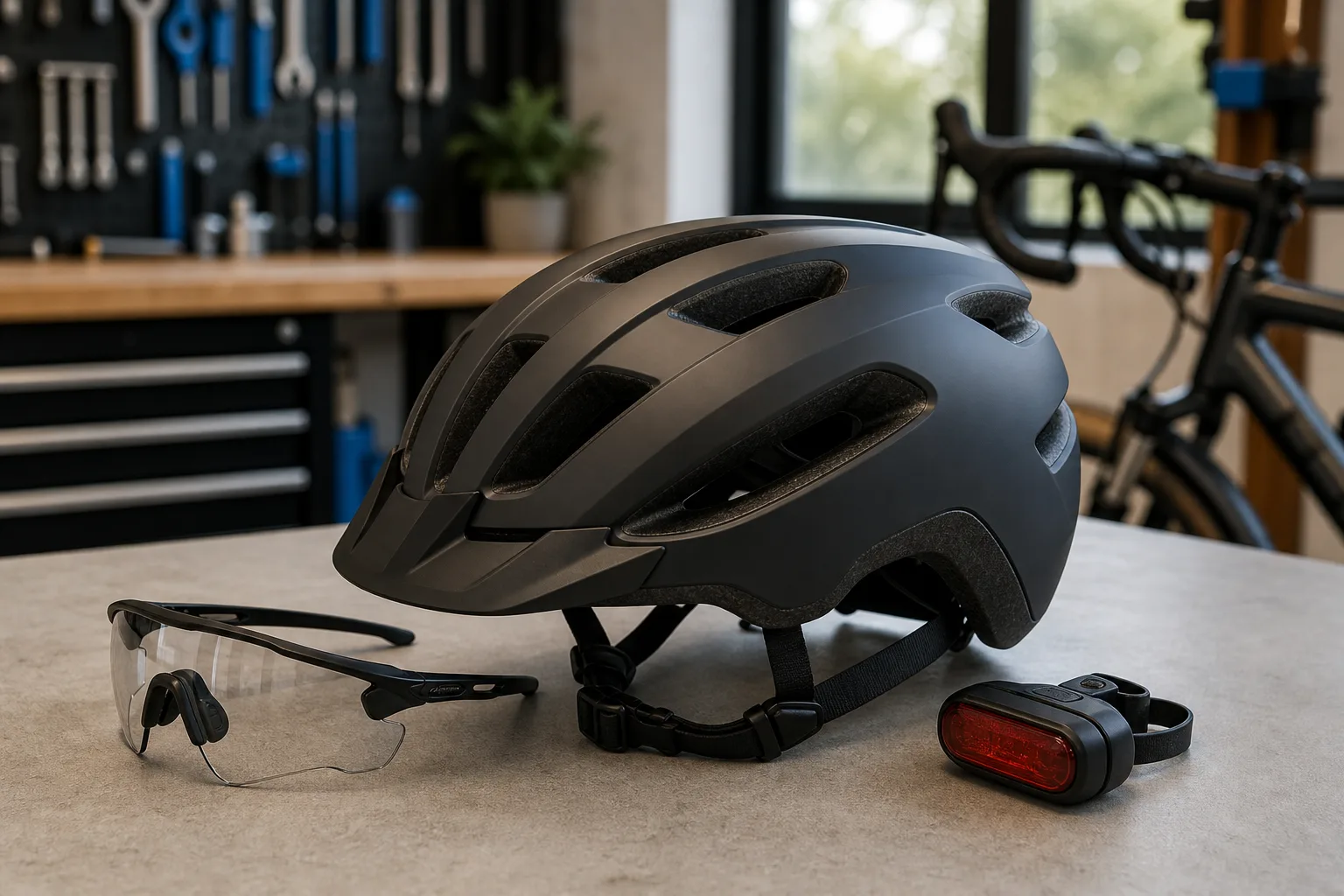
The best e-bike helmet is the one that fits your head, works with your glasses and does not annoy you by week three. This Cycling UK helmet fitting guidance is a useful reference for the practical fit points: level shell, snug rear adjustment and straps that sit cleanly around the ears.
The Two-Minute Fit Test
Try this before you remove any tags:
- Set the shell level: the front should sit about two finger-widths above your eyebrows, not tilted back like a cap.
- Tighten the rear dial: it should feel snug without pressure points after five minutes.
- Set the side straps: the Y-shape should sit just below your ears, not halfway down your jaw.
- Fasten the chin strap: you should fit one or two fingers under it, not a whole fist.
- Shake test: look down, shake gently, then look over each shoulder. If it moves a lot, change size or model.
Do the test with your normal riding glasses, winter cap or ear warmers. A helmet that fits bare-headed in July may be tight with a thin cap in January.
Visibility Without Turning Your Head Into a Christmas Tree
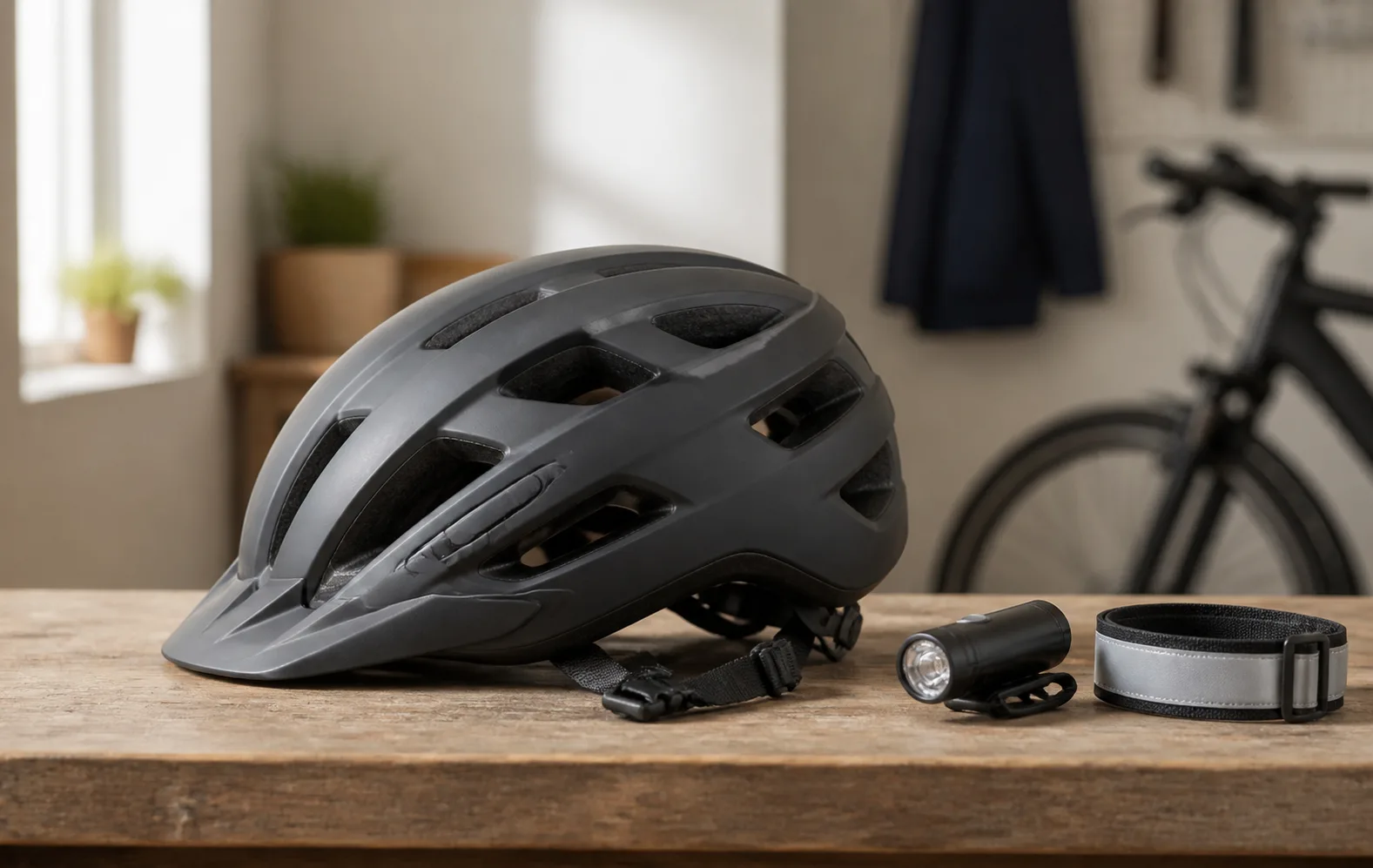
Helmet lights are useful, but they should not replace legal bike lights. I like a simple setup: fixed front and rear bike lights, reflective detail on the helmet or jacket, and one extra helmet/rear light if your route includes dark side roads. Our waterproof cycling jacket guide for e-bike commuters covers the clothing side, where reflective panels often matter more than colour alone.
For nervous road riders, a helmet pairs well with a mirror. It does not make you invulnerable, but it cuts down the surprise factor when traffic approaches from behind. We have a separate guide to the best e-bike mirrors for road safety if you want that extra awareness.
Speed Pedelec Buying Notes
Speed pedelecs are awkward in the UK because they are not the same thing as standard EAPCs. A normal EAPC assists only up to 15.5mph. A speed pedelec that assists beyond that can fall into moped or motorcycle territory, with registration, insurance, licensing and different road-use rules. Do not buy a 28mph imported bike and assume a beefier helmet makes it legal.
For helmet choice, the practical point is this: if your bike is a normal legal EAPC, you can choose a normal EN 1078 cycle helmet. If you are dealing with a higher-speed machine, you need to understand the vehicle category first, then choose protective kit that matches how and where it can be used.
When NTA 8776 Makes Sense
NTA 8776 makes most sense if you ride:
- Long mixed-road commutes: especially where you spend time near 25km/h and mix with faster traffic.
- Heavy utility e-bikes: cargo, child-seat or loaded pannier setups where falls can be clumsier.
- Year-round urban routes: wet roads, tramlines, potholes, low winter light and busy junctions.
It is less useful if your riding is slow towpaths, school-run paths, park routes or short flat hops to the station. In those cases, fit and visibility beat chasing a higher-spec label.
Match the Helmet to the Bike You Own
Someone riding a 16kg electric road bike will not want the same helmet as someone riding a 28kg step-through commuter with panniers. That is the same logic we use in our guide to the best electric commuter bikes for daily UK rides: match the kit to the route, not the fantasy version of the route.
If you test ride an e-bike, wear or take the helmet style you expect to use. Upright bikes, swept bars and mirrors can change how often you turn your head and how much helmet bulk you notice. Our e-bike test ride checklist is useful here because comfort problems show quickly when you ride like a commuter, not like a showroom browser.
Common Buying Mistakes
The first mistake is buying by brand before fit. Giro, Specialized, ABUS and Lazer all make good helmets, but their shapes are not identical. A cheaper helmet that sits properly is better than a premium one perched on the wrong head shape.
The second mistake is treating ventilation like the only comfort feature. Strap dividers, rear dial position, ponytail clearance, glasses arms and winter-cap room matter just as much.
The third mistake is ignoring replacement timing. I would replace a daily commuter helmet every three to five years, sooner after a crash or if the foam, straps or shell look tired. UV, sweat, bag knocks and storage in sheds all add up.
The fourth mistake is paying for features you will not charge, clean or use. Integrated lights are handy only if you keep them charged. Magnetic visors help only if you ride in spray. Be honest about your habits. No judgement: the best kit is the kit that survives Monday morning.
The final mistake is assuming a helmet is the whole safety setup. I would rather see a £45 Specialized helmet, £50-£80 of proper lights, a visible jacket and good road positioning than a £180 helmet with weak lights.
Frequently Asked Questions
Do you legally need a helmet on an e-bike in the UK? No, not on a normal legal EAPC that meets UK rules. A helmet is still sensible for commuting, but it is not compulsory for standard pedal-assist e-bikes.
What is the best e-bike helmet for most UK commuters? The Giro Escape MIPS LED is my pick for most riders at about £89.99 on sale because it combines MIPS, urban coverage and built-in lights. The Specialized Align II MIPS at about £45 is the better budget buy.
Do I need an NTA 8776 helmet for a UK e-bike? Not for a normal 15.5mph EAPC. NTA 8776 is more relevant to speed-pedelec style riding and higher-speed urban use, but fit and visibility still matter more than the label alone.
Are helmet lights enough for night commuting? No. Use proper bike-mounted front and rear lights as your main lights. Helmet lights can help with visibility, but they should be treated as an extra.
How much should I spend on an e-bike commuter helmet? Budget around £45 for a good entry-level MIPS helmet, £90-£150 for a stronger commuter helmet with lights, and £130-£170 for deeper e-bike-specific options.
Should I buy a used cycling helmet? Usually no. Unless you know its age and crash history, buy new. Hidden impact damage is hard to spot, and decent new MIPS helmets now start at about £45.