The best e-bike lights UK front rear helmet setup is not the brightest bundle you can find; it is the one you will keep charged, leave fitted, and trust when a driver pulls out in drizzle. For most UK e-bike commuters, I would buy a strong rechargeable front light, a separate rear light with a wide flash pattern, and treat any helmet light as a backup rather than the main system.
In This Article
- Best E-Bike Lights UK Front Rear Helmet: Quick Picks
- UK Legal Requirements and Visibility
- Front Lights: Beam, Battery and E-Bike Speed
- Rear Lights and Brake-Style Visibility
- Helmet Lights and Secondary Mounts
- Buying Checks for E-Bikes
- My Recommendation for Different Riders
- Frequently Asked Questions
Best E-Bike Lights UK Front Rear Helmet: Quick Picks
Best overall setup
My pick for most riders is a Lezyne Macro Drive 1400+ front light with a strong rear light such as the Trek Flare RT or Exposure TraceR. It is not the cheapest answer, but it covers the real problem with e-bikes: you are often moving quicker than a normal commuter bike, carrying more weight, and riding through traffic that does not always judge your speed properly.
The Lezyne Macro Drive 1400+ is around £74.99 at Tredz, with a claimed 1,400-lumen top output. Pair it with a Trek Flare RT at around £35.99 at Tredz or an Exposure TraceR Mk3 rear at around £54.99 at Tredz and you have a serious commuting setup for roughly £111-£130 before any helmet mount.
That is the set I would buy for year-round commuting because it separates the jobs properly:
- Front light: lets you see potholes, kerbs and debris before you hit them.
- Rear light: makes your speed and road position obvious to traffic behind.
- Helmet or clip light: adds movement and height, but does not replace bike-mounted lights.
If you are still sorting the rest of the bike, pair this guide with our advice on how to ride an e-bike safely in traffic and best e-bike locks. Lights help drivers see you; they do not stop a badly parked van or a stolen bike.
Best budget setup
If you want a cheap, tidy setup for lit streets, Decathlon is hard to beat. The Decathlon Front/Rear USB Bike Light Kit ST510 is around £19.99, while the Decathlon waterproof battery-powered front and rear LED set is about £9.99. I would avoid the £9.99 battery set for proper winter commuting unless it is a spare, but it is fine for a low-speed shopping bike or emergency drawer.
The better budget buy is the ST510 USB kit because rechargeable lights are easier to live with. Once coin cells or AAA batteries start fading, people leave them too long. A USB light can sit on the same charging routine as your e-bike battery.
Best premium setup
The premium choice is the Exposure Trace and TraceR Mk3 Light Set, about £104.50 at Sigma Sports, if your priority is neat mounting, UK-made build quality and compact commuter visibility. It is a lovely set for town riding, though I would still choose a higher-output front light for unlit lanes.
For rural riding, look at a front light in the 1,000-1,500 lumen range and budget £75-£150. That sounds steep until you hit a broken road edge at 25 km/h in January. Ask me how I know.
UK Legal Requirements and Visibility
What you must have at night
The UK baseline is simple. The Highway Code says that at night a cycle must have a white front light and a red rear light lit, plus a red rear reflector and amber pedal reflectors where required. The wording in Rule 60 of the Highway Code matters because a helmet light on its own is not the same as having lights fitted to the bike.
For an e-bike that meets the GOV.UK EAPC rules, the lighting requirement is still a cycle-lighting issue, not a motorbike-style lighting issue. If you are still unsure whether your bike is legally an e-bike, read our UK e-bike laws guide first. A throttle-modified or overpowered machine changes the legal conversation.
What the law does not solve
Legal is not the same as visible. A tiny £7.99 rear clip light may tick a box, but it can disappear behind a long coat, pannier bag or child seat. E-bikes make this worse because they often carry:
- Rear racks and panniers that block seatpost lights.
- Cargo seats or child seats that hide low rear lamps.
- Large batteries and thick tubes that make cheap rubber mounts twist.
- Higher average speeds that give you less time to react to potholes.
If you run panniers, read our best e-bike rear racks UK guide before choosing the rear light position. Rack-mounted rear lights are sometimes boring, but boring is good when it means the beam is not buried under a waterproof jacket.
Flashing or steady?
For city commuting, I like a steady front beam and a pulsing or flashing rear mode. A steady front beam helps you read the road surface and gives pedestrians a better sense of where you are going. A flashing rear catches attention in traffic.
On dark lanes, use a steady front beam. Flashing front lights can be hard for drivers and other riders to judge, and they are grim for anyone coming the other way on a narrow path. On shared-use paths, turn the output down and angle the beam slightly lower. Your light should help people see you, not punish them.
Front Lights: Beam, Battery and E-Bike Speed
How many lumens do you need?
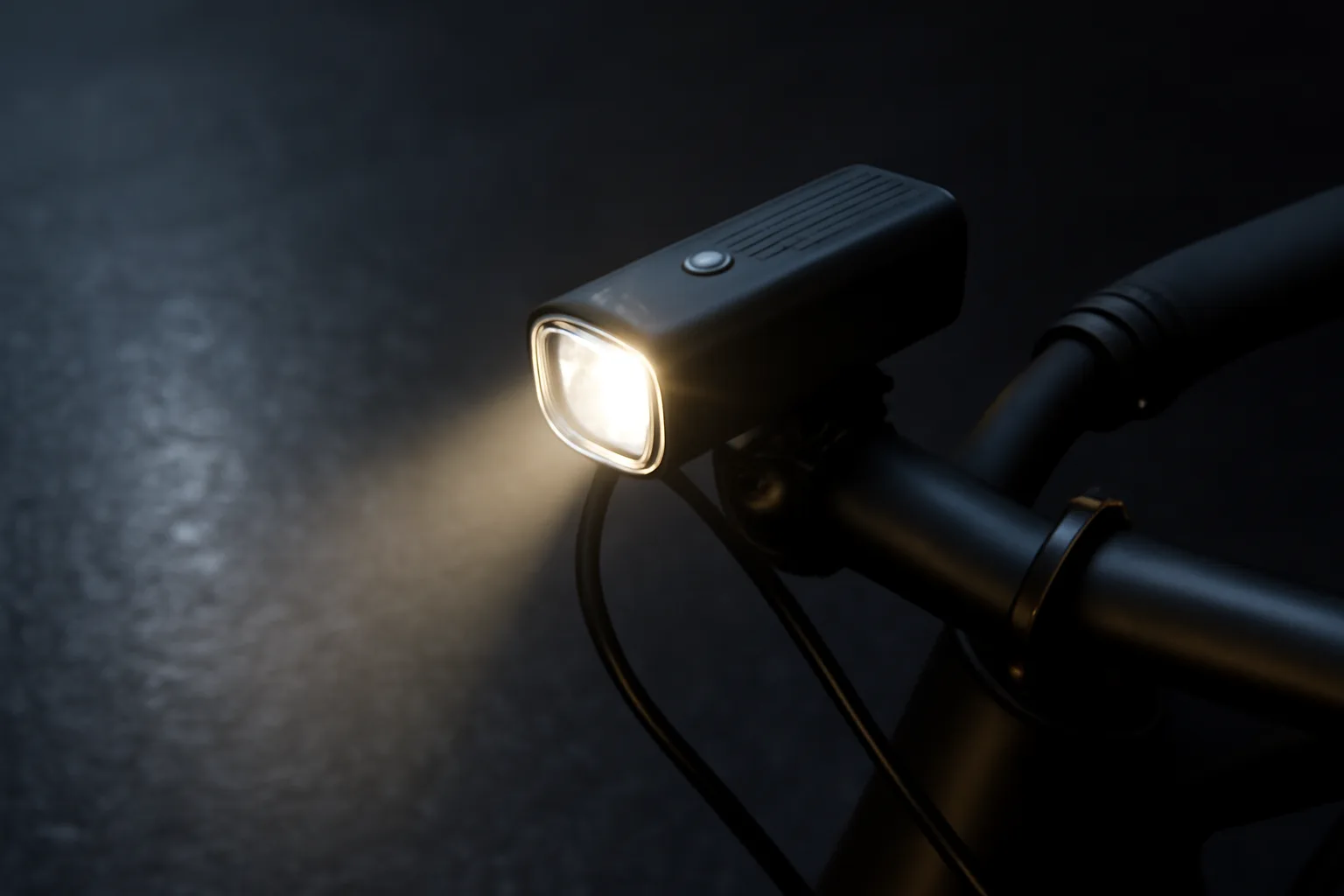
For an e-bike, I would not buy a main front light under 400 lumens unless you only ride under streetlights. The extra weight and speed of an e-bike mean you need more warning distance than you might on a slow hybrid.
Use these as sensible UK ranges:
- Lit city streets: 300-600 lumens, roughly £20-£55.
- Mixed commuting and parks: 600-1,000 lumens, roughly £45-£90.
- Unlit roads, canal paths and rural lanes: 1,000-1,500 lumens, roughly £75-£150.
- Trail or off-road night riding: 1,500+ lumens, usually £120+, often with a helmet light too.
The mistake is buying one tiny “be seen” front light because it looks neat on the bars. It may be fine outside Tesco. It is not fine when a wet pothole appears at 20 km/h on an unlit lane.
The front lights I would shortlist
The Lezyne Macro Drive 1400+ is the practical middle ground. At about £74.99 at Tredz, it gives enough output for fast commuting and occasional dark-road use without drifting into silly money. The body is compact enough for most e-bike handlebars, though you still need to check clamp clearance if your display, bell and phone mount already live there.
The Exposure Trace front light, sold as part of the Trace and TraceR Mk3 set for around £104.50 at Sigma Sports, is better as a premium urban visibility light than as a lane-blasting headlamp. I like it for a clean commuting bike where you want small, reliable lights and you are mostly on roads with some ambient light.
The Decathlon ST510 USB kit, around £19.99, is the budget answer for riders who want a simple rechargeable set. It is not my pick for winter country lanes, but it is a lot better than running no lights because the “proper” set felt too expensive.
Battery life matters more than max output
Ignore the hero lumen number unless you also check runtime. Many lights only hit their top output briefly or drain quickly at full power. For a normal e-bike commute, I want:
- At least 2 hours on a useful mid mode, not just 30 minutes on turbo.
- A clear battery indicator, preferably not a vague red blink five minutes before it dies.
- USB-C charging if possible, because micro-USB cables vanish at the exact moment you need them.
- A secure mount that does not rotate on oversized or swept-back e-bike bars.
If your commute is 35 minutes each way, buy for the week you forget to charge it on Wednesday, not the perfect day when you remember everything.
Rear Lights and Brake-Style Visibility
Why rear lights deserve real budget
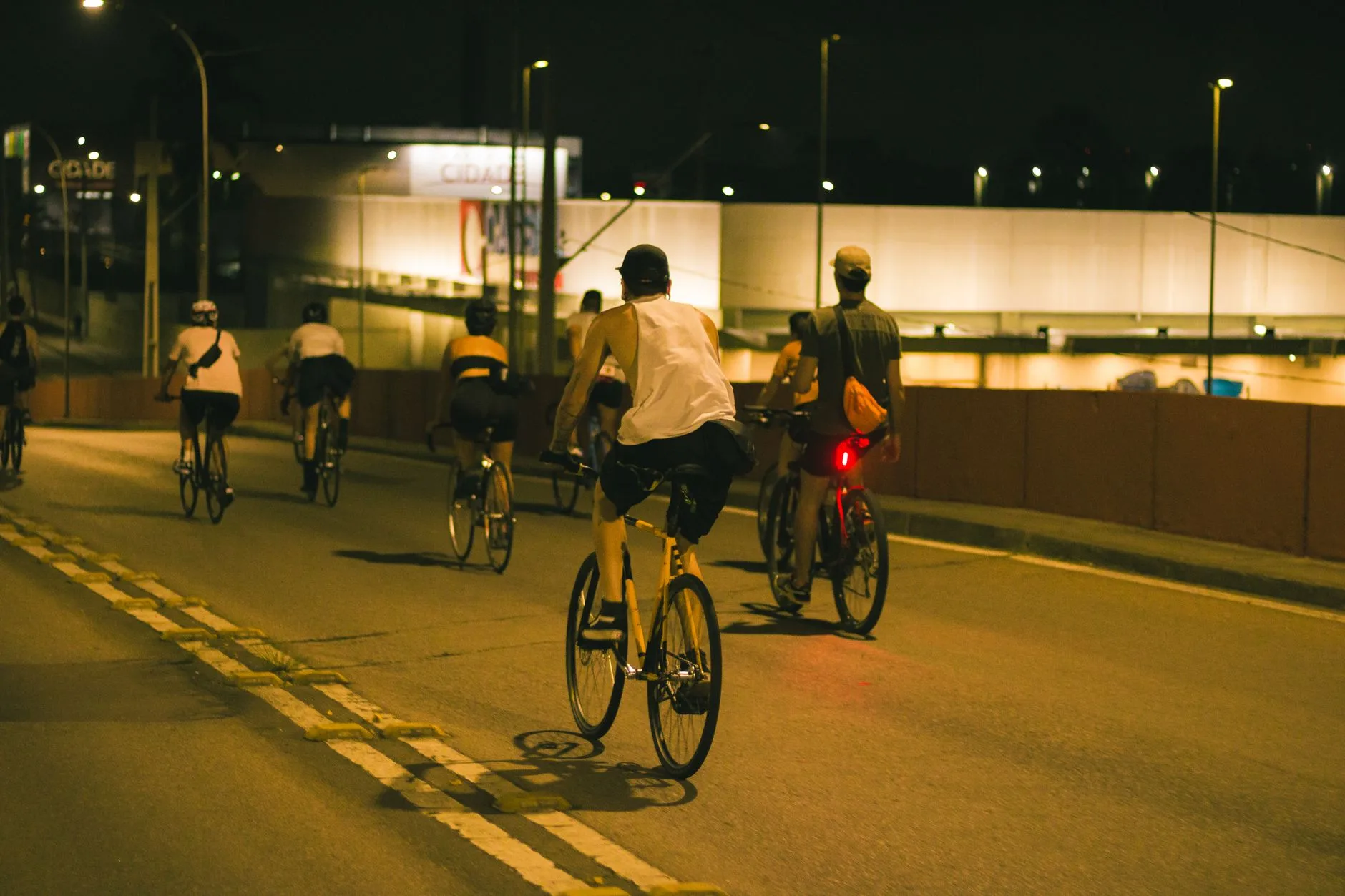
Rear lights are where too many e-bike riders cheap out. A front light feels more useful because you can see it working. The rear light is for everyone else, which is exactly why it matters.
I like rear lights with a wide lens, a daylight mode and a secure mount. On an e-bike, I also prefer a light that can sit on a rack, seatstay or saddle rail if the seatpost is blocked. If you carry a child seat or panniers, test visibility from directly behind and from a slight angle. Do it in the garden or hallway. It takes two minutes and saves buying the wrong thing.
Good rear light options
The Exposure TraceR Mk3 at around £54.99 from Tredz is my favourite premium rear light because it is small, bright and built for year-round riding. It is the one I would put on a commuter e-bike where reliability matters more than saving £20.
The Trek Flare RT at around £35.99 from Tredz is a strong value pick, especially if you like the idea of ANT+/Garmin integration. It is small enough to avoid looking clumsy, but bright enough to make sense for daytime and low-light use.
The Knog Plus USB rechargeable rear light at about £13.50 from Tredz is a useful backup or second light. I would not make it my only rear light on a fast commuter, but clipped to a bag or jacket it adds height and movement.
For a basic utility bike, the Decathlon CL 100 rear USB light is around £7.99. Fine as a spare. Too small as your only winter rear light if you ride busy roads.
Brake-sensing and radar lights
Brake-sensing rear lights are useful on e-bikes because your speed changes can surprise drivers. Radar lights are more expensive but can help if you ride fast roads and already use a compatible head unit.
The Wahoo TRACKR Radar rear light is listed around £161.99 at Tredz, which puts it in premium territory. I would not tell a casual commuter to spend that. For a rider doing dark A-road sections or long training-style e-bike rides, radar starts to make more sense.
There is a cost trade-off here. A £160 radar rear light does not make up for poor road position, a dead front light or a loose helmet strap. Buy it after the basics are sorted.
Helmet Lights and Secondary Mounts
Helmet lights are extra, not the foundation
A helmet light is useful because drivers notice movement. When you turn your head at a junction, the beam moves with you. That can help. It is also useful if you are fixing a chain, reading a gate latch or finding the key for a battery lock in the dark.
But I would not rely on a helmet light alone. It can dazzle people, it can point away from the road, and it may not satisfy the bike-mounted lighting expectation in normal cycling rules. Treat it as a third layer.
Sensible helmet-light options
For a rear helmet light, the Lazer Universal Rechargeable Rear LED Bike Light is around £27.99 at Decathlon. It is clean if you already have a compatible Lazer helmet and want a tidy rear marker.
For a front helmet light, the Cateye AMPP 900 Helmet Light is listed around £58.19 at Decathlon. That is more of a trail or dark-path tool than a casual town add-on. On the road, keep the beam controlled; nobody wants 900 lumens straight in the eyes.
If you prefer the all-in-one route, Decathlon sells the City Cycling Helmet with Visor and Rear Light 900 at around £99.99. I like integrated rear lights for casual town riding, but I still want a proper rear bike light on the frame or rack.
Where secondary lights work well
The best secondary-light positions are boring and practical:
- Helmet rear light: visible above panniers and winter coats.
- Bag clip light: useful if your rear rack blocks the seatpost.
- Seatstay light: lower but less likely to be covered by clothing.
- Rack-mounted light: best for cargo e-bikes and pannier-heavy commuting.
- Spare mini front light: gets you home when the main light dies.
If you use a phone for navigation, check our best e-bike phone mounts before cramming another mount onto the bars. E-bike cockpits get crowded fast.
Buying Checks for E-Bikes
Check the handlebar before buying
E-bike handlebars often already carry a display, remote buttons, a bell, brake hoses and sometimes a throttle-style walk-assist control. Before buying a front light, measure the free straight section of bar. A cheap rubber strap can be fine on a normal hybrid and useless on a chunky e-bike cockpit.
For swept-back bars, I prefer a light with a mount that can angle cleanly without pointing at the verge. For mountain-bike style bars, check that the light clears brake hoses and does not block the display. If your bike has a front basket, the light may need to mount lower on the fork or higher on the bars.
Do not ignore charging habits
Your e-bike already needs charging discipline. Adding three separate lights can turn into a faff if you do not plan it. My rule is simple: charge lights whenever the main e-bike battery drops below half, even if the lights still look fine.
If you ride in winter, keep a cheap backup light in your work bag. A Decathlon SL510 clip light at about £9.99 or a Knog Plus at about £13.50 is small enough to forget until you need it. That is exactly the point.
For battery care more widely, our e-bike battery guide and how to maximise e-bike battery life cover charging habits, storage and range loss in cold weather.
Weather sealing and winter use
UK winter commuting is hard on lights. Rain gets into charge ports, grit works into mounts, and gloves make tiny buttons annoying. I look for:
- Proper rubber charge-port covers that sit flush.
- A glove-friendly button you can press without hunting.
- A mount that can be removed quickly when leaving the bike outside.
- A body that does not rattle when the motor cuts in over rough tarmac.
- Replacement brackets available for under £10-£15, because mounts fail before LEDs do.
Based on UK owner reviews, mount complaints are often more common than brightness complaints. That tracks with real use. A light can be bright and still be a poor buy if it points at the sky after three speed bumps.
Security and theft
Do not leave expensive clip-on lights on a locked e-bike outside a station. A £55 rear light takes seconds to remove, and a thief does not need tools. Either take them with you or use cheaper rack-mounted lights for station bikes.
There is a balance. If removing three lights every time means you stop using them, buy fewer, better-positioned lights. A front-and-rear set you use daily beats a premium setup left in a drawer.
My Recommendation for Different Riders
Daily urban commuter
Buy the Decathlon ST510 USB kit for about £19.99 if money is tight, or step up to the Exposure Trace and TraceR Mk3 set at about £104.50 if you want a neater premium setup. Add a small clip light to your bag for £10-£15 if your jacket covers the rear light.
The urban priority is being noticed from odd angles. Delivery vans, school-run traffic and wet windscreens are the enemy. You do not need 1,800 lumens to ride through town; you need reliable front and rear visibility at the height drivers expect.
Rural or unlit-road rider
Buy a front light around 1,000-1,500 lumens, such as the Lezyne Macro Drive 1400+ at about £74.99, and pair it with a serious rear light like the Exposure TraceR Mk3 at about £54.99. If you ride lanes regularly, this is where spending £120-£150 makes sense.
Use a steady front beam on dark roads. Keep a flashing rear, but do not rely on a tiny seatpost light if your coat hangs over it.
Cargo e-bike or child-seat rider
Start with the rear position, not the product. If a child seat, box, panniers or cargo rack hides the seatpost, use a rack-mounted or seatstay-mounted rear light. Budget £35-£60 for a good rear light and treat a helmet rear light as a useful extra.
Then buy a front light that clears the basket or front carrier. Many cargo bikes need a lower front-light position than a normal commuter.
Budget buyer
If you have £30, buy the Decathlon ST510 USB set at about £19.99 and a spare rear clip light for £7.99-£13.50. That is better than stretching to one bright front light and leaving the rear as an afterthought.
If you have £100, buy a better front light first, then a decent rear. My split would be roughly £65-£75 front, £25-£40 rear. Helmet lights can wait.
The final answer
For most UK e-bike riders, the best setup is not front, rear or helmet. It is front and rear first, helmet second. Spend enough on the front light to see the road at your normal speed, spend enough on the rear light that panniers and coats do not hide it, and use helmet lights as an extra visibility layer.
That is the boring answer. It is also the one that works in February rain.
Frequently Asked Questions
Do e-bikes need special lights in the UK? Not if the bike is a legal EAPC, but it still needs normal cycle lights at night: white front and red rear. I would still choose stronger lights than I would for a slow town bike because e-bikes are heavier and often ridden faster.
Is a helmet light enough for an e-bike? No. A helmet light is useful as an extra, but your main front and rear lights should be mounted to the bike. Helmet lights can point away from traffic and can dazzle people if used badly.
How much should I spend on e-bike lights? For city riding, about £20-£60 can work. For year-round commuting, £80-£130 is a better budget. For unlit roads or fast rural rides, expect £120-£180 for a strong front and rear setup.
How many lumens do I need for an e-bike front light? Around 300-600 lumens is fine for lit streets, 600-1,000 lumens suits mixed commuting, and 1,000-1,500 lumens is better for unlit roads. Beam shape and runtime matter as much as the lumen number.
Are flashing bike lights legal in the UK? Flashing cycle lights are permitted, but a steady front lamp is better on unlit roads because it helps you see hazards and makes your position easier to judge. A flashing rear mode is useful in traffic.
Should I remove e-bike lights when parking? Yes, if they are clip-on and cost more than you would happily lose. Expensive front and rear lights are easy to steal, so remove them at stations, schools, shops and town-centre racks.