Locking an e-bike properly is about making the thief’s job awkward, noisy and slow. The techniques that deter thieves are more practical than buying the heaviest lock you can find and hoping for the best. You need the frame, at least one wheel, a fixed stand, and as little spare space inside the lock as possible.
In This Article
- The Locking Method That Matters Most
- Choose the Right Lock Combination for the Risk
- Where to Park an E-Bike in the UK
- Step-by-Step: How to Lock Your E-Bike Properly
- Common E-Bike Locking Mistakes
- Extra Deterrents That Are Worth Adding
- What I Would Do for Different E-Bike Values
- Frequently Asked Questions
The Locking Method That Matters Most
The best basic method is frame, rear wheel and fixed stand with one serious D-lock or chain. If your lock will not fit around all three, lock the frame to the stand first and secure the front wheel with a second lock or cable. The frame is the non-negotiable bit. A thief can replace a wheel; they cannot ride away with a frame fixed to a stand.
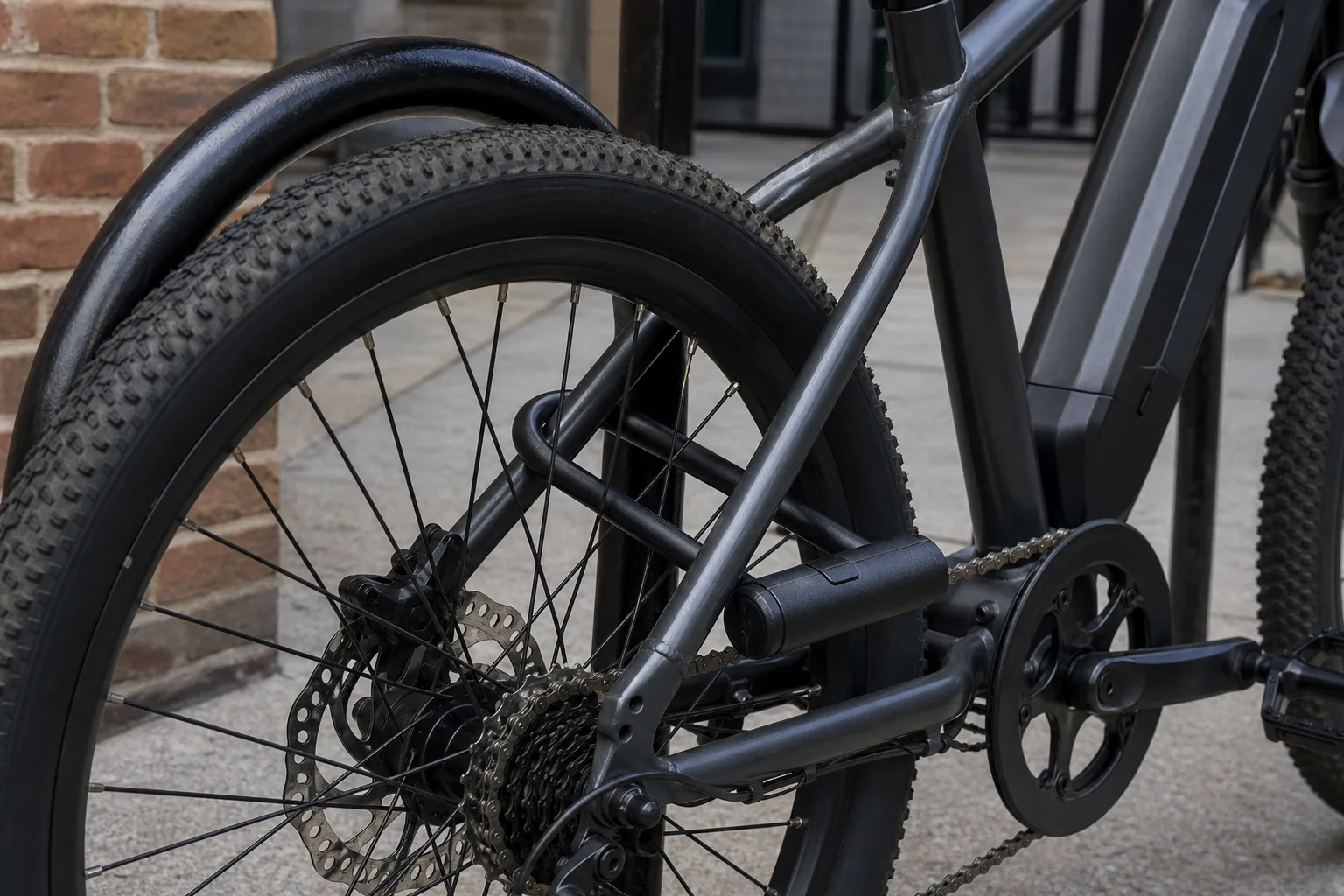
For most UK commuter e-bikes, the rear triangle is the easiest place to work through. Put the lock through the rear wheel, inside the rear triangle, and around the Sheffield stand. You do not need to trap the seat tube every time if the lock passes through the rear triangle and wheel, because the wheel cannot come out without being cut. That said, if your frame shape lets you catch the seat tube as well, do it.
Keep the lock high and tight
A loose lock gives a thief room to twist, lever or brace a tool against the ground. Keep the shackle or chain off the pavement and fill as much of the inside space as possible with frame, wheel and stand. On a D-lock, that usually means using the smallest shackle that still fits your regular parking spots.
This is where e-bikes differ from normal bikes. Chunky down tubes, rear hub motors, mudguards and pannier racks can make a neat locking angle awkward. It is worth practising at home before your first train-station commute. Five minutes of faffing in the rain is when people start locking only the front wheel and hoping for the best.
Do not rely on one cable lock
A cable lock is useful for keeping a front wheel or saddle honest, but it should not be your main lock on a £1,500 e-bike. Cheap cables under £15 from Amazon UK or Decathlon are fine as a secondary nuisance. They are not the thing standing between your bike and a battery-powered cutter.
If you already own a decent lock, spend your next £20-£40 on a second small lock or cable rather than replacing everything immediately. A thief choosing between two similar bikes will usually pick the one with fewer problems attached to it.
Choose the Right Lock Combination for the Risk
This is not a full buying guide, because we already cover that in our best e-bike locks UK guide. For technique, the important point is matching the lock combination to the value of the bike and where you leave it.
For a typical UK e-bike worth £1,200-£2,500, I would start with a Sold Secure Gold or Diamond D-lock and add either a chain or cable for the second wheel. Sold Secure maintains the official searchable lock database, including Bicycle Gold and Diamond ratings, so it is worth checking the exact model rather than trusting a retailer’s headline wording.
Sensible UK lock setups
Here is the rough spend I would use:
- Lowest acceptable setup: a Gold-rated D-lock around £45-£80, plus a £10-£20 cable for the front wheel. Fine for short stops in low-risk areas.
- Daily commuter setup: a Diamond-rated D-lock around £80-£170, plus a secondary chain or folding lock around £40-£90.
- High-risk city setup: an angle-grinder-resistant lock such as a LITELOK X1 at about £169.99 from LITELOK UK, or a Hiplok D1000 often around £220-£250 from UK cycling retailers, plus a separate wheel lock.
- Home shed setup: a heavy chain and ground anchor, usually £70-£180 for the chain and £35-£80 for the anchor, because weight matters less at home.
The LITELOK X1 is the one I would look at first for a valuable commuter e-bike because it is still portable enough to carry. The Hiplok D1000 is tougher again, but the price and smaller internal space mean it makes most sense for expensive bikes parked in places with repeated theft attempts. For a £900 second-hand e-bike, I would rather buy a good £80-£100 Diamond D-lock and improve where I park.
Insurance may dictate the rating
Some UK e-bike insurance policies specify the minimum Sold Secure rating and how the bike must be locked. If your insurer says Gold or Diamond, treat that as the floor, not a suggestion. Keep the lock receipt and take a photo of the bike locked correctly when leaving it overnight or at a station. Boring, yes. Useful if you ever need to claim.
The legal side matters too. GOV.UK says an electrically assisted pedal cycle must have pedals, a motor rated no more than 250W, and assistance that cuts off at 15.5mph. If your bike is outside the EAPC rules, insurance and theft recovery can get messier because it may be treated differently from a standard pedal cycle.
Where to Park an E-Bike in the UK
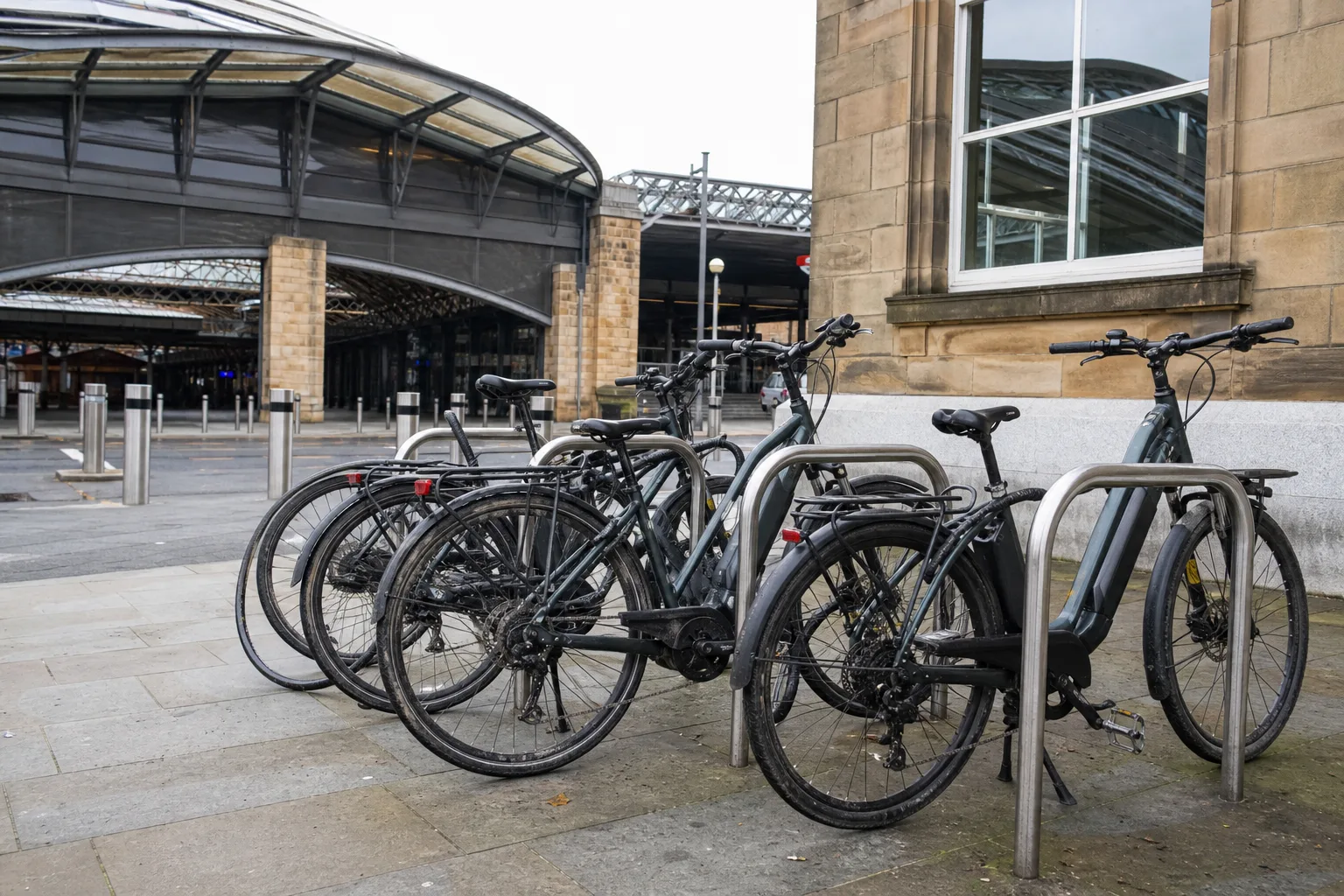
The best lock in the world is wasted on a weak object. Use a proper Sheffield stand, a secure cycle hangar, or a fixed rack that cannot be unbolted, lifted or cut quietly. Avoid temporary barriers, thin railings, signposts with removable tops, and trees. Trees are lovely. They are not bike stands.
Good parking spots
A good e-bike parking spot has three things:
- A fixed anchor: the stand is bolted into the ground and cannot be lifted over.
- Visibility: people walk past regularly, ideally with shopfronts or station staff nearby.
- Enough room: you can get the lock around the frame, wheel and stand without leaving the bike leaning at a strange angle.
Busy is not the same as safe. A crowded station rack can still be risky if bikes are packed so tightly that you can only lock the front wheel. If the stand design forces a poor lock angle, move along and find a better one.
Bad parking spots
Avoid places where a thief gets privacy or leverage. Back lanes, quiet car parks, dark corners of supermarket racks and stands hidden behind bins are all poor choices. If you have to park there, use two locks and remove the battery if the bike allows it.
For home storage, read our guide to where to store an e-bike battery overnight separately. For locking, the short version is this: a shed lock alone is not enough. Lock the bike inside the shed to a ground anchor or wall anchor, and keep the battery indoors if the manufacturer allows it.
Step-by-Step: How to Lock Your E-Bike Properly
This is the practical routine I would use for a commuter e-bike outside a shop, gym, office or station.
- Pick the stand before you stop. Choose a fixed stand with enough space to get close to it. If the rack is flimsy or isolated, keep moving.
- Put the bike tight to the stand. The frame should sit close enough that the lock does not have to bridge a big gap.
- Lock the rear wheel and frame first. Put the D-lock through the rear triangle, rear wheel and stand. Keep it above ground level and as full as possible.
- Secure the front wheel. Use a second lock if you have one. If you only have a cable, run it through the front wheel and back into the main lock.
- Protect removable parts. Take lights, display units and panniers with you. Remove the battery for longer stops if it is quick-release and practical.
- Check the stand and lock angle. Tug the bike, rotate the lock and check that nothing can be lifted over the top of the stand.
- Photograph the locked bike for high-value stops. It takes five seconds and gives you useful evidence for insurance or police reporting.
That routine sounds slower than it is. Once you have done it a few times, it is a 30-second habit. The biggest improvement is locking the rear triangle instead of the front wheel, because front wheels are quick to remove and cheap enough for a thief to sacrifice.
If the stand is awkward
Some modern e-bike frames have thick tubes that do not play nicely with small D-locks. If you cannot catch the frame and rear wheel together, lock the frame to the stand with the strongest lock and use the secondary lock for a wheel. Do not demote the frame just because the angle is annoying.
For cargo e-bikes, longtails and step-through frames, test your lock reach before you need it. The best setup may be a long-shackle D-lock around the frame plus a chain around the rear wheel and stand. A good 10mm-12mm chain is heavy, but on a £4,000 cargo bike it is not overkill.
Common E-Bike Locking Mistakes
Most stolen-bike stories have one painful detail: the lock was decent, but the method was poor. These are the mistakes I see most often.
Locking only the wheel
Locking only the front wheel is barely locking the bike. A thief can undo the quick release, leave the wheel behind and carry the rest away. Even a bolted axle is not enough protection on an e-bike that may be worth more than a used car deposit.
If you are in a rush, frame to stand is the minimum. Wheel-only locking is for a pub garden where you are sitting next to the bike, not a town-centre rack.
Letting the lock touch the ground
Ground contact gives thieves a working surface. They can brace cutters, hammers or jacks against the pavement. Keep the lock floating in the triangle of frame, wheel and stand.
Using a folding lock as the only lock in a high-risk area
Folding locks are neat and easy to carry, which is why people like them for commuting. The downside is that the joints are extra attack points. A good folding lock can work for cafe stops and lower-risk areas, but for a valuable e-bike in London, Bristol, Manchester or any theft hotspot, I would use it as a second lock rather than the main one.
Leaving the battery and display on show
Many e-bike batteries lock into the frame, but that does not make them invisible. If your battery removes easily and the stop is more than a few minutes, take it with you. Replacement batteries often cost £300-£800, and some are awkward to source for older models.
Displays, lights, phone mounts and panniers should come with you. If removing everything makes the bike irritating to steal, good. That is the point.
Extra Deterrents That Are Worth Adding
Locks buy time. Extra deterrents make the bike less attractive before a thief starts cutting. You do not need every gadget, but a few sensible additions help.
Register the bike
Register the frame number and photos before anything happens. We have a separate guide on how to register your e-bike to help recovery, but the quick version is to store clear photos of the frame, battery serial number, receipt and lock setup. If the bike disappears, you can report it properly rather than trying to remember details under stress.
Add a tracker if the bike is valuable
Trackers are not magic, and you should not confront a thief yourself. Still, a hidden tracker can help police or insurance reporting, especially on expensive e-bikes. Apple AirTag-style trackers cost around £25-£35, while dedicated bike trackers can be £40-£150 plus subscription. If you are weighing that up, our e-bike GPS tracker guide goes into the trade-offs.
Use an alarm as a nuisance layer
A small motion alarm is cheap and irritating. Budget alarms start around £12-£20 on Amazon UK, while alarmed locks from brands like Abus or Oxford often sit around £50-£130. I would not rely on an alarm instead of a lock, but I do like one on a shed-stored e-bike or a commuter bike left in the same place every day.
Make the bike less convenient to ride away
Lower the appeal where you can:
- Remove the battery: especially for longer stops or overnight storage.
- Take the display: some systems are harder to ride or resell without it.
- Use locking skewers or security axles: useful for front wheels and saddles, usually £20-£60.
- Do not advertise upgrades: expensive lights, bags and accessories attract attention.
None of this replaces a proper lock. It just changes the maths for the thief.
What I Would Do for Different E-Bike Values
The right setup depends on value, parking time and risk. A £900 folding e-bike outside a village cafe does not need the same kit as a £5,000 cargo bike outside a city station.
Under £1,500: keep it simple but serious
For a lower-cost e-bike, I would buy a Sold Secure Gold or Diamond D-lock around £50-£100 and add a cable for the front wheel. Decathlon, Halfords and Amazon UK all sell workable locks in this range, but check the rating carefully. “Heavy duty” means nothing if there is no independent rating.
If you are still shopping for the bike itself, our guide to cheap electric bikes under £1,000 is worth reading because theft risk is only one part of the ownership cost.
£1,500-£3,000: two locks as standard
This is where most decent commuter e-bikes sit. I would use a Diamond D-lock as the main lock and a second chain, folding lock or cable for the front wheel. Budget roughly £120-£220 for the full locking setup. That feels painful until you compare it with the cost of replacing the bike, battery and accessories.
For rail-station parking, leave a heavy chain at your regular stand if the location allows it and carry a D-lock on the bike. You get better security without hauling 3kg of chain around all day.
£3,000+ cargo, e-MTB or premium commuter
For expensive e-bikes, I would use an angle-grinder-resistant lock, a second independent lock, a tracker and proper home anchoring. A LITELOK X1 at about £169.99 plus a heavy chain around £80-£150 is a sensible starting point. For a premium cargo bike, I would not blink at £250-£350 of security kit.
If that sounds excessive, look at replacement batteries, insurance excesses and the time spent dealing with a theft claim. The lock budget starts to look less dramatic.
The bottom line
To lock an e-bike properly, techniques deter thieves more than brand names do. Lock the frame and rear wheel to something fixed, keep the lock high and tight, use a second lock for the front wheel, remove easy accessories, and choose parking spots with people around. Good security is not one heroic lock. It is several small problems stacked together.
Frequently Asked Questions
What is the best way to lock an e-bike? Lock the frame and rear wheel to a fixed stand with a strong D-lock or chain, then secure the front wheel with a second lock or cable. Keep the lock off the ground and tight inside the frame triangle.
Do I need two locks for an e-bike? For a valuable e-bike, yes. One good lock secures the frame; a second lock or cable protects the other wheel and makes the bike slower to attack.
Should I remove the battery when locking an e-bike? Remove it for longer stops if it is practical and allowed by the manufacturer. E-bike batteries often cost £300-£800 to replace, so they are worth protecting.
Is a cable lock enough for an e-bike? No. A cable lock is useful as a secondary lock for a wheel or saddle, but it should not be the main security on an e-bike.
What lock rating should I buy for an e-bike in the UK? Use at least Sold Secure Gold for lower-risk parking and Diamond for valuable e-bikes, city parking or insurance requirements. Check the exact model in the Sold Secure database.
Where should I lock an e-bike overnight? Indoors is best. If it must stay in a shed or garage, lock it to a ground or wall anchor with a heavy chain and remove the battery where suitable.