The best electric road bike is not the one with the biggest motor. It is the one that still feels like a road bike when the assist cuts out at 15.5mph, does not punish you on wet UK lanes, and gives enough help on climbs to make longer rides feel realistic rather than heroic.
In This Article
- Best Overall: Specialized Turbo Creo 2 Comp E5
- Quick Comparison: Lightweight E-Road Bikes UK
- How to Choose a Lightweight Electric Road Bike
- The Best Electric Road Bikes to Shortlist
- What Changes on UK Roads
- Where to Buy and What to Budget
- Common Buying Mistakes
- Frequently Asked Questions
Best Overall: Specialized Turbo Creo 2 Comp E5
If I were buying one electric road bike in the UK in 2026, I would start with the Specialized Turbo Creo 2 Comp E5. It is not the lightest bike here and it is not the cheapest, but it gets the balance right: proper drop-bar handling, a strong enough motor for steep lanes, wide tyre clearance, hydraulic discs and a dealer network that will still matter when you need firmware help in two years.
The UK price is about £3,499 on the Specialized Turbo Creo range and at Balfe’s Bikes, down from a typical £3,999 RRP. That is still serious money, but it sits below the carbon superbike tier and above the online-only value options. For most riders moving from a normal endurance bike, the Creo makes more sense than chasing the lightest possible e-road bike.
The main reason is ride feel. The motor support is there when gradients kick up, but the bike does not feel dead above the legal assistance limit. That matters in Britain because plenty of rides include fast rolling sections where you are over 25km/h under your own power. A heavy, draggy e-bike feels brilliant on the first climb and annoying for the next 40km. The Creo avoids most of that.
You should still be honest about the trade-off. At roughly 15kg depending on size and spec, it is not a featherweight. If your dream ride is a fast club chain gang where everyone sits at 32km/h, a normal carbon endurance bike may still be better. If your rides involve hills, headwinds, tired legs and the odd gravelly back lane, the Creo is the more forgiving all-rounder.
For the legal side, UK-compliant electric bikes are treated as EAPCs if they meet the rules on pedals, motor output and assisted speed. The GOV.UK EAPC guidance is the plain-English source to check before buying anything derestricted or imported.
Quick Comparison: Lightweight E-Road Bikes UK
| Bike | Best for | Motor | Typical UK price | Who should skip it |
|---|---|---|---|---|
| Specialized Turbo Creo 2 Comp E5 | Best overall road/gravel mix | Specialized SL 1.2 mid-drive | About £3,499 | Weight-focused riders who want a barely-electric feel |
| Ribble Allroad E AL | Best value fast road option | Mahle rear hub | From about £2,849 | Riders who want local shop support before buying |
| Trek Domane+ ALR 5 | Best dealer-backed endurance pick | TQ HPR system | About £4,000 | Anyone trying to stay near £3,000 |
| Giant Defy Advanced E+ Elite AR | Best premium comfort/speed blend | SyncDrive Move Plus rear hub | About £5,499 | Budget buyers or riders who dislike wide all-road tyres |
| Giant Defy Advanced E+ Elite 1 | Best high-end carbon option | SyncDrive Move Plus rear hub | About £7,499 | Most normal riders, frankly |
Those prices move with sales and build options, so treat them as the buying window rather than a promise. The useful split is simpler: Ribble is the value route, Specialized is the easiest all-round recommendation, Trek is the service-led endurance pick, and Giant is where you look when you want carbon, speed and comfort without pretending it is cheap.
How to Choose a Lightweight Electric Road Bike
Motor feel matters more than peak torque
For a lightweight electric road bike, the best motor is the one you stop noticing. Rear hub systems from Mahle and Giant tend to feel subtle and quiet, with the weight tucked away at the back of the bike. Mid-drive systems from Specialized and TQ can feel stronger on steep climbs because they work through the drivetrain.
I would not buy purely from the torque number. A 50Nm motor on a well-tuned road bike can feel more natural than a more powerful system with clumsy delivery. On short UK climbs, the smooth handover between your legs and the motor matters more than winning a spec-sheet argument.
Weight changes how the bike feels after the assist limit
UK assistance stops at 15.5mph. On a road bike, you will often ride above that on flats and descents, so dead weight matters. Around 12-14kg feels close to a normal endurance bike with a little extra heft. Around 15-16kg is still fine if the geometry and tyres suit the riding. Once you get much beyond that, the bike can feel more like a fast hybrid with drop bars.
This is why the Ribble options remain attractive. Ribble’s current electric range starts from about £2,849 for the aluminium Allroad E AL and about £4,099 for the carbon Allroad SL R e. The old Endurance SL e is succeeded now, but the lesson remains: keep the system light and the bike still feels sharp when the motor is off.
Tyre clearance is not a boring detail
Do not buy a 28mm-only e-road bike for British lanes unless you know exactly why. Wider tyres make more sense for most riders: 32-38mm gives better grip, less buzz and more confidence on lanes that have been patched, flooded and patched again. The extra electric help makes the small rolling-resistance penalty less painful.
For pure summer club rides, 28-30mm tyres still feel quick. For real UK use, 32mm is the practical minimum I would want. If you are deciding between road and gravel-leaning models, our Ribble vs Specialized vs Giant electric road bike comparison goes deeper on brand character.
Battery range should match your hardest ride, not your average ride
Most lightweight e-road bikes use modest batteries to keep weight down. Expect roughly 50-100km in mixed UK riding depending on rider weight, hills, wind, assist mode and tyre choice. A small rider using eco mode on rolling roads may get far more than a heavier rider using high assist into a February headwind.
The sensible test is your hardest likely ride. If you want to ride 80km in the Peak District with friends, buy enough battery for that ride with a margin. If your normal loop is 35km around Oxfordshire lanes, a lighter system with a smaller battery is probably more enjoyable.
The Best Electric Road Bikes to Shortlist
Specialized Turbo Creo 2 Comp E5
The Creo 2 Comp E5 is the one I would put in front of most UK riders first. It has enough assistance to make steep lanes manageable, big tyre clearance for rough roads and a riding position that suits endurance miles rather than pure racing.
The build usually sits around £3,499 in UK shops. You get SRAM Apex Eagle gearing, hydraulic disc brakes and Specialized dealer support. That last point is not glamorous, but it is valuable. Electric road bikes are still bicycles, but firmware, diagnostics and battery warranty make local support worth paying for.
The downside is weight. If you want the lightest possible e-road feel, a rear-hub carbon bike may suit better. If you want one bike for road rides, winter lanes and occasional light gravel, the Creo is easier to recommend.
Ribble Allroad E AL
Ribble’s Allroad E AL starts at about £2,849 and is the value pick if you want a fast, clean-looking e-road bike without spending Trek or Giant money. It uses Ribble’s direct-sales model, so you usually get stronger spec for the price than you would from a traditional dealer.
The appeal is simple: a lightweight aluminium frame, drop bars, electric assistance and a road-friendly stance. It is the bike I would look at if I wanted an e-road machine for fitness rides, rolling commutes and weekend hills, but did not want to tie up £4,000.
The caution is service and fit. Ribble has UK showrooms, but it is still not the same as walking into a Trek or Giant dealer five miles away. If you already know your road-bike size and are comfortable buying direct, it is a strong option. If you are between sizes or new to drop bars, get measured properly before ordering.
For broader buying context, our best electric bikes UK guide covers where road bikes sit against commuters, folders and hybrids.
Trek Domane+ ALR 5
The Trek Domane+ ALR 5 is the pragmatic dealer-backed choice. UK Trek stores list it at about £4,000, and the pitch is classic Domane: endurance comfort, stable handling and a system designed to feel natural rather than shouty.
This is not the cheapest way into electric road riding. The reason to buy it is confidence. Trek dealers are easy to find, sizing help is easy to access, and the Domane platform suits UK riders who want to go long without feeling folded in half.
I would shortlist it if you value aftercare as much as spec. If you are the sort of rider who wants the lowest price per component, Ribble will probably tempt you away. If you want a bike shop to help with fit, servicing and future electrical issues, Trek earns the premium.
Giant Defy Advanced E+ Elite AR
The Giant Defy Advanced E+ Elite AR is the premium comfort-speed pick at about £5,499. Giant’s UK range also includes higher-spec Defy Advanced E+ Elite models at around £7,499 and £8,999, which tells you where this bike sits: not entry-level, not pretending to be.
The AR version makes sense for riders who like the idea of a fast electric road bike but know their real rides involve rough lanes, winter grit and mixed surfaces. The wider tyre stance and carbon frame make it feel more forgiving than a razor-edged race bike.
The price is the obvious catch. You can buy a very good normal road bike and a very good hybrid e-bike for similar money. Buy the Giant if you want one premium e-road bike and will actually use the assistance on hilly, longer rides. Do not buy it because the top model looks good on a comparison page.
What Changes on UK Roads
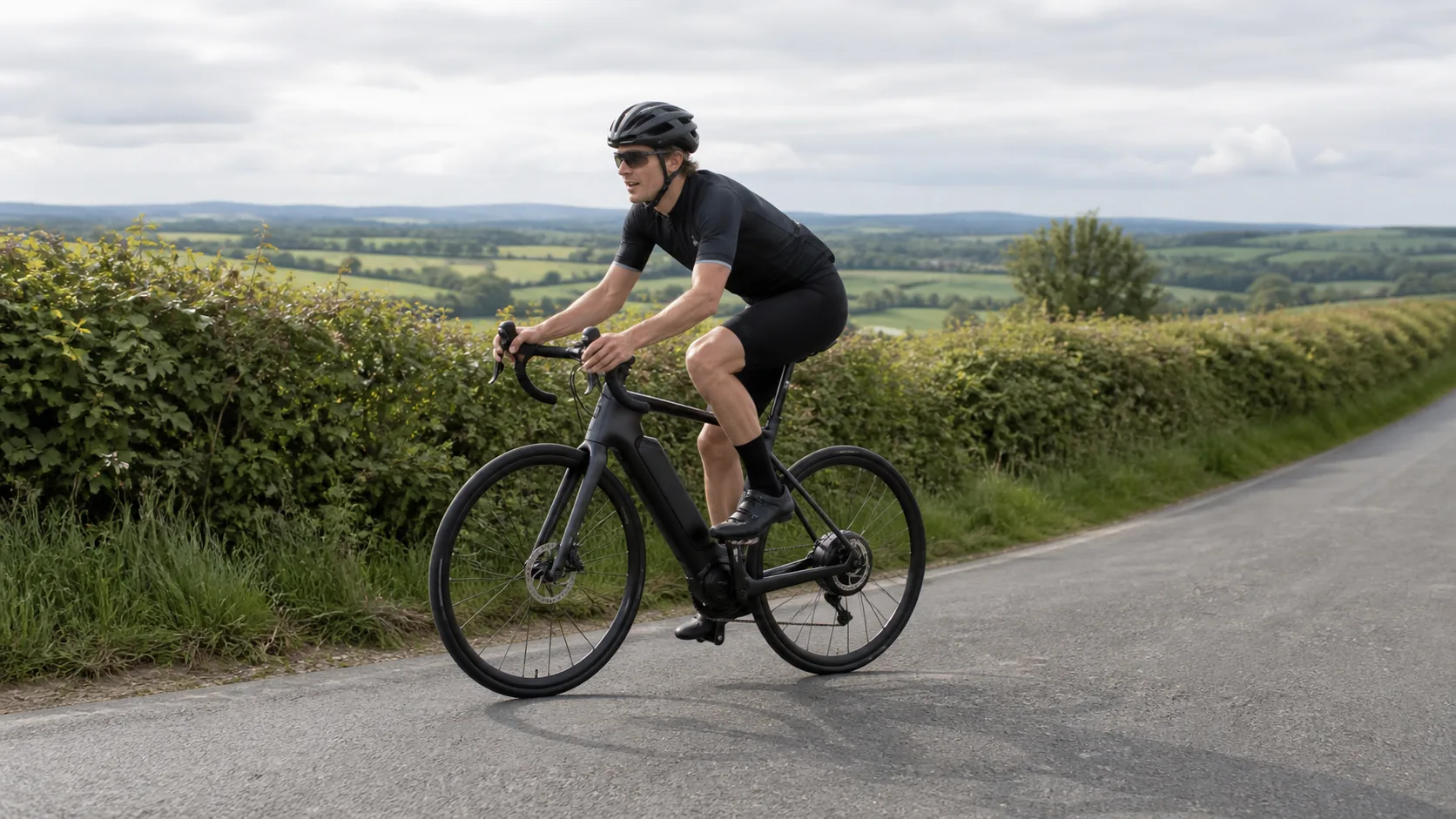
Electric road bikes make the biggest difference where UK riding is most irritating: steep little climbs, stop-start villages, headwinds, winter fitness gaps and routes that look easy on Strava until the last 20km. They do not turn a road bike into a motorbike, and the legal assistance limit means you still need to pedal properly.
The practical changes are more subtle:
- Hills become pacing decisions, not survival tests. You can keep cadence up without grinding your knees.
- Group rides get less intimidating. You can stay with stronger riders on climbs, then ride normally on flats.
- Longer routes feel realistic. A 70km loop with climbs becomes a normal Saturday rather than a once-a-month effort.
- Headwinds sting less. That is not romantic, but in the UK it matters.
There is a flip side. E-road bikes are heavier to lift over gates, pricier to insure and less simple to travel with. If you mostly ride flat roads above 25km/h, the motor will spend a lot of time doing nothing. In that case, spend the same budget on a lighter non-electric endurance bike and better wheels.
Where to Buy and What to Budget
For most UK buyers, the realistic budget is £2,800-£5,500. Below that, you are usually looking at hybrid e-bikes rather than proper lightweight electric road bikes. Above that, you are paying for carbon frames, lighter wheels, electronic shifting and more polished integration.
Budget for the bike and the bits around it:
- Quality lock: £60-£120 for a Sold Secure-rated D-lock or chain.
- Insurance: roughly £80-£180 per year depending on postcode, bike value and cover.
- First service: often free from a dealer, otherwise about £50-£90.
- Tyres: £80-£140 for a pair of good 32-35mm road/all-road tyres.
- Range extender: often £400-£700 if the system supports one.
Cycle to Work can change the maths. A £3,499 bike may cost much less after salary sacrifice, depending on your employer’s scheme and tax position. Do check scheme limits and ownership terms before falling in love with a bike that your employer’s provider cannot supply.
For EAPC-compliant bikes, you do not need tax, registration or compulsory insurance, but theft cover is still sensible at these prices. If you are also buying lights, mudguards or luggage, our e-bike rear rack guide and e-bike lock picks are worth checking before you bolt random accessories to an expensive frame.
Common Buying Mistakes
Buying too much bike for normal rides
The £7,499 carbon option is lovely. It is also overkill for many people. If your real riding is 30-50km loops, occasional hills and a bit of fair-weather commuting, a £2,849-£3,499 bike will already feel special. Spend the saved money on fit, tyres, clothing and insurance.
Ignoring fit because the motor sounds exciting
An uncomfortable e-road bike is still uncomfortable. Do not accept the wrong reach or stack because a sale price looks good. Drop-bar fit matters more on e-bikes because you may ride further than usual. If your neck hurts after 20km, the motor has not solved the problem.
Assuming all e-road bikes ride the same
They do not. Rear-hub systems, mid-drives, tyre sizes and frame geometry all change the feel. Test ride if you can, especially between Ribble-style lightweight rear-hub bikes and Specialized/Trek-style endurance systems. The spec sheet can tell you the motor type; your legs tell you whether the delivery feels right.
Forgetting battery care
A lightweight electric road bike is still built around a lithium-ion battery. Use the correct charger, avoid leaving it permanently full for weeks, and keep the bike somewhere dry. If you are storing the bike for winter, our e-bike battery guide covers the habits that preserve capacity.
Frequently Asked Questions
What is the best electric road bike in the UK in 2026? For most riders, the Specialized Turbo Creo 2 Comp E5 is the best electric road bike to start with because it balances ride feel, tyre clearance, motor support and UK dealer access. The Ribble Allroad E AL is the stronger value pick at about £2,849.
How much should I spend on a lightweight electric road bike? Expect to spend about £2,800-£5,500 for a proper lightweight electric road bike in the UK. Cheaper e-bikes are usually hybrids or commuters, while premium carbon e-road bikes can run from about £7,499 to £8,999.
Are electric road bikes legal in the UK? Yes, if they meet EAPC rules: working pedals, a motor rated at no more than 250W continuous output, and assistance that cuts out at 15.5mph. Compliant bikes do not need registration, tax, insurance or a licence.
Is a rear hub motor or mid-drive motor better for an electric road bike? Rear hub motors often feel lighter and cleaner on fast road bikes, while mid-drives can feel stronger and more controlled on steep climbs. For rolling UK lanes, both can work well if the assistance is smooth.
Can I use an electric road bike for club rides? Yes, but choose carefully. A light e-road bike can help you stay with a group on climbs, but above 15.5mph the motor stops assisting. If your club rides are fast and flat, a normal road bike may still feel better.
Which electric road bike is best value? The Ribble Allroad E AL is the best value shortlist pick because it starts from about £2,849 and keeps the ride road-focused. The trade-off is that direct buying may not suit riders who want local dealer fitting and support.