You’ve got an e-bike, you’ve been eyeing the Lake District on the map, and you’re wondering whether those hills that defeat regular cyclists will be any friendlier with a motor. The short answer: yes, massively so. The Lakes is one of the best e-bike destinations in England — the motor flattens the brutal climbs, the scenery is world-class, and there’s a growing network of trails, cafés, and charging points that cater specifically to electric cyclists. For related guidance, see our E-Bike Battery Guide: Range, Charging & How to Make It Last guide. For related guidance, see our How to Choose a Folding E-Bike: Weight, Fold Size & Range guide.
In This Article
- Why the Lake District Works for E-Bikes
- Where You Can and Can’t Ride
- Easy Trails for Beginners
- Intermediate Trails
- Challenging Trails for Experienced Riders
- E-Bike Hire in the Lake District
- Charging and Battery Management
- Practical Planning Tips
- Best Time to Visit
- Frequently Asked Questions
Why the Lake District Works for E-Bikes
The Hill Problem (Solved)
The Lake District is famously hilly. Passes like Hardknott (33% gradient) and Kirkstone (20%) defeat even fit road cyclists. On an e-bike, these gradients become challenging but achievable — the motor transforms a suffer-fest into an adventure. We’ve ridden passes on an e-MTB that would have been walk-and-push on a regular bike, and arrived at the top with enough energy to actually enjoy the view instead of lying on the verge wheezing.
The Scenery
This isn’t a selling point that needs much elaboration. The Lake District is a UNESCO World Heritage Site with some of the most dramatic landscapes in England — lakes, fells, valleys, and mountain passes framed by dry stone walls and ancient woodland. On an e-bike, you cover more ground than walking but stay closer to the landscape than driving. It’s the ideal speed for appreciating the scenery.
The Infrastructure
The Lakes has embraced cycling more than almost any other UK national park. Dedicated cycle paths, quiet lanes, e-bike hire shops, and cafés with charging points make it genuinely accessible for electric cyclists. The Lake District National Park Authority actively promotes cycling as a sustainable transport alternative.
Where You Can and Can’t Ride
Legal Access
Under the Countryside and Rights of Way Act 2000 and cycling access laws, e-bikes (EAPC-compliant — under 250W, pedal-assist only, limited to 15.5mph) have the same access rights as regular bicycles:
- Public roads and lanes ✅ — full access, including all Lake District mountain passes
- Bridleways ✅ — shared with walkers and horse riders. Give way to both
- Byways Open to All Traffic (BOATs) ✅ — less common but some exist in the Lakes
- Cycle paths and railway trails ✅ — dedicated cycling infrastructure
- Footpaths ❌ — cycling is not permitted on footpaths, even on an e-bike
- Open fell land ❌ — “right to roam” does not include cycling
Trail Etiquette
- Slow down for walkers — they have right of way on shared paths. A bell or friendly “hello” prevents surprises
- Give way to horses — stop, move to the side, and let them pass. Horses can be startled by bikes
- Stay on the trail — don’t create new routes across fell land. Erosion is a real problem in the Lakes
- Close gates behind you — livestock graze across most of the Lake District
Easy Trails for Beginners
Keswick to Threlkeld Railway Path
- Distance: 6km one way (12km return)
- Surface: Tarmac and compacted gravel
- Gradient: Gentle — almost flat throughout
- Highlights: Views of Blencathra, Castlerigg Stone Circle nearby, café at Threlkeld
The old railway line between Keswick and Threlkeld is the most beginner-friendly trail in the Lakes. The gradient is barely noticeable (railways couldn’t handle steep hills either), the surface is smooth, and the views of Blencathra and the northern fells are superb. On an e-bike, you could extend to the Castlerigg Stone Circle loop and still be back for lunch. There are bike racks at both ends and several pubs in Threlkeld for the turnaround stop.
West Shore of Windermere (via ferry)
- Distance: 15km loop
- Surface: Quiet lanes and some off-road tracks
- Gradient: Rolling — a few short hills, nothing severe
- Highlights: Windermere ferry crossing, Claife Heights viewpoint, lakeside riding
Take the Windermere ferry from Bowness to Far Sawrey, then ride the quiet lanes along the western shore. The east side of Windermere is busy with traffic; the west side is peaceful and largely car-free. The route passes through Beatrix Potter country with views across the lake to the Langdale Pikes. The hills are gentle enough that you’ll barely notice you’re on an e-bike — use the motor sparingly and save battery for the ride back.
Whinlatter Forest Trails
- Distance: Various loops from 5-15km
- Surface: Forest roads and graded gravel trails
- Gradient: Moderate — some hills but nothing steep
- Highlights: Forest setting, red squirrel viewing areas, café with bike racks
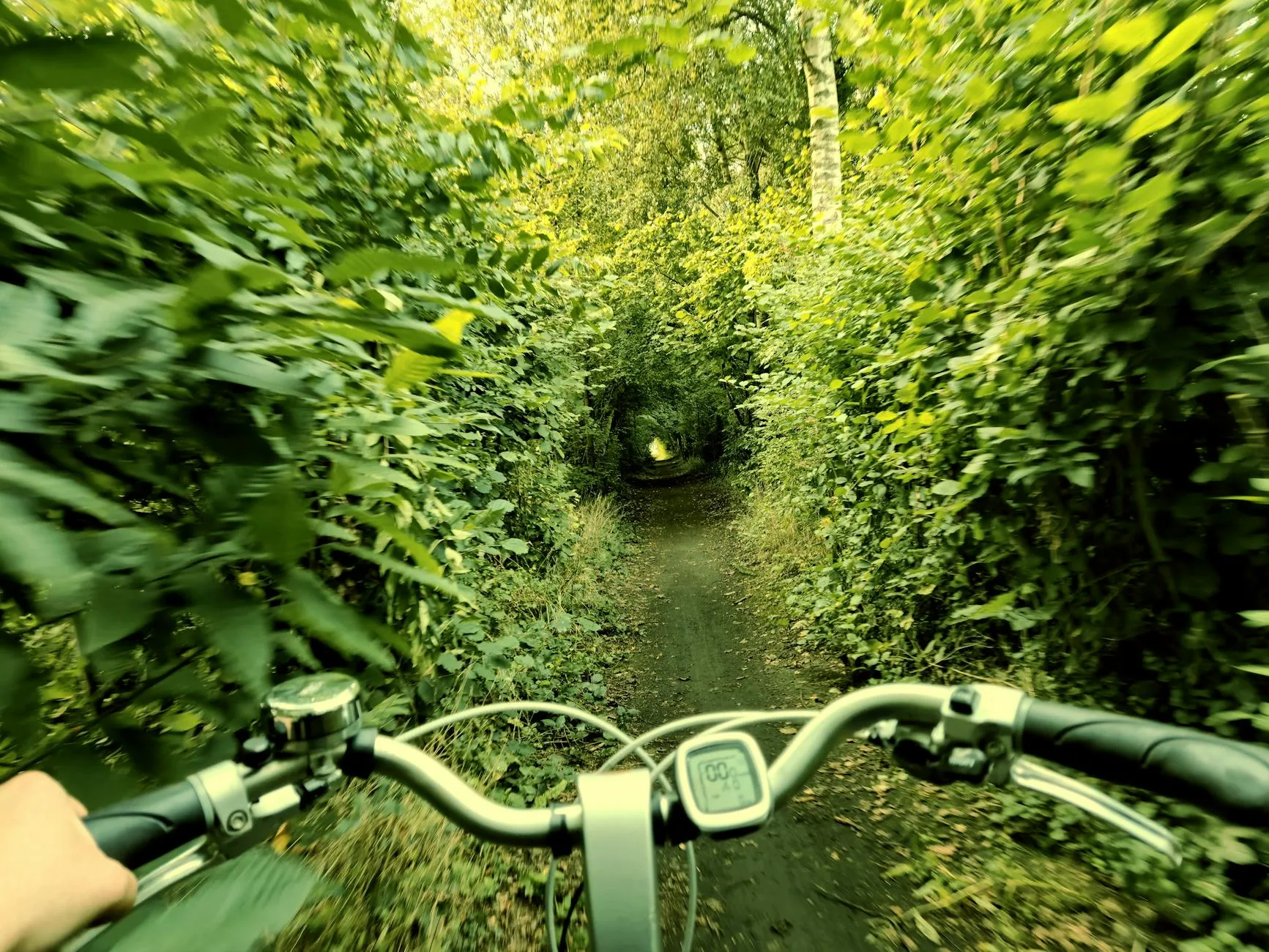
Whinlatter is England’s only true mountain forest, and the Forestry England trails are well-maintained and clearly waymarked. The e-bike-friendly loops use forest roads with gentle gradients — perfect for building confidence off-road. The visitor centre has a café, bike wash, and information about red squirrel sighting points along the trails. Don’t expect mountain bike trail centre features — this is more about peaceful forest riding than technical challenge.
Intermediate Trails
Grizedale Forest to Hawkshead
- Distance: 20km loop
- Surface: Forest trails and quiet lanes
- Gradient: Moderate hills — some sustained climbs
- Highlights: Sculpture trail, Hawkshead village, Esthwaite Water views
Grizedale Forest has a network of cycling trails that connect to Hawkshead via quiet lanes. The forest sections include some rougher surfaces and steeper sections that test your off-road confidence. Hawkshead itself is a postcard-perfect Lake District village — park the bike, explore the narrow streets, and refuel at one of the pubs before riding back. The return via Esthwaite Water is flat and scenic.
Keswick to Buttermere via Whinlatter Pass
- Distance: 30km out and back
- Surface: Road (B5292)
- Gradient: Sustained climbing — Whinlatter Pass reaches 390m
- Highlights: Whinlatter Pass summit, Buttermere lake, Honister Pass views
This is where your e-bike earns its keep. The climb over Whinlatter Pass from Braithwaite is relentless on a regular bike — on an e-bike, it’s manageable with the motor on eco or trail mode. The descent into Lorton Vale is glorious, and Buttermere at the end is one of the most beautiful lakes in the district. The return over the pass means two climbs total — budget your battery accordingly. There’s a café at Whinlatter Forest for a mid-ride charge if needed.
Coniston Loop via Tarn Hows
- Distance: 18km loop
- Surface: Mix of lanes, bridleways, and rough tracks
- Gradient: Hilly — several steep sections
- Highlights: Tarn Hows (one of the Lakes’ most photographed spots), Coniston Water, The Old Man views
The loop from Coniston village takes in Tarn Hows — an artificially created but stunningly beautiful tarn surrounded by forest. The bridleway sections are rough in places and muddy after rain, so an e-MTB or hardtail e-bike is better suited than a road-biased commuter. The climb from Coniston to Tarn Hows is steep but short — the motor makes it achievable for anyone with basic fitness.
Challenging Trails for Experienced Riders
Kirkstone Pass from Ambleside
- Distance: 25km out and back (to Patterdale and return)
- Surface: A592 road
- Gradient: Severe — Kirkstone Pass tops out at 454m with sections at 20%
- Highlights: The Kirkstone Pass Inn (highest pub in the Lakes), views of Ullswater, Patterdale valley
Kirkstone is a proper mountain pass. On a regular road bike, it’s a leg-destroying slog. On an e-bike with a decent battery (400Wh+), it’s a challenging but rewarding ride that opens up the Ullswater side of the Lakes. Use turbo mode on the steepest sections and eco on the gentler slopes — battery management matters here. The descent into Patterdale is fast and spectacular, with Ullswater appearing ahead of you. Return over the same pass or take the longer (but less steep) route via Windermere.
Honister Pass and Buttermere Horseshoe
- Distance: 40km loop from Keswick
- Surface: B-roads and one mountain pass
- Gradient: Extreme — Honister Pass reaches 350m with 25% gradients
- Highlights: Honister Slate Mine, Buttermere, Crummock Water, Lorton Vale
The horseshoe loop takes in both Honister and Whinlatter passes in a single ride. It’s a full-day adventure that tests battery management, fitness, and e-bike capability. The climb up Honister from Seatoller is the steepest road in the route — short but savage. The reward is the descent into Buttermere and the lakeside riding through Crummock Water. Battery tip: use eco mode on the flats and save turbo for the two pass climbs. A 500Wh battery should handle the loop with careful management; 400Wh might not.
Helvellyn Bridleway Circuit
- Distance: 25km loop from Glenridding
- Surface: Bridleways and rough tracks — e-MTB essential
- Gradient: Steep and technical in sections
- Highlights: Helvellyn views, Glenridding, Ullswater shoreline
This off-road loop uses bridleways around the lower slopes of Helvellyn. It’s technically demanding with rocky sections, steep drops, and exposed moorland. Only attempt this on a proper e-mountain bike with suspension, wide tyres, and disc brakes. The views are outstanding — Helvellyn’s ridgeline above you, Ullswater stretching below — but the terrain demands full attention.
E-Bike Hire in the Lake District
Hire Shops
- E-Bike Tours Lakeland (Keswick) — guided and self-guided hire, route advice, 400Wh+ batteries
- Grizedale Mountain Bikes (Hawkshead) — e-MTB hire for forest trails
- Wheelbase (Staveley) — major bike shop with e-bike hire and servicing
- Country Lanes (Windermere) — e-bike hire with suggested routes and maps
What to Expect
- Cost: About £45-75 per day for a quality e-bike. Half-day hire available from some shops
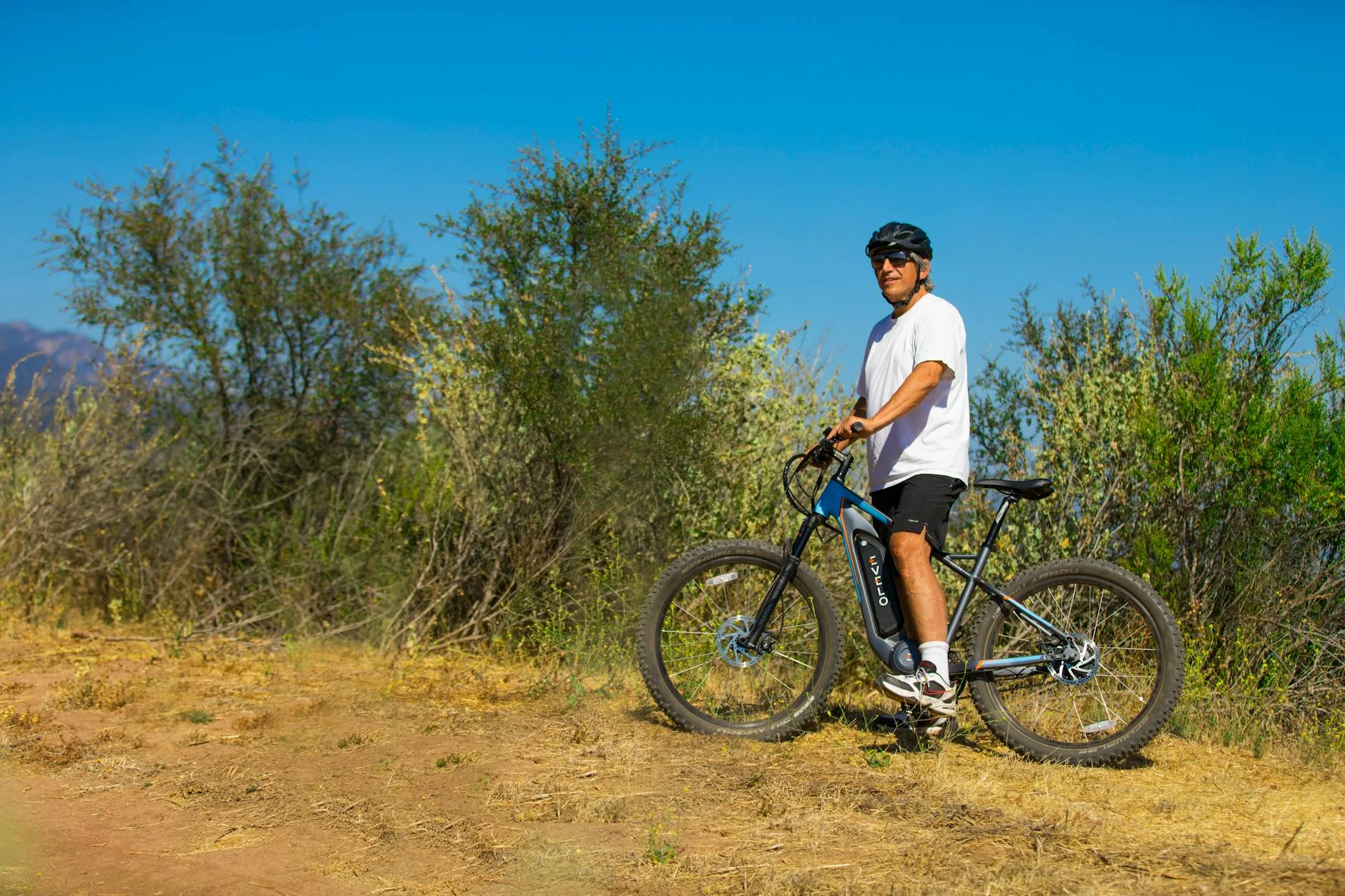
- Battery size: Most hire bikes come with 400-500Wh batteries. Ask for the largest available if you’re planning mountain passes
- Booking: Reserve in advance during school holidays and summer weekends. Availability drops fast
- Deposit: £200-500 deposit or credit card hold. Most include basic insurance for damage
Charging and Battery Management
Battery Range in the Lakes
Lake District terrain is hilly, which means higher motor assistance and faster battery drain than flat riding. Realistic ranges:
- 400Wh battery — 40-60km in eco mode on hilly terrain, 25-35km in turbo
- 500Wh battery — 50-75km in eco mode, 30-45km in turbo
- 625Wh battery — 60-90km in eco mode, 40-55km in turbo
These are conservative estimates for hilly riding. On flat sections, range extends considerably.
Charging Points
- Cafés and pubs — many now offer charging for cyclists. Ask at the bar — most are happy to plug your charger in while you eat
- Visitor centres — Whinlatter, Grizedale, and Brockhole visitor centres have charging facilities
- Accommodation — most B&Bs and hotels will let you charge overnight. Ask when booking
- Formal charging stations — still rare specifically for e-bikes, but standard 3-pin sockets work
Battery Strategy for Long Rides
- Start with a full charge the night before
- Use eco mode on flats and gentle hills — save turbo for the steep passes
- Turn off the motor entirely on descents (you don’t need it and it saves battery)
- Plan a mid-ride stop at a café for a 30-60 minute partial charge if your route is ambitious
- Carry your charger in a pannier or backpack for emergency top-ups
Practical Planning Tips
Getting There
- By car — the M6 runs along the eastern edge of the Lakes. Major car parks at Keswick, Ambleside, Windermere, and Coniston. Bike racks or e-bike car racks needed
- By train — Oxenholme (LNER/Avanti) connects to Windermere via a branch line. Bike spaces are limited — book in advance. Penrith station serves the northern Lakes
- By bike — the C2C and Way of the Roses routes pass near the Lakes. An e-bike makes connecting to these routes feasible
Weather
The Lake District is one of the wettest places in England — Seathwaite in Borrowdale averages 3,300mm of rain annually. Waterproofs are non-negotiable, even in summer. Check the forecast before riding and be prepared to adjust plans. Mountain passes are exposed and conditions can change rapidly.
Where to Stay
- Keswick — best base for northern Lakes trails (Whinlatter, Buttermere, Skiddaw)
- Ambleside — central location with access to all areas
- Coniston — quiet base for Grizedale Forest and southern trails
- Glenridding — Ullswater access, Helvellyn trails, quieter than the western Lakes
Best Time to Visit
Spring (April-May)
Quieter than summer, lambing season adds character, and the fells are green without the bracken that obscures views in August. Days are long enough for full-day rides. Weather is unpredictable but that’s the Lakes year-round.
Summer (June-August)
Longest days, warmest temperatures, and the best chance of dry weather. Also the busiest period — roads around Windermere and Ambleside get congested. Midweek riding avoids the worst crowds. Book accommodation and bike hire well in advance.
Autumn (September-October)
The secret best season. Autumn colours in the forests are spectacular, crowds thin after school holidays, and the weather is often more settled than spring. Shorter days mean starting earlier and planning routes with daylight in mind.
Winter (November-March)
Cold, wet, short days, and some trails become impassable with mud. Mountain passes can be icy or closed. Not impossible for prepared riders — the Lakes in winter sun is magical — but plan short rides and carry extra layers. Battery performance drops in cold weather too (expect 15-25% less range below 5°C).
Frequently Asked Questions
Can I ride an e-bike on Lake District bridleways? Yes. EAPC-compliant e-bikes (pedal-assist only, 250W motor, limited to 15.5mph) have the same access rights as regular bicycles, including bridleways, byways, and cycle paths. You cannot ride on footpaths or open fell land.
Will my e-bike battery last for a mountain pass? A 500Wh battery will handle most single-pass routes with power to spare. For double-pass loops (e.g., Honister and Whinlatter), you’ll need careful battery management or a 625Wh battery. Use eco mode on flats, turbo only on the steepest sections, and turn off the motor on descents.
Do I need an e-mountain bike for Lake District trails? For road and railway path rides, any e-bike works. For forest trails (Grizedale, Whinlatter) and bridleways, an e-MTB or hardtail with wider tyres is strongly recommended. Rocky, muddy surfaces and steep gradients demand proper off-road capability.
Where can I charge my e-bike in the Lake District? Many cafés, pubs, and visitor centres offer charging — ask at the counter. Most accommodation providers will let you charge overnight. Carry your charger on long rides for emergency top-ups at any standard plug socket. Dedicated e-bike charging stations are still uncommon.
Is the Lake District too hilly for e-bikes? No — that’s precisely why e-bikes work so well here. The motor transforms punishing climbs into challenging but achievable rides. Passes that would be walk-and-push on a regular bike become rideable. Just manage your battery wisely and choose routes that match your fitness and battery capacity.