Off-road e-bikes overheat on climbs because the motor is being asked for high torque at low speed with very little airflow. Add mud, soft tyres, a heavy rider, a steep gradient and Boost mode, and the system can hit its thermal limit surprisingly quickly. If you are trying to work out why off road e-bikes overheat on climbs, start with load, cadence and cooling before assuming the motor is faulty.
In This Article
- Why Off-Road E-Bikes Overheat on Climbs
- The Riding Habits That Create Heat Fast
- Motor, Battery and Controller: Which Part Is Getting Hot?
- Setup Checks That Reduce Overheating
- What to Do Mid-Climb When Power Drops
- When Overheating Means a Fault or Bad Spec
- UK Costs: Fixes, Servicing and Upgrades
- Frequently Asked Questions
Why Off-Road E-Bikes Overheat on Climbs
An e-bike motor turns battery energy into movement, but some of that energy always becomes heat. On flat tarmac, the motor gets cooling airflow and only has to help against rolling resistance and wind. On a steep off-road climb, the same motor has to fight gravity, drag a heavier bike through rough ground, and often do it at walking pace.
That low-speed part matters. A climb through a muddy bridleway may feel slower and less dramatic than a fast road descent, but it is harder on the drive system. The motor is producing high torque while the bike crawls forward. Less speed means less air moving over the motor casing and battery compartment. Heat builds.
Torque demand is the main trigger
Climbing is torque-heavy. A legal UK e-bike may only be rated at 250W continuous assistance under GOV.UK’s EAPC rules, but e-MTB systems can still deliver high short-term torque through the drivetrain. Bosch Performance Line CX, Shimano EP8 and Yamaha PW-X3 systems are common on UK e-MTBs from roughly £2,500-£5,500, and they are designed for climbing, but none of them can ignore physics.
The problem is not one hard pedal stroke. It is sustained load: five, ten or fifteen minutes of steep climbing with the motor under pressure. That is why overheating usually appears on long drags, repeated switchbacks or technical climbs where you keep losing momentum.
Off-road terrain adds hidden resistance
Tarmac is predictable. Off-road climbing is messy. Mud sucks at the tyres, roots break rhythm, loose gravel forces tiny accelerations, and ruts make you steer more than you expect. Every correction asks the motor for another burst.
A 12% road climb at steady cadence may be fine. A 12% woodland climb with wet leaves, soft tyre pressure and stop-start line choices can push the system much harder. Based on owner reports from UK e-MTB riders, overheating warnings are more common on slow technical climbs than on smoother fire-road climbs of the same gradient.
Heat is not always a failure
Thermal protection is there to save expensive parts. If the motor reduces assistance or asks you to stop, it is usually protecting the windings, controller electronics or battery cells. Annoying, yes. Better than a cooked drive unit.
The key question is whether the warning appears only in extreme conditions or during normal riding. A brief reduction on a brutal climb in July is one thing. Repeated overheating on mild trails in Eco or Trail mode is a different problem.
The Riding Habits That Create Heat Fast
Most overheating episodes are not caused by one bad part. They come from a stack of small load increases. The rider can control more of them than it first appears.
Grinding in too high a gear
The classic mistake is climbing slowly in a hard gear while asking the motor to drag you up. Your legs feel like they are pushing hard, the motor is working hard, and cadence drops. That is the hot zone.
Most mid-drive systems are happier when you spin rather than grind. Aim for roughly 70-90rpm on climbs if your display shows cadence. If it does not, use feel: your legs should be turning smoothly rather than stamping down on each pedal.
This overlaps with the broader advice in our guide to extending e-bike range in hilly areas, but the overheating angle is more urgent. Low cadence creates heat, not just poor range.
Staying in Boost for too long
Boost mode is useful. It is also the fastest way to build heat on a long off-road climb. If you use Boost to get over a steep root step, fine. If you leave it on for a ten-minute woodland climb, the motor and battery have to deal with sustained peak demand.
Use higher assist for short sections, then drop back to Trail, Tour or Eco as soon as the gradient eases. Trek’s e-bike maintenance guidance makes the same practical point for batteries: electric systems dislike temperature extremes, so heat management is part of ownership rather than a rare edge case.
Starting climbs too slowly
Momentum is cooling and efficiency. If you roll into a steep climb almost stopped, the motor has to haul the full bike-rider system from a crawl. That creates a large current draw, especially on hub motors and cadence-sensor bikes.
Approach the climb in the right gear, carry sensible speed, and sit down before traction gets sketchy. You are not trying to sprint. You are trying to avoid making the motor rescue a stalled bike every five metres.
Carrying too much load
An off-road e-bike is already heavy. Add a 90kg rider, a 24kg full-suspension e-MTB, a 3kg lock, tools, water, jacket and mud stuck to the tyres, and the motor has a serious lifting job.
This does not mean bigger riders cannot ride e-MTBs. It means total system weight matters. A 500Wh hardtail that feels fine on a summer towpath may struggle on a loaded Lake District climb. If you regularly carry camping kit, our e-bike camping guide is worth reading alongside this.
Motor, Battery and Controller: Which Part Is Getting Hot?
“The e-bike overheated” is too vague to be useful. Different parts behave differently, and the fix depends on which part is actually hitting its limit.
Motor heat
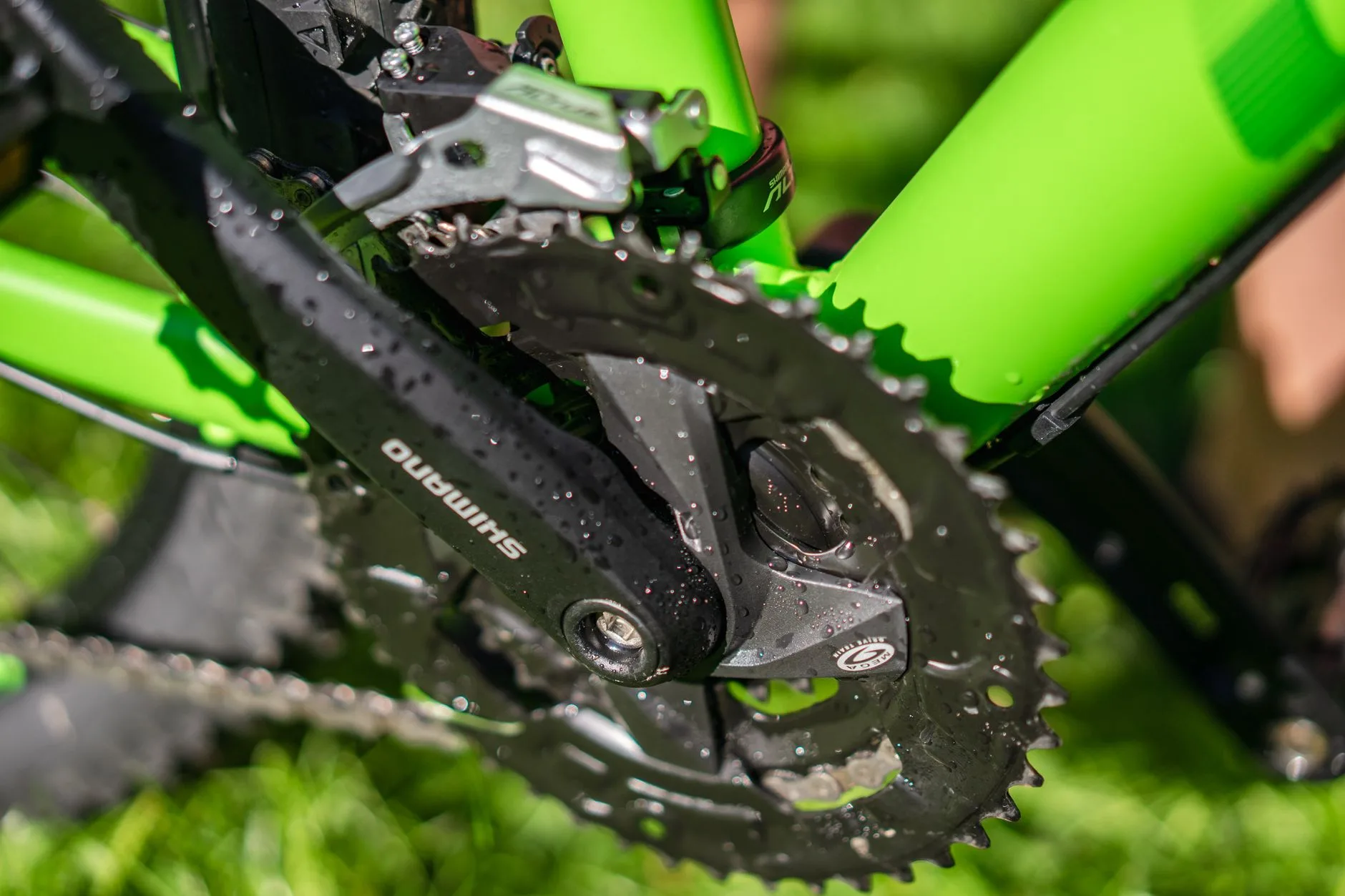
Motor heat usually shows up as reduced assistance, a warning code, or a motor casing that feels very warm near the bottom bracket or rear hub. Mid-drive motors sit low and central, so you may feel warmth around the crank area. Rear hub motors concentrate heat in the rear wheel.
Hub motors are more vulnerable on steep off-road climbs because they cannot use the bike’s gears in the same way a mid-drive can. They have to turn the wheel directly at low speed. That is why our hub drive vs mid-drive guide recommends mid-drive systems for serious hill and trail riding.
Battery heat
Battery heat can come from high current draw, hot weather, direct sun or poor ventilation inside an integrated frame. You may notice the battery case is warm after a hard climb, or the display may show a battery-related warning.
Do not charge a hot battery straight after the ride. Let it return to room temperature first. A replacement e-bike battery can cost £350-£800 depending on brand and capacity, so treating heat casually is false economy. The e-bike battery guide covers charging and storage habits in more depth.
Controller heat
The controller manages power delivery between battery and motor. On many modern systems it is integrated into the motor unit or frame, so riders do not think about it. If the controller overheats, assistance can cut suddenly or behave inconsistently.
Controller issues are more common on cheaper conversion kits and budget hub-drive systems than on dealer-supported Bosch, Shimano, Giant or Yamaha systems. That does not make every budget bike bad, but it does mean heat management is one area where cheap electronics can show.
Setup Checks That Reduce Overheating
Before blaming the motor, check the basic setup. A badly maintained e-bike can make any climb feel like a stress test.
Tyres and pressure
Soft tyres give grip, but too soft creates drag and heat. Off-road tyre pressure is a compromise: low enough for traction, high enough that the casing does not squirm and the motor is not fighting unnecessary rolling resistance.
As a rough starting point:
- Hardtail e-MTB on mixed trails: Around 23-28psi depending on rider weight and tyre width.
- Full-suspension e-MTB on rocky trails: Around 20-26psi with tubeless tyres.
- Hybrid e-bike on bridleways: Around 35-50psi for 40-50mm tyres.
Use the tyre sidewall as your safe range. A decent track pump with a gauge costs about £25-£45 from Halfords, Decathlon or Amazon UK. A digital pressure gauge is about £12-£25 and is worth it if you ride off-road often.
Drivetrain condition
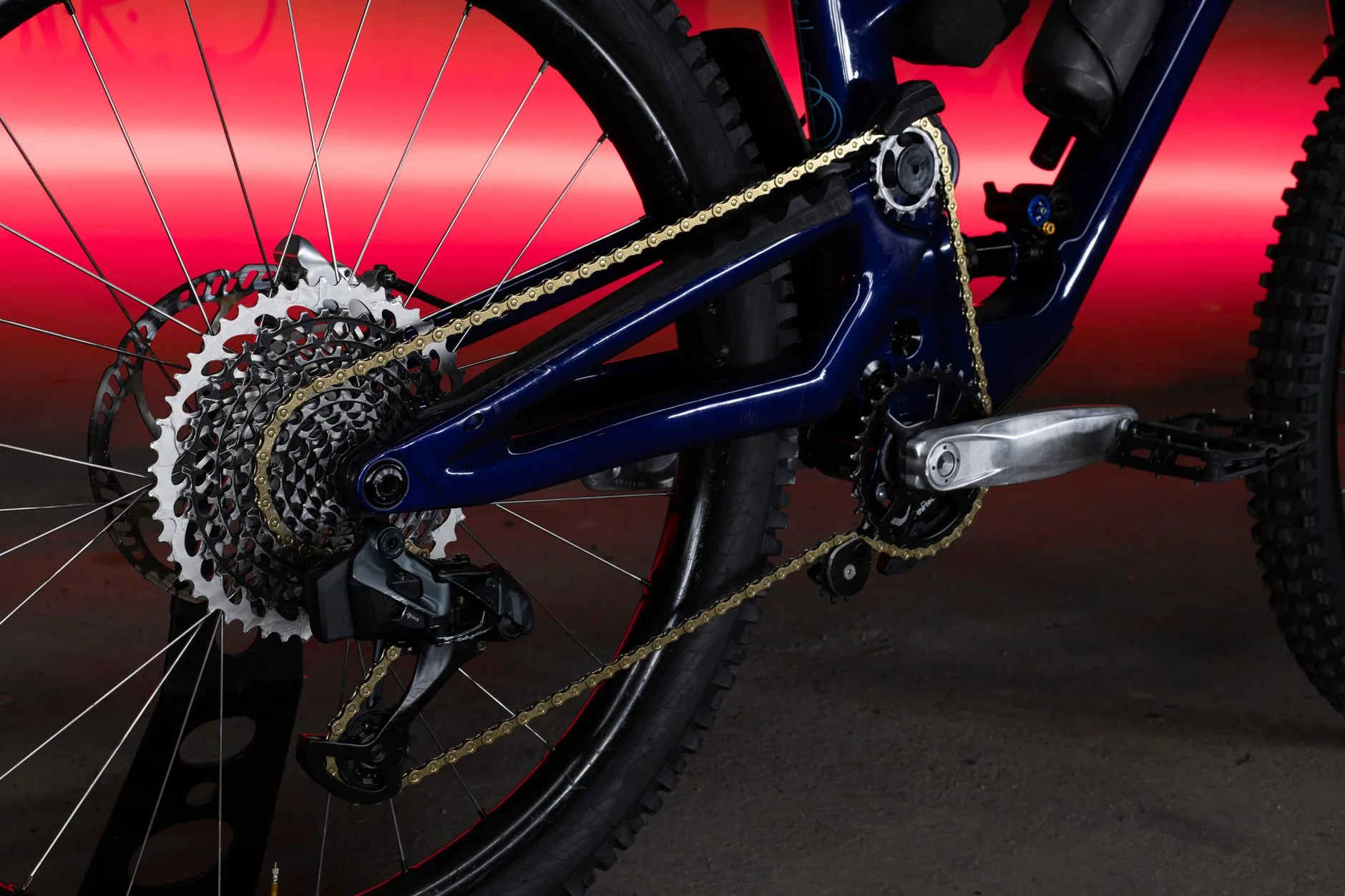
A filthy chain, worn cassette or sticky jockey wheel wastes power. On a normal bike that feels sluggish. On an e-bike climb, it also makes the motor work harder.
Clean and lubricate the chain before muddy rides, not once it starts squeaking. A bottle of wet lube is about £5-£9, a chain-cleaning tool is £10-£25, and a replacement e-bike chain is usually £20-£40. If your chain is stretched, the motor is pushing through a poor mechanical link.
Brake rub
This is easy to miss. Lift each wheel and spin it. If the disc rotor rubs through part of the rotation, you are carrying a tiny brake all the way up the climb. On steep trails, that extra resistance can be enough to tip a hot system into thermal limiting.
Minor brake adjustment at a local bike shop is usually £10-£25. New e-bike brake pads cost about £12-£30 per pair. If the rotor is bent, expect roughly £15-£35 for a replacement rotor plus fitting.
Firmware and assist settings
Some e-bike systems let you tune assist response. Bosch Smart System, Shimano E-Tube and Giant RideControl setups, typically found on branded UK e-bikes from about £2,000 upwards, can alter support feel, torque response or mode behaviour. If the bike feels punchy and hot on every climb, a softer Trail mode may help.
Do not install unofficial tuning dongles or derestricting kits. Apart from the legal problem on UK roads and public routes, they can increase heat load and void warranties. If your bike is road-legal and still overheating under normal use, speak to a dealer rather than trying to trick the system.
What to Do Mid-Climb When Power Drops
If power fades halfway up a climb, do not keep stamping harder in the same gear. That is the cycling equivalent of shouting at a kettle.
Immediate steps
Use this sequence:
- Shift down. Get cadence up and reduce torque load.
- Drop one assist level. Move from Boost to Trail, or Trail to Eco if the gradient allows.
- Pick a smoother line. Avoid repeated stalls on roots, ruts and loose stones.
- Keep moving if safe. Gentle airflow helps more than standing still with the system hot.
- Stop if the warning persists. Let the motor and battery cool for five to ten minutes.
- Check for obvious drag. Look for a rubbing brake, jammed mud, flat tyre or clogged chain.
If the display gives a specific error code, take a photo before turning the bike off. Dealers can diagnose faster when they see the exact warning rather than “it went weird on a hill”.
When to abandon the climb
Walk it if the warning returns quickly after a cool-down, the motor cuts repeatedly, or the battery feels unusually hot. There is no prize for turning a £3,000 e-MTB into a warranty conversation because pride got involved.
If the climb is a known heat trigger, change the route next time. A slightly longer fire-road approach may use less battery and create less heat than a shorter technical wall.
What not to do
Do not pour water over the motor or battery. Sudden cooling is not a clever fix, and water around connectors is asking for a new problem. Do not open the battery casing. Do not keep restarting the bike every thirty seconds hoping the warning gives up.
Treat the warning as information. It is telling you the system has reached a limit. Your job is to reduce load or stop.
When Overheating Means a Fault or Bad Spec
Some overheating is normal in hard use. Some is a sign the bike is wrong for the job, badly set up, or faulty.
Normal heat behaviour
Normal: the motor feels warm after a long climb, assist reduces briefly in hot weather, or Boost mode becomes unavailable until the bike cools. That is the system protecting itself.
Also normal: a heavy e-MTB using more battery and getting warmer on mud than on dry hardpack. If you ride Welsh trail centres in winter, the bike is doing more work than the marketing photo suggests.
Fault warning signs
Get the bike checked if:
- Warnings appear on gentle climbs: Especially in Eco or low assist.
- The same fault code repeats: A recurring code is evidence, not bad luck.
- Battery range has dropped sharply: Heat plus sudden capacity loss can point to battery health issues.
- The motor makes new noises: Grinding, clicking or harsh whirring under load needs inspection.
- The bike overheats after a recent knock or wash: Water ingress or connector damage may be involved.
Our home battery-health checks are a useful first screen, but motor/controller diagnostics need dealer software on most branded systems.
Bad spec for the route
A budget rear-hub hardtail may be fine for canal paths and gentle bridleways. It is not the right tool for repeated steep off-road climbs. If you keep overheating a hub-motor bike on technical hills, the honest answer may be that the bike is outside its comfort zone.
For regular off-road climbs, look for a mid-drive e-MTB with a known support network: Bosch Performance Line CX, Shimano EP8/EP801, Yamaha PW-X3 or Giant SyncDrive Pro. Bikes with those systems usually start around £2,500 for hardtails and move into the £3,500-£6,000 range for full-suspension models. The best electric mountain bike UK guide covers those systems from the buying angle.
UK Costs: Fixes, Servicing and Upgrades
Overheating fixes range from free riding changes to expensive component decisions. Start cheap. Most riders do not need a new bike.
Low-cost fixes
The first round is inexpensive:
- Tyre pressure gauge: £12-£25 from Halfords, Decathlon or Amazon UK.
- Track pump with gauge: £25-£45.
- Chain cleaner and wet lube: £15-£30 combined.
- Brake pad check or adjustment: £10-£25 at a local bike shop.
- Firmware update at dealer: Often free during a service, otherwise roughly £20-£40.
If I were troubleshooting a hot e-MTB at home, I would start with tyre pressure, brake rub and chain condition before paying for diagnostics. Those three checks catch a lot of silly heat creators.
Dealer diagnostics and servicing
Expect to pay roughly:
- Basic e-bike safety/service check: £50-£90.
- Diagnostic plug-in and report: £30-£80, depending on dealer and system.
- Full e-bike service: £100-£180 before parts.
- Replacement chain: £20-£40 plus fitting.
- Cassette replacement: £35-£90 depending on speed and brand.
For Bosch or Shimano mid-drive bikes, which are most common on £2,500+ UK e-MTBs, use a dealer with the correct diagnostic tools. A normal bike shop can fix brakes and drivetrains, but it cannot always read motor logs or update system firmware.
Bigger upgrades
If the bike is fundamentally under-specced for the riding, spending £200 on small fixes may only delay the inevitable. A capable hardtail e-MTB for UK trails usually starts around £2,000-£3,000. Full-suspension trail e-MTBs with strong motors and 600Wh+ batteries often sit around £3,500-£5,500.
That is a serious spend, so be blunt about the use case. If you ride one hilly trail weekend per year, adjust technique and live with the limits. If you ride steep off-road climbs every week, the right mid-drive bike is not a luxury; it is the right tool.
Frequently Asked Questions
Why do off-road e-bikes overheat more than road e-bikes? Off-road climbs create high torque at low speed with less cooling airflow. Mud, soft ground, repeated stalls and heavy assist modes all add load.
Is it bad if my e-bike motor gets warm? Warm is normal after a climb. Repeated warning codes, sudden power loss on easy hills, or heat with strange motor noise should be checked by a dealer.
Should I use Boost mode on steep climbs? Use Boost for short steep sections, but avoid leaving it on for long climbs. Shift down, keep cadence up and drop back to Trail or Eco when possible.
Can tyre pressure make an e-bike overheat? Yes. Very soft tyres increase rolling resistance, which makes the motor work harder. Use pressures that suit the tyre, terrain and rider weight.
Are hub motors worse for off-road climbing? Usually, yes. Hub motors cannot use the bike’s gears for torque multiplication like mid-drives, so they can struggle and heat up on slow steep climbs.
How much does e-bike overheating diagnosis cost in the UK? A dealer diagnostic check is commonly around £30-£80. A full e-bike service is often £100-£180 before parts.