Your perfectly good bike is sitting in the garage, and you’ve been eyeing e-bikes for months but can’t justify buying a whole new one when there’s nothing wrong with the frame, wheels, and gears you already own. An e-bike conversion kit adds a motor and battery to your existing bike for a fraction of the cost of a complete e-bike — typically £300–800 versus £1,500–4,000.
The concept is simple: bolt on a motorised wheel (front or rear), strap on a battery, connect a few cables, and your regular bike becomes an electrically assisted bike. The reality involves some decisions about motor type, battery size, and legal compliance that are worth understanding before you spend anything. Here’s the practical guide.
In This Article
- How E-Bike Conversion Kits Work
- Front Hub vs Rear Hub Kits
- Best E-Bike Conversion Kits 2026 UK
- UK Legal Requirements You Must Follow
- What Bikes Are Suitable for Conversion
- Battery Choices and Range
- Installation: DIY or Professional?
- Conversion Kit vs Buying a Complete E-Bike
- Frequently Asked Questions
How E-Bike Conversion Kits Work
A conversion kit replaces one of your existing wheels with a motorised hub wheel (or adds a mid-drive unit to the bottom bracket). A battery mounts to the frame or rear rack, a controller manages the power delivery, and a handlebar display shows speed and battery level. A pedal sensor (cadence or torque) detects when you’re pedalling and activates the motor assist.
What’s in a Typical Kit
- Motorised wheel (front or rear hub, pre-built with spokes and motor)
- Battery (lithium-ion, usually 36V or 48V, various capacities)
- Controller (the brain that regulates power from battery to motor)
- Pedal assist sensor (cadence type in budget kits, torque type in premium)
- Throttle (optional — but see legal section below)
- Display/computer (handlebar-mounted, shows speed, assist level, battery)
- Wiring harness and connectors
- Brake cut-off sensors (mandatory for safety — cuts motor when braking)
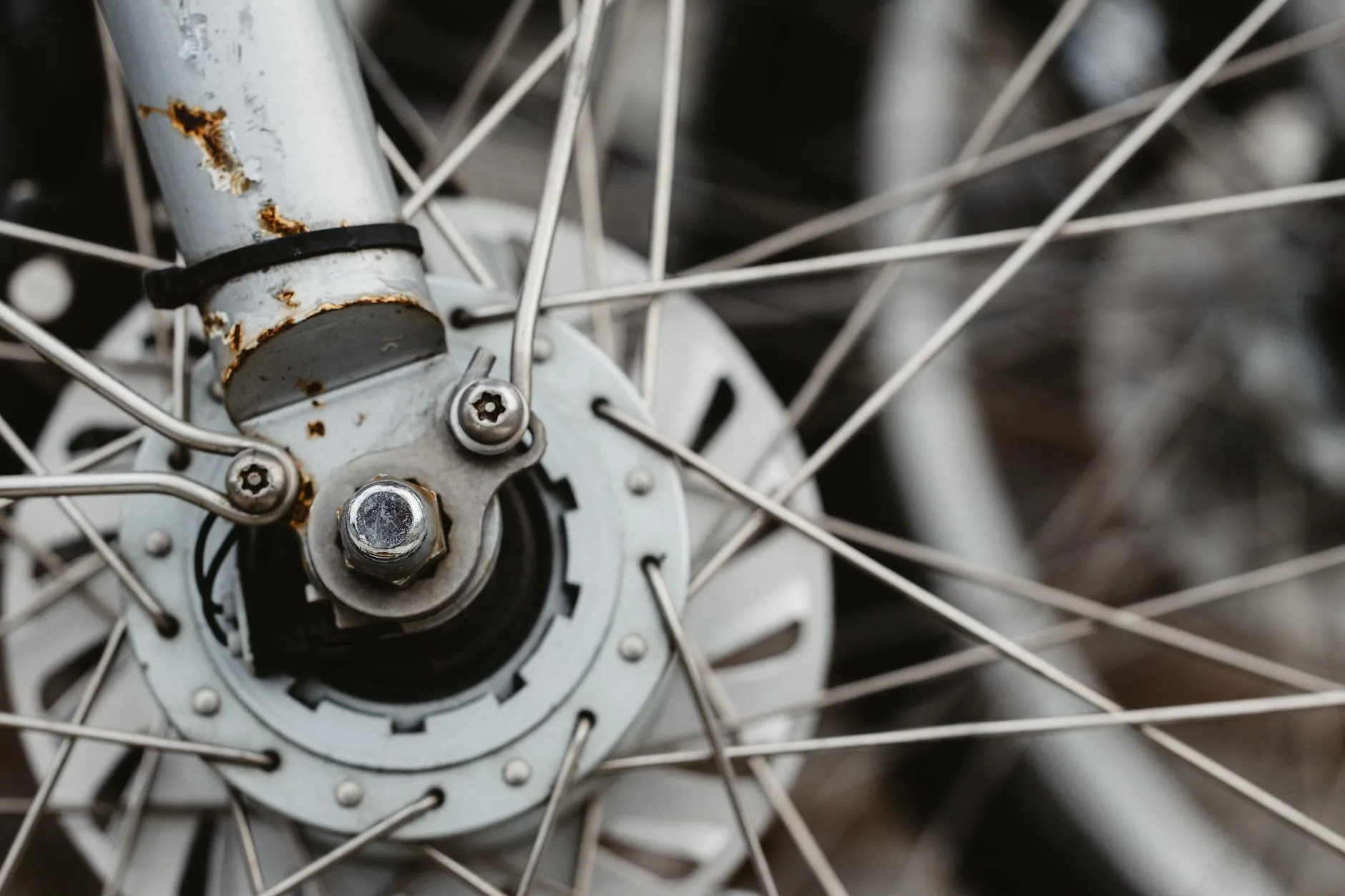
Front Hub vs Rear Hub Kits
This is the first decision and it affects handling, traction, and installation difficulty. Our motor types guide covers the engineering in depth, but here’s the practical comparison for conversion kits specifically.
Front Hub Kits
The motor sits in the front wheel. This is the most common conversion kit type because installation is simpler — you don’t need to work around the rear derailleur, cassette, or chain.
- Pros: easier to install (no gear compatibility issues), keeps rear wheel standard for easy puncture repair, weight distribution with a rear-mounted battery
- Cons: can feel strange — you’re being pulled forward rather than pushed. Front-heavy in the steering. On loose or wet surfaces, the front wheel can spin because the drive force is at the front while most of your weight is at the back
- Best for: flat terrain, commuter bikes, casual riders, first-time conversions
Rear Hub Kits
The motor sits in the rear wheel, replacing your existing rear wheel. This puts the drive force where your weight is, giving better traction — especially on hills and loose surfaces.
- Pros: more natural riding feel (power comes from where you’re used to pedalling), better traction on hills and wet roads, weight distribution is more balanced
- Cons: harder to install (must be compatible with your gear cassette), rear puncture repair is more involved, heavier rear end
- Best for: hilly terrain, performance-focused riders, anyone who wants a natural ride feel
Which Should You Choose?
For most UK commuters on relatively flat routes, a front hub kit is the easier, cheaper option. For hilly areas or anyone who wants the most natural ride feel, rear hub is worth the extra installation effort.
Best E-Bike Conversion Kits 2026 UK
Swytch Air — Best for Simplicity
About £600–800 from Swytch direct. The Swytch Air is designed specifically for people who don’t want to deal with complex installations. The battery packs into a small handlebar bag (2.5kg), the front hub motor weighs about 2kg, and the whole system adds under 5kg to your bike.
The trade-off is range — about 30–50km depending on terrain and assist level, which is fine for commuting but limits longer rides. Installation takes about an hour with basic tools. The Swytch app provides ride data and battery management.
Why we rate it: The lightest and most elegant conversion solution. Your bike still looks and feels like a bike, not a DIY project.
Bafang BBS02B Mid-Drive — Best for Performance
About £400–600 for the motor kit (battery separate, £200–400). The Bafang BBS02B is the enthusiast’s choice — a 750W mid-drive motor that replaces your bottom bracket and drives through your existing gears. This gives you the mechanical advantage of gear reduction on hills, which hub motors can’t match.
Important: 750W exceeds the UK legal limit of 250W for EAPC classification. You’ll need to restrict the output to 250W continuous power via the controller settings to ride legally on public roads. Many riders use unrestricted mode off-road only. Check our UK e-bike law guide before deciding.
Why we rate it: Unmatched hill-climbing ability and natural ride feel. The mid-drive approach is what premium complete e-bikes use, at a fraction of the price.
Voilamart 26″ Front Hub Kit — Best Budget
About £200–280 from Amazon UK. This is the no-frills entry point — a 250W front hub motor with a basic cadence sensor and LCD display. Battery is usually sold separately (add £150–250 for a 36V 10Ah pack).
Build quality is adequate rather than premium. The cadence sensor means the motor kicks in based on pedal rotation rather than effort, which feels less refined than a torque sensor. But for someone wanting to try e-bike conversion without a big investment, it’s a legitimate starting point.
Why we rate it: Under £500 all-in for a working e-bike conversion. If you’re not sure conversion is for you, this is the low-risk way to find out.
Pendleton E-Bike Conversion Kit — Best High Street
About £350–450 from Halfords. Pendleton (Halfords’ own brand) offers a front hub kit with a 250W motor, 36V battery, and pedal assist sensor. The advantage: you can buy it in a physical shop, Halfords can fit it for you (about £80 fitting charge), and warranty support is simple.
Why we rate it: The buy-and-forget option. Walk into Halfords, walk out with a conversion kit, book a fitting, done.
UK Legal Requirements You Must Follow
This section is non-negotiable. A converted bike must meet EAPC (Electrically Assisted Pedal Cycle) regulations to be ridden legally on public roads without registration, insurance, or a licence.
The Legal Requirements
- Maximum continuous motor power: 250W — measured as continuous rated output, not peak
- Maximum assisted speed: 15.5 mph (25 km/h) — the motor must cut out at this speed. You can pedal faster under your own power
- Pedal assist only — the motor must only provide assistance when you’re pedalling. Throttle-only mode is not legal for EAPC classification (with one exception: a throttle that works up to 6 km/h for walking assist is permitted)
- Must have pedals — the bike must be capable of being pedalled without motor assist
What Happens If Your Kit Doesn’t Comply
If your conversion exceeds 250W continuous or assists above 25 km/h, the bike is legally classified as a moped or motorcycle. You’d need it registered, insured, taxed, and you’d need at minimum a CBT (Compulsory Basic Training). Riding an unregistered overpowered e-bike on public roads is a criminal offence with a potential fine and seizure of the bike.
Practical Compliance
Most quality conversion kits allow you to set the power limit and speed cut-off in the controller software. Make sure these are set correctly before your first ride. The DVLA guidance on e-bikes is the definitive reference.
What Bikes Are Suitable for Conversion
Not every bike makes a good conversion candidate. Here’s what to check.
Frame Compatibility
- Steel frames — best candidates. Strong, affordable, and standard dropouts that fit most hub motors
- Aluminium frames — fine for hub motors if the dropouts are standard. Older aluminium frames can be brittle around the dropouts
- Carbon frames — generally not recommended for hub motor conversion. The torque from a hub motor can damage carbon dropouts. Mid-drive is safer on carbon
- Frame age — if your bike is more than 15 years old, have the frame checked for metal fatigue, particularly at the dropouts and bottom bracket. The extra motor forces stress different parts than pedalling alone
Wheel Size
Most hub motor kits come in standard wheel sizes: 26″, 27.5″, 700c, or 29″. Measure your existing wheel before ordering — an incorrectly sized motor wheel won’t fit your frame or brakes.
Brake Compatibility
Hub motors add weight and speed. Your brakes must handle both.
- Disc brakes — ideal for conversion. Better stopping power and consistent in wet conditions
- Rim brakes — adequate for 250W conversions at legal speeds but marginal in wet conditions. Consider upgrading to disc if your frame has the mounts
- Coaster brakes — not suitable for conversion. The motor overpowers them
Dropout Type
Your hub motor axle must match your frame’s dropout width and style. Most bikes use standard 100mm front / 135mm rear dropouts, but check. Through-axle frames need specific motor compatibility.
Battery Choices and Range
Capacity and Range Estimates
Battery capacity is measured in watt-hours (Wh). More Wh = more range.
- 250Wh — 25–40km range (enough for short commutes)
- 400Wh — 40–65km (standard commute with some margin)
- 500Wh — 50–80km (comfortable for longer rides)
- 600Wh+ — 70–100km+ (touring and longer distances)
These are estimates for flat terrain at moderate assist. Hills, headwinds, rider weight, and assist level all reduce range. Our battery guide covers the variables in detail.
Battery Mounting Options
- Frame-mounted (triangle bag) — lowest centre of gravity, best handling. Needs a frame triangle large enough to fit the battery
- Rear rack — convenient but raises the centre of gravity. Can feel top-heavy, especially with panniers
- Downtube/bottle cage mount — compact batteries fit here on some frames
Battery Safety
Use only reputable lithium-ion batteries with a BMS (battery management system) and store them safely. Cheap unbranded batteries from marketplace sellers are a genuine fire risk — the BMS may be absent or inadequate. Budget £200–400 for a quality battery from a known brand.
Installation: DIY or Professional?
DIY (Front Hub)
A front hub conversion is within reach of anyone who can change a bicycle wheel and follow instructions. You’ll need:
- Allen key set, adjustable spanners, cable ties
- About 2–3 hours for first-time installation
- A willingness to run cables neatly (the difference between a clean conversion and a mess)
DIY (Rear Hub or Mid-Drive)
Rear hub kits require removing your cassette and possibly respacing the axle — intermediate mechanical skill. Mid-drive kits like the Bafang require bottom bracket removal and may need spacers — confident home mechanic territory.
Professional Fitting
Most independent bike shops will fit a conversion kit for £80–150. Halfords charges about £80 for their own kits. Professional fitting ensures correct torque on the axle, proper brake alignment with the new wheel, and tidy cable routing. For a first conversion, it’s money well spent.
Follow the e-bike maintenance schedule after installation — conversion kits need the same ongoing care as complete e-bikes.
Conversion Kit vs Buying a Complete E-Bike
When Conversion Makes Sense
- You already own a bike you love and it’s mechanically sound
- Your budget is £300–800 rather than £1,500+
- You want to keep riding the same frame, saddle, and handlebar setup
- You enjoy tinkering and maintaining your own bike
When a Complete E-Bike Is Better
- Your existing bike is old, worn, or not suitable for conversion
- You want a clean, integrated look with internal wiring and frame-mounted battery
- You value warranty coverage on the complete system
- You don’t want to deal with compatibility issues or installation
The Honest Cost Comparison
A quality conversion (Swytch or equivalent) costs about £600–800. A decent complete e-bike starts at about £1,200. The conversion saves £400–600 but requires some mechanical involvement and won’t look as polished. For riders who already have a bike they enjoy, conversion is the better value proposition.
Frequently Asked Questions
Is it legal to convert a normal bike to an e-bike in the UK? Yes — provided the conversion meets EAPC regulations: maximum 250W continuous motor power, speed cut-off at 15.5 mph (25 km/h), and pedal assist only (no throttle-only mode above walking speed). A compliant converted bike doesn’t need registration, insurance, or a licence.
How much does an e-bike conversion cost? Budget kits start at about £200 (motor only, battery separate). Complete kits with battery range from £400–800 for quality options. Add £80–150 for professional fitting if you’re not doing it yourself. Total cost: £300–950 depending on quality and whether you DIY.
Can I convert any bike to an e-bike? Most steel and aluminium bikes with standard wheel sizes and dropouts are suitable. Carbon frames are risky for hub motors. Very old bikes may have fatigue issues. Check dropout compatibility, wheel size, and brake adequacy before buying a kit.
How far can I ride on a conversion kit? Typical ranges are 30–80km depending on battery capacity, terrain, assist level, and rider weight. A 400Wh battery provides about 40–65km on moderate assist over mixed terrain — enough for most UK commutes with margin.
Do conversion kits void my bike warranty? Adding a motor to a bike almost always voids the manufacturer’s frame warranty, since the frame wasn’t designed for motor forces. If your bike is still under warranty and you value that coverage, consider waiting until it expires or buying a purpose-built e-bike instead.