Choose a cut that fits your body and riding position first, then compare features within that cut. For men’s cuts: Proviz City REFLECT360 for a reflective outer, Altura Grid Parka for hooded coverage, or Endura Xtract II for packability. For women’s cuts: compare the Proviz City REFLECT360 with the Altura Nightvision Storm for full reflective fabric versus a coloured outer with vents and pockets.
This shortlist includes three men’s cuts and two women’s cuts, not interchangeable sizing. It does not cover a women’s hooded parka or dedicated packable shell. All five are separate waterproof jackets, with no trousers or other rain kit included. The comparison gives the exact linked size and colour; use the relevant body-measurement chart rather than assuming the same letter size fits across brands.
Commuter Jackets at a Glance
| Jacket and linked cut | Choose it for | Rain construction / ventilation | Main compromise |
|---|---|---|---|
| Proviz City REFLECT360 — men’s Silver, M | Men’s reflective-outer choice for dark commuting | Seam-sealed; underarm vents; adjustable waist and cuffs | Grey by day; not a fluorescent daytime jacket |
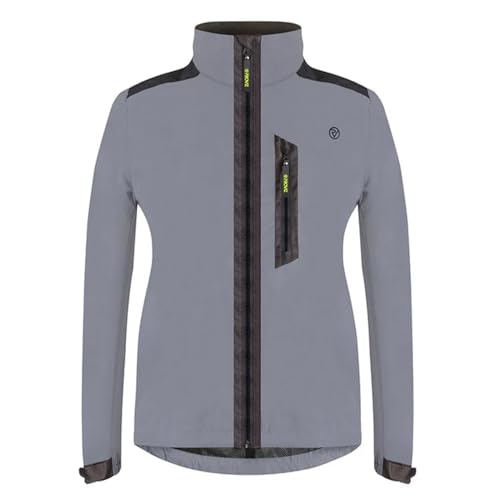
| Proviz City REFLECT360 — women’s silver/black trim, M | Women’s reflective-outer choice for dark commuting | Seam-sealed; underarm vents; adjustable waistband and cuffs | No hood; grey rather than fluorescent by day |
| Altura Nightvision Storm — women’s pink, UK12 | Women’s relaxed cycling cut and several storage pockets | Taped seams; underarm and back vents; fleece-lined collar | No hood for the walk after parking |
| Altura Grid Parka — men’s olive, S | Men’s longer coverage over everyday clothes | Taped seams; adjustable hood; zipped underarm vents | Long cut needs checking for bunching when leaning forward |
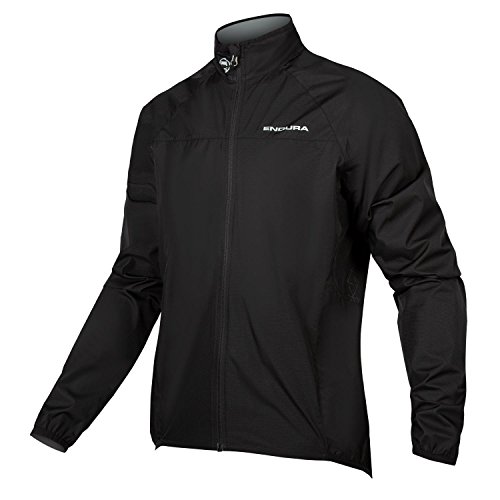
| Endura Xtract II — men’s black, L | Men’s packable rain shell kept in the pannier | Seam-sealed 2.5-layer fabric; storm flap; back mesh vents | No hood; fewer adjustment options than a commuter coat |
Selection method: we compared exact garment features, cuts and intended use, with manufacturer information supporting key details where available. We have not ridden in these jackets or measured their waterproofing. Recommendations reflect those documented differences, rather than an invented test ranking.
- The five jackets
- Coverage and ventilation
- Visibility, fit and hoods
- The rest of your rain kit
- Care and buying decision
- Frequently asked questions
Five Waterproof Jackets Compared by Cut
Proviz City REFLECT360 Men’s — Reflective Coverage for Dark Commutes
The City REFLECT360 puts reflective fabric across the jacket rather than limiting it to a few small logos. That is the reason to choose it over the olive Grid Parka or black Xtract II if your regular journeys take place after dark. It appears grey in daylight and reflects light directed towards it; it is not a light source or a guarantee that a driver will see you.
Proviz specifies seam-sealed construction, underarm vents and adjustable cuffs and waistband for this City model. The fleece-lined collar, mesh lining and chest/rear storage are practical commuter details. Close the cuffs around your gloves and check the rear coverage in your seated position, especially with a rucksack pulling on the shoulders.
The compromise is the daylight colour and the conspicuous off-bike appearance. Buy this for a reflective outer with commuting features, not because silver fabric makes every other aspect of the rain kit unnecessary. This is the City REFLECT360—not the differently specified Plus APEX or outdoor hooded jacket.

Proviz City REFLECT360 Women’s — The Reflective Alternative to the Storm
The women’s City gives this shortlist a reflective-outer choice without changing to a men’s cut. Choose it over the women’s Storm when that reflective coverage is your priority; choose the Storm if you prefer its coloured outer and pocket arrangement. Check chest, waist and hip measurements with your commuting layers on.
Proviz’s women’s City specification confirms seam sealing, underarm ventilation, adjustable waistband and cuffs, and a fleece-lined collar. The linked silver/black-trim M has those features; its sizing is not the same as the men’s M. It has no hood, and its grey daytime appearance is the trade-off for the reflective outer.
Altura Nightvision Storm Women’s — Vents and Useful Storage
The Nightvision Storm combines a relaxed women’s cycling cut with taped seams and ventilation under the arms and across the back. It makes sense if you want a normal coloured jacket with reflective detailing, rather than the women’s Proviz City’s full reflective shell. The pink example is UK12; check the women’s chart for chest, waist and hips before deciding whether this cut suits you.
Altura documents the vents, fleece-lined collar and hand, chest and back pockets. Those pockets make keys and small items easier to organise than on a stripped-down rain shell. A rucksack may cover the rear vent and pocket, so this arrangement is particularly worth considering if your laptop travels in a pannier.
Choose it if this women’s cut fits and you want its ventilation and pocket arrangement. Compared with the women’s Proviz City, it has a coloured outer with less reflective coverage. Neither women’s option here has a hood: if walking coverage is essential, widen your search within a suitable cut rather than defaulting to the men’s Grid Parka.

Altura Grid Parka Men’s — Longer Coverage over Work Clothes
The Grid Parka addresses a different problem: riding to work in ordinary clothes and keeping the same outer layer on afterwards. Its longer shape and adjustable hood suit an upright commuter position and the walk at either end of the journey. The olive colour is restrained off the bike, while zipped chest and hand pockets are useful away from the handlebars.
It has taped seams, zipped underarm ventilation and a water-repellent outer finish. Unlike the similarly named Grid Field, which is a water-repellent garment, the Parka is the waterproof model. Altura introduced the Grid range for city riding and everyday use; that is the right context for this choice, rather than treating it as a road-racing shell.
The extra length is also its compromise. Lean into your riding position and check that the front does not bunch against your thighs or interfere with pedalling. Choose the Xtract instead if compact storage and a shorter cycling shell matter more. Do not assume the hood fits over a helmet: check head movement and vision with your actual setup.

Endura Xtract Jacket II Men’s — A Packable Shell for the Bag
The Xtract II is the pick when you want rain protection to carry rather than a coat to wear all day. Its 2.5-layer waterproof fabric has fully sealed seams, with an internal storm flap behind the front zip and mesh vents at the centre back. Those construction details make it a proper rain shell, not merely a windbreaker with a water-repellent finish.
Choose it over the Parka when you ride in cycling layers and want less coat to stow between showers. If underarm ventilation matters more, compare the men’s Proviz City or men’s Grid Parka, provided their cut and coverage suit you. Check the cuffs over your gloves and the rear hem when seated before keeping it.
The linked black men’s L version has no hood. It works best as part of a kit that already handles lighting, lower-body rain protection and luggage, rather than as a single purchase intended to solve every wet-commute problem. Its colour is another reason to pay attention to lights and visible accessories.
Choose Coverage and Ventilation for Your Commute
Keep spray out before chasing fabric ratings
Look for sealed or taped seams, a protected front closure and a hem that still covers your waistband when you reach the bars. Rain can enter at openings even when the fabric itself resists water. Full-length mudguards reduce spray from your wheels; our e-bike mudguard setup guide explains the fit considerations.
Hydrostatic-head ratings describe fabric resistance to water pressure, not how many minutes you can ride before getting wet. Do not pay more solely because one number is larger, or assume a cheaper jacket will fail after a particular commute length. Seams, closure design, condition and fit are part of the choice.
Plan around your effort and luggage
Motor assistance can reduce your effort, but pace, hills, temperature and clothing still determine how warm you get. A commuter who pedals hard may need more ventilation than someone using high assistance on a short flat route. Underarm zips are useful for adjusting airflow; a back vent is less useful if a close-fitting rucksack covers it.
Start with a lighter layer underneath than you would wear for standing at a bus stop, then adjust to your own ride. Carrying work clothes in a pannier can keep the back of the jacket clear and lets you change at the destination. Check Met Office warnings before exposed rides: clothing is not a solution to unsafe wind, ice or flooding.
Visibility, Fit and Hood Details
Reflective is not the same as fluorescent
Fluorescent colours help you stand out in daylight; reflective material returns light towards its source in the dark. A rucksack can cover a reflective back panel, so assess what remains visible from the sides and rear with your luggage in place. Neither colour nor reflectivity replaces the bike’s lights.
Under the Highway Code’s cycling rules, night riding requires white front and red rear lights and the required reflectors. Our e-bike lights guide covers that separate purchase. Reflective clothing is an addition, not an exemption.
Try it in your riding position
- Reach and turn: hold your arms as if riding, then look over each shoulder. The jacket should not pull tight across your back.
- Check coverage: make sure the hem overlaps your trousers while seated and the sleeves still reach your gloves.
- Try normal layers: leave room for the jumper or mid-layer you actually commute in, without so much loose fabric that it catches or flaps.
- Assess the hood: if worn while riding, it must not block side vision or restrict head movement. Do not disturb your helmet’s fit to force a hood underneath.
A hood is useful when walking after parking but is not essential on every cycling jacket. The men’s Grid Parka covers that mixed use if its cut fits; the other four are hoodless. An ordinary walking shell can also work if it passes the fit and coverage checks, though pockets and hem length may be less suited to riding.
Complete Your Wet-Weather Kit
A dry torso is only part of arriving comfortably. Waterproof overtrousers protect ordinary trousers in sustained rain; suitable gloves help keep wet, cold hands usable on the controls. Compare the options in our waterproof e-bike gloves guide, rather than relying on a fixed temperature threshold.
Keep electronics and a change of clothes inside a waterproof bag or protected liner. The jacket cannot protect a laptop in an exposed bag: see carrying a laptop on an e-bike. Panniers also leave your back free, though they must suit your rack and load limits.
Good tyres, secure parking and a sensible route still matter. Our guides to puncture-resistant e-bike tyres, e-bike locks and route and kit planning cover those separate decisions. Do not spend the entire commuting budget on the jacket while neglecting the basics.
Care and the Final Buying Decision
Follow the exact garment’s washing and drying instructions. Clean dirt from cuffs and collars, avoid products the label prohibits, and let the jacket dry before leaving it packed in a bag. If the face fabric stops beading water, use the manufacturer’s cleaning and reproofing advice; a surface treatment will not repair a torn membrane or detached seam tape.
Inspect worn cuffs, zip areas and shoulder contact points before replacing the whole jacket. Ask about repair or warranty options where relevant. Do not assume a higher purchase price guarantees a fixed number of years, or that every reflective fabric accepts the same wash-in treatment.
Final choice: in a men’s cut, choose the City for a reflective outer, Grid Parka for hooded coverage, or Xtract II for compact storage. In a women’s cut, compare the City’s reflective outer with the Storm’s coloured fabric, vents and storage. Fit comes before those features; do not switch to an unsuitable cut just to gain a pocket or hood.
Frequently Asked Questions
Do e-bike commuters need a special waterproof jacket? Not necessarily. A suitable jacket needs sealed seams, useful coverage and enough room to turn and reach the handlebars. Motor assistance does not remove the need for ventilation or appropriate layers.
Which jacket is most useful for dark commuting? The men’s and women’s Proviz City REFLECT360 are the reflective-outer choices in this shortlist. Both reflect external light but appear grey by day. Keep proper bike lights and required reflectors regardless of the jacket.
Should I choose a hood? Choose a hood if you also need walking coverage after parking. Check that it does not obstruct side vision or alter helmet fit when riding. A hoodless cycling jacket can be a better fit for riders who do not use one.
Is the Altura Grid Field the same as the Grid Parka? No. The Parka here is a waterproof, taped-seam garment with a hood. The Grid Field is a different water-repellent design; do not assume the names describe equivalent rain protection.
Why do I still feel damp inside a waterproof? Moisture can come from perspiration, condensation or water entering at openings, not only leaking fabric. Adjust layers and vents, check fit, and follow the cleaning instructions before diagnosing a failed membrane.
Are these men’s or women’s jackets? There are three men’s cuts: Proviz City, Altura Grid Parka and Endura Xtract II. The women’s cuts are Proviz City and Altura Nightvision Storm. Compare within the cut that fits you; the table identifies each linked size and colour.