For the e-bike Cycle to Work scheme, how it works matters as much as the headline saving. It can make an e-bike feel much more affordable, but it is not a normal discount code. It is usually a salary-sacrifice hire agreement through your employer, so the real saving depends on your tax band, employer rules, scheme provider and what happens at the end.
In This Article
- How The E-Bike Cycle To Work Scheme Works
- What You Can Buy With The Scheme
- How Much You Can Save On An E-Bike
- The Catch: Ownership, Final Fees And Employer Rules
- Choosing An E-Bike Through Cycle To Work
- Mistakes To Avoid Before You Apply
- Bottom Line: Is Cycle To Work Worth It For An E-Bike?
- Frequently Asked Questions
How The E-Bike Cycle To Work Scheme Works
The e-bike Cycle to Work scheme works by letting your employer provide a bike and cycling equipment, usually through salary sacrifice. Instead of paying the shop yourself upfront, your gross salary is reduced each month and the bike is supplied through the scheme.
That matters because deductions normally come out before income tax and National Insurance. The saving is not a cashback payment. It is the tax and NI you do not pay on the sacrificed salary.
The basic flow
Most schemes follow this pattern:
- Your employer joins a scheme provider: common providers include Cyclescheme, Cycle2Work, Green Commute Initiative and Bike2Work Scheme.
- You choose an eligible e-bike and accessories: usually from an approved retailer or provider marketplace.
- Your employer approves the amount: this may be limited by payroll, employer policy or provider rules.
- You receive a voucher or certificate: the retailer redeems it against the bike package.
- You repay through gross salary: often over 12, 18 or 24 months.
- At the end, you choose what happens next: many schemes offer extended hire or a transfer option, but the exact process varies.
GOV.UK’s Cycle to Work implementation guidance explains the employer-led setup, salary sacrifice approach and tax treatment. That is the best starting point if your HR team gives you a vague answer.
Why e-bikes fit the scheme well
E-bikes are where the scheme earns its keep. A normal commuter bike might cost £500-£900, which some people can buy outright. A decent commuter e-bike is more often £1,200-£2,500, and cargo or folding e-bikes can go higher.
Spreading that cost over payroll can be the difference between buying a sensible e-bike now and putting it off for another year. It also lets you include useful commuting kit at the start rather than buying the bike and forgetting the lock, lights and waterproof jacket.
Who can use it
You normally need to be an employee paid through PAYE, and your employer must offer the scheme. Sole traders cannot just create the same salary-sacrifice arrangement for themselves. Company directors may be able to use one through payroll, but that needs proper accounting advice rather than forum wisdom.
The other practical limit is pay. Salary sacrifice cannot usually take your pay below minimum wage, so low-paid staff may have a smaller available monthly deduction. That is not an e-bike rule; it is a payroll rule.
What You Can Buy With The Scheme
The scheme is for cycles and cycling safety equipment used mainly for commuting. E-bikes can qualify, but they need to be road-legal in the UK if you are buying a normal electric bicycle rather than a moped-style vehicle.
E-bike eligibility
For most UK commuters, the relevant category is an electrically assisted pedal cycle. Our UK e-bike laws guide covers the details, but the short version is:
- Motor assistance must cut off at 15.5mph: above that, you are riding under your own effort.
- Rated motor power is normally 250W continuous: higher-powered throttle bikes can fall outside standard EAPC rules.
- You must pedal for assistance: twist-and-go throttles have tighter rules unless type-approved.
- The bike must be suitable for road use: lights, reflectors and braking performance matter in real commuting.
Do not try to squeeze a non-road-legal high-powered import through the scheme because it looks exciting on YouTube. It may create insurance, warranty and legal problems, and your employer/provider may reject it anyway.
Accessories usually allowed
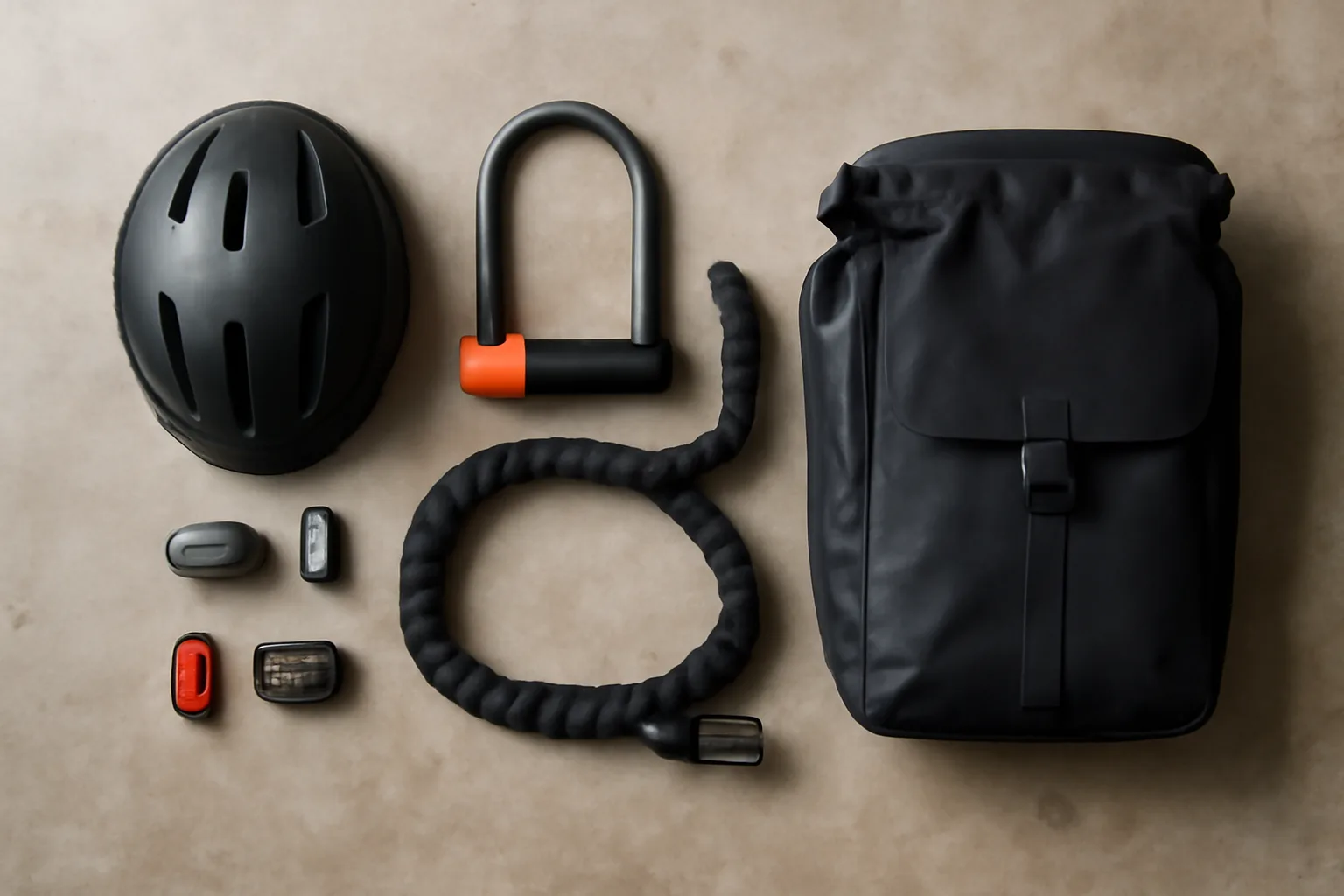
The useful part is that you can often include commuting accessories in the same package. Typical eligible items include:
- Helmet: about £30-£90 from Halfords, Decathlon, Tredz or Sigma Sports.
- Lock: a Sold Secure Gold D-lock or chain is often £50-£130.
- Lights: basic USB sets start around £25; serious commuter lights can be £60-£150.
- Mudguards and rack: often £30-£100 depending on the bike.
- Panniers: £40-£150 for practical waterproof commuter bags.
- Waterproof jacket: £60-£180 for something you will actually wear in February.
Cycling UK has a useful Cycle to Work scheme guide explaining the employee angle, including spreading payments and buying necessary accessories.
What is not usually sensible
Do not treat the scheme as a way to buy every accessory in the shop. A £2,000 e-bike plus £700 of extras may still be approved by some employers, but you are committing future salary to kit you might not need.
For most e-bike commuters, the must-have bundle is bike, strong lock, lights, mudguards, basic tools and weatherproof carrying. Upgrade clothing later once you know your route and habits.
How Much You Can Save On An E-Bike
The headline saving is usually around 28-42%, but that is a broad range. Basic-rate taxpayers save less than higher-rate taxpayers because the tax and NI avoided is lower.
Worked examples
These are simplified examples, not payroll advice, but they show the rough shape:
- £1,200 commuter e-bike package: a basic-rate taxpayer might save roughly £300-£400, bringing the real cost near £800-£900 before any end-of-scheme fee.
- £1,800 hybrid e-bike package: likely saving around £500-£750 depending on tax band and scheme structure.
- £2,500 folding e-bike or premium commuter: possible saving around £700-£1,000+ for higher earners, but monthly deductions are larger.
- £3,500 cargo or high-end e-bike: the saving can be large, but employer caps, affordability checks and final ownership terms matter much more.
The monthly feel is often the bigger win. A £1,800 package over 12 months might mean a gross salary sacrifice of £150 per month. Your take-home pay falls by less than that because of tax/NI savings. Over 18 or 24 months, the monthly hit can become easier to live with.
Why the old £1,000 limit still confuses people
People still talk about a £1,000 limit because older schemes were often capped there unless the employer had the right consumer credit authorisation. The 2019 guidance update made higher-value schemes more practical, which helped e-bikes because many sensible models cost more than £1,000.
That does not mean every employer will approve a £4,000 e-bike. Many set their own caps: £1,000, £2,000, £3,000 or a monthly affordability limit. Some providers also restrict retailers or brands.
Compare it with buying outright
Cycle to Work is usually strongest when you were going to buy a commuter e-bike anyway and you are staying in your job during the repayment period. If you can get a shop sale price, 0% finance or a nearly new e-bike at a strong discount, compare the total cost.
A £2,000 e-bike through the scheme might beat a £2,000 cash purchase. But a £2,000 RRP bike reduced to £1,350 in a January sale may be closer than the headline scheme saving suggests.
This is where the calculator matters. Use your provider’s quote, not a generic saving claim.
The Catch: Ownership, Final Fees And Employer Rules
The biggest misunderstanding is ownership. During the hire period, the bike is normally owned by the employer or scheme provider, not you. You use it, insure it if needed, maintain it and repay through salary, but the legal ownership structure is not the same as buying from Halfords with a debit card.
End-of-scheme options
At the end, schemes usually offer one of these routes:
- Extended hire: you keep using the bike for a longer period, often with a small deposit or no immediate transfer.
- Ownership transfer: you pay a fair market value or transfer fee based on the bike’s age and value.
- Return: possible in theory, though most commuters want to keep the bike.
The final fee is where some headline savings shrink. A scheme claiming “up to 42%” may still be good value, but you need to know whether there is an ownership payment later.
Leaving your job
If you leave your employer before the salary-sacrifice term ends, the remaining balance may come out of your final net pay. That can be painful because you may lose the tax-saving advantage on the remaining amount.
This is the bit people skip when they are excited about a new bike. If your job situation is uncertain, choose a shorter term, lower amount or wait.
Employer caps and retailer rules
Your employer may limit:
- Maximum certificate value: for example £1,000, £2,000 or £3,000.
- Repayment length: commonly 12 months, sometimes 18 or 24.
- Retailers: some schemes work with Halfords only, others include independent bike shops.
- Accessories: some allow broad safety kit, others are stricter.
- Sale bikes: some retailers exclude discounted models from voucher purchases.
Ask HR for the provider name and scheme limit before you choose a bike. Otherwise you end up falling in love with a £2,800 e-bike your employer will not approve.
Choosing An E-Bike Through Cycle To Work
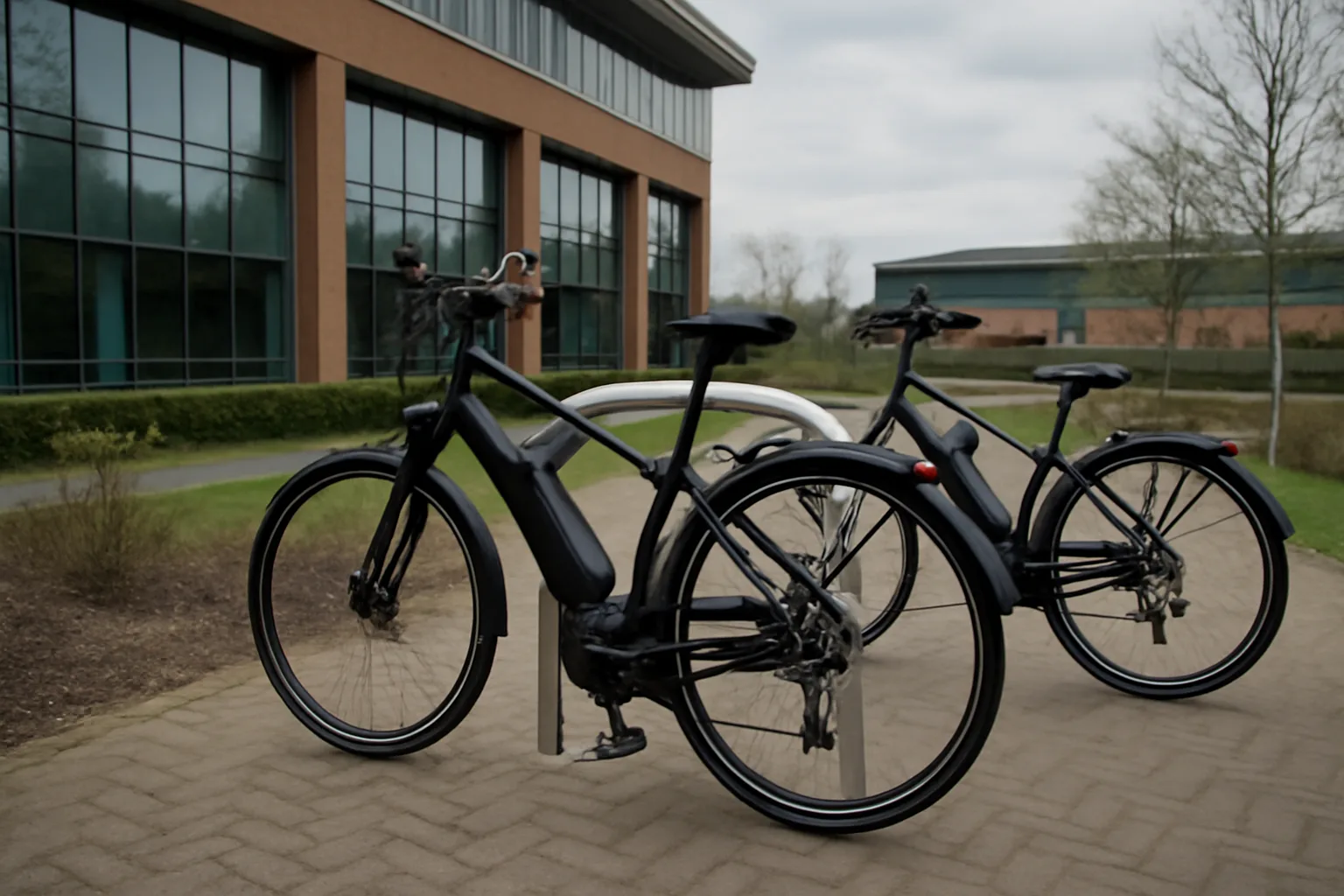
The best Cycle to Work e-bike is not always the fanciest one you can squeeze through payroll. It is the one that fits your commute, storage, charging routine and maintenance budget.
Start with the commute
For a 5-8km urban commute, a £1,200-£1,800 hybrid e-bike from Halfords, Decathlon, Raleigh, Cube or Specialized may be enough. You want mudguards, rack mounts, reliable brakes and a comfortable riding position.
For a longer 15-25km commute, spend more attention on battery size, tyres and comfort. Our real-world e-bike range guide explains why a claimed 100km range can become far less in cold weather, hills and higher assist modes.
For train-plus-bike commuting, a folding e-bike may make sense, but weight matters. A 17kg folding e-bike is manageable. A 24kg folder is a folded problem with pedals.
Pick a realistic price band
Useful UK price bands:
- Under £1,000: possible for basic hub-drive e-bikes, but check brakes, warranty and battery quality carefully.
- £1,200-£1,800: the practical commuter sweet spot for many hybrids and entry-level folders.
- £1,800-£2,800: better motors, batteries, brakes and brand support; often the strongest Cycle to Work territory.
- £3,000+: premium folding, cargo, road or e-MTB options; check whether the scheme saving justifies the monthly deduction.
If you are tempted by a cheap model, read our guide to cheap electric bikes under £1,000 first. The scheme saving does not make a poor e-bike good.
Do not forget security
An e-bike is attractive to thieves. A £1,700 commuter e-bike locked with a £12 cable lock is a false economy.
Budget at least £70-£150 for proper security. A Sold Secure Gold or Diamond D-lock plus a chain is boring money, but it is cheaper than losing the bike outside a station. Our e-bike lock guide covers practical options.
Insurance may also be worth pricing before you apply. Some policies require a specific lock rating, storage arrangement or proof of purchase. See our UK e-bike insurance guide before assuming home insurance covers everything.
Check charging and storage
Before ordering, decide where the bike and battery will live. If you are in a flat, do not assume you can charge in a communal hallway or store a heavy bike under the stairs.
Battery storage matters too. Our guide to storing an e-bike battery overnight explains the flat, shed and garage trade-offs. For Cycle to Work, this is not a side issue. It affects whether the bike fits your life.
Mistakes To Avoid Before You Apply
Most Cycle to Work regrets are admin mistakes, not bike mistakes. The scheme is simple once it is running, but awkward if you order the wrong value or misunderstand the rules.
Applying before a test ride
Do not apply for a voucher until you know the size, model and retailer. Test ride if possible. At minimum, sit on the bike and check reach, standover, handlebar height and weight.
Our e-bike test ride checklist is useful here because motor feel varies a lot. A jerky budget hub motor may be fine for short trips and annoying every day.
Forgetting accessories in the certificate
If you need lights, lock, mudguards, pannier rack and helmet, include them at the start if your scheme allows it. Adding them later with cash is fine, but you lose the salary-sacrifice saving on those items.
That said, do not pad the certificate with “maybe” kit. Buy the essentials, then upgrade after a month of commuting.
Ignoring maintenance
E-bikes are heavier and faster than normal bikes, so tyres, brake pads and drivetrains work hard. A basic annual service might be £60-£100. More involved brake, drivetrain or motor-system work can be £120-£250+.
The scheme helps with purchase cost, not long-term neglect. Our e-bike maintenance schedule gives a sensible routine.
Assuming all retailers accept all vouchers
A bike shop may stock the perfect e-bike and still not accept your employer’s provider. Some providers charge retailer fees, and some independent shops restrict sale bikes or brands.
Check three things before applying:
- Provider: which scheme does your employer use?
- Retailer acceptance: will the shop accept that voucher?
- Exact basket value: bike, accessories, delivery and any setup fees.
Missing the return policy
Cycle to Work purchases can be less flexible than normal online buying because the certificate and hire agreement sit between you, the employer, provider and retailer. Do not assume you can casually return a used e-bike after a week.
Ask the retailer what happens if the size is wrong, the bike arrives damaged or the motor has a fault. Keep emails. Keep receipts. This also helps if you ever need a warranty claim; our e-bike warranty claims guide explains why paperwork matters.
Bottom Line: Is Cycle To Work Worth It For An E-Bike?
Cycle to Work is worth it for many e-bike commuters because the saving is meaningful and the monthly payroll route removes the big upfront hit. It is strongest when you have a stable job, a participating employer, a sensible commute and a bike package you were likely to buy anyway.
Best case
The best case looks like this: a £1,500-£2,500 commuter e-bike, proper lock and lights, employer cap high enough, 12-18 month repayment, and a clear end-of-scheme ownership route. In that situation, the scheme can save hundreds of pounds and get you riding sooner.
When to be careful
Be careful if:
- You may leave your job soon: the remaining balance can become awkward.
- Your employer cap is too low: it may push you into a weaker bike.
- You cannot store or charge safely: the bike will become a daily nuisance.
- The sale price is better outside the scheme: compare total costs, not just tax-saving claims.
- You are buying a leisure e-bike and pretending it is for commuting: that is not what the scheme is for.
Practical recommendation
For most UK commuters, aim for a reliable £1,500-£2,300 e-bike package with lights, mudguards and a serious lock included. Do the scheme maths using your actual provider calculator, check the end-of-hire terms, then compare against the best cash price.
If the numbers still work, Cycle to Work is one of the cleanest ways to buy an e-bike. Just treat it like a payroll commitment, not a free discount.
Frequently Asked Questions
Can you get an e-bike on the Cycle to Work scheme? Yes. Road-legal electrically assisted pedal cycles can usually be bought through Cycle to Work if your employer offers the scheme and approves the certificate value.
How much can you save on an e-bike through Cycle to Work? Many employees save roughly 28-42%, depending on tax band, National Insurance, scheme structure and any end-of-hire fee.
Is there still a £1,000 Cycle to Work limit? There is no simple universal £1,000 limit for every scheme, but employers and providers can set their own caps. Always check your employer’s rules before choosing an e-bike.
Do you own the e-bike straight away? Usually no. During the hire period the bike is normally owned by the employer or scheme provider. Ownership or extended hire is handled at the end according to the scheme terms.
Can you include accessories with an e-bike? Usually yes, if they are cycling safety or commuting equipment such as locks, lights, helmets, mudguards, racks and panniers. Provider rules vary.
What happens if you leave your job during Cycle to Work repayments? The remaining balance may be taken from your final net pay, which can reduce or remove some tax-saving benefit. Check the policy before applying.