Getting more range from an e-bike is rarely one magic setting. It is a stack of small habits: charge sensibly, keep the tyres firm, use the right assist mode, avoid dragging brakes, and stop treating the battery like a phone you run to 1% every day. Do those things and you will usually get more miles per charge while slowing the expensive bit of ageing that leads to a tired battery.
In This Article
- Quick Answer: How to Maximise E-Bike Battery Life and Range
- Start With the Battery Habits That Matter
- Set Up the Bike So It Rolls Efficiently
- Ride in the Right Assist Mode
- Plan Charging Without Creating Fire Risk
- What to Buy When Range Still Feels Poor
- When Range Loss Means a Fault
- Frequently Asked Questions
Quick Answer: How to Maximise E-Bike Battery Life and Range
To maximise e-bike battery life range, keep the battery out of heat extremes, avoid leaving it empty for days, use lower assist on flat roads, keep tyres at the right pressure, clean the drivetrain, and charge with the correct manufacturer-approved charger. None of that sounds dramatic. It works because e-bike range is mostly lost through waste: heat, drag, bad habits and avoidable voltage stress.
The quickest wins are:
- Use Eco or Tour mode more often: save Turbo for hills, headwinds and junctions where you need a clean getaway.
- Keep tyres inflated: soft tyres feel comfortable but make the motor work harder every metre.
- Do not store the battery flat: if you are parking the bike for a few weeks, leave it roughly half charged.
- Clean and lubricate the chain: a dry, gritty drivetrain wastes rider effort and motor assistance.
- Charge safely and predictably: use the right charger, unplug when finished, and avoid overnight unattended charging.
This guide is not another battery-size explainer. If you are still comparing watt-hours before buying, read our watt-hours guide and real-world e-bike range calculation guide. This page is for getting the best from the e-bike already in your hall, garage or shed.
My usual test is simple: if a rider complains about range, I look at tyres, assist mode and charging routine before blaming the battery. The battery is often fine. The bike is just being asked to push through avoidable drag.
Start With the Battery Habits That Matter
Lithium-ion e-bike batteries age with time, charge cycles, heat and abuse. You cannot freeze that process, but you can avoid speeding it up.
Avoid running it flat every ride
Occasional low-battery rides are not a crisis. Making 0-5% your normal finish point is poor practice. The bike’s battery management system protects the cells, but deep discharges still add stress. For commuting, I would rather finish with 20-30% left and charge calmly than limp home on the last bar every evening.
If your ride regularly ends with range panic, the answer may be route planning or assist mode, not a bigger battery. Our range anxiety guide covers the longer-ride planning side.
Do not leave it fully charged for weeks
Charging to 100% is fine when you are about to ride. Leaving a battery full for weeks in a warm room is less kind. For storage over a few weeks, many manufacturers suggest a partial charge, often around 40-70%. Check your manual because exact advice varies.
The habit I like is boring but reliable: charge the night before or the morning of a longer ride, then store the battery partly charged if the bike is not being used.
Keep it out of temperature extremes
Cold weather reduces available range on the day. Heat does more long-term harm. Do not leave the battery cooking in a conservatory, car boot or metal shed during a hot spell. In winter, bring a removable battery indoors before charging if it has been sitting in a freezing garage, then let it reach room temperature first.
That does not mean babying it like a museum piece. It means avoiding the obvious bad conditions: freezing charge sessions, direct summer sun and damp storage.
Use the correct charger
A replacement e-bike charger from a known brand or dealer might cost £40-£120. A suspicious marketplace charger for £18 is not a saving if it damages a £300-£700 battery. I would not mix unknown chargers with a lithium battery, especially indoors. Match voltage, connector and manufacturer guidance, and avoid second-hand chargers unless you know exactly what you are buying.
For wider battery care, our e-bike battery guide is the supporting read.
Set Up the Bike So It Rolls Efficiently
Range is not only a battery problem. An e-bike with soft tyres, rubbing brakes and a dry chain can feel as if the battery has aged overnight.
Tyre pressure is the cheap win
Check the pressure printed on the tyre sidewall, then adjust for rider weight, load and road surface. A basic track pump with a gauge costs about £20-£45 from Halfords, Decathlon or Amazon UK. A separate digital pressure gauge is usually £8-£20 if your pump gauge is vague.
Do not simply inflate to the maximum number and call it done. Too hard can reduce comfort and grip, especially in wet UK weather. Too soft increases rolling resistance and can cause pinch damage. For commuting, I aim for firm enough that the tyre does not visibly squash under load, then fine-tune from there.
If your tyres are worn, squared-off or constantly puncturing, our e-bike tyre guide will be more useful than squeezing a few extra PSI into tired rubber.
Brake rub steals range quietly
Disc brakes can drag after wheel removal, pad wear or a knock in the bike shed. Spin each wheel off the ground. If it stops quickly or you hear scraping, something needs aligning. A shop brake adjustment is often about £20-£40 if no parts are needed. New pads are commonly £10-£25 per pair, plus labour if you are not fitting them yourself.
That small spend can restore range and make the bike feel lighter. It also stops you training one leg harder than the other for no good reason.
Keep the chain clean
A bottle of bike chain lube is usually £5-£12. A simple cleaning brush set is about £6-£15. That is cheap compared with wearing out a cassette early. E-bikes put extra load through the drivetrain, especially mid-drive models, so a gritty chain wastes energy and money.
After wet rides, wipe the chain, dry it, and add the right lube sparingly. A black, sticky chain is not “well lubricated”; it is grinding paste with ambition.
For a broader routine, use our e-bike maintenance schedule rather than waiting for range to drop.
Ride in the Right Assist Mode
The easiest way to burn range is to ride everywhere in the highest assist mode. Turbo is brilliant. It is also the setting most likely to turn a 60 km claim into a 32 km reality.
Use high assist as a tool
High assist makes sense for:
- Steep hills: especially if grinding a heavy gear would strain your knees.
- Busy junctions: quick acceleration can be safer and calmer.
- Strong headwinds: there is no honour in arriving angry and cooked.
- Heavy loads: cargo, panniers and child seats all change the effort needed.
On flat paths and steady roads, Eco or a middle mode is usually enough. If you can hold a normal conversation while spinning the pedals, you probably do not need full power.
Shift gears like a normal bike
Many new e-bike riders leave the bike in a hard gear because the motor masks the effort. The motor still has to work. Shift down before hills, keep your cadence smooth, and avoid stomping from a dead stop in a high gear. Mid-drive motors in particular prefer a sensible cadence.
After riding a few different commuter e-bikes, the pattern is obvious: smooth riders get better range without trying to be slow. They anticipate stops, change gear early and let the motor assist rather than rescue every pedal stroke.
Watch speed, not just assist level
UK-legal EAPCs provide motor assistance only up to 15.5 mph. GOV.UK’s e-bike rules explain that compliant electrically assisted pedal cycles do not need registration, tax or insurance, but must meet rules including pedal assistance and power limits. If you keep pushing above the assistance cut-off, you are riding a heavy bicycle with motor drag doing very little for you. That may be fine for fitness, but it will not feel efficient.
You can check the official rules on GOV.UK’s electric bike page. If your bike does not meet EAPC rules, that is a legal and safety issue, not a range hack.
Plan Charging Without Creating Fire Risk
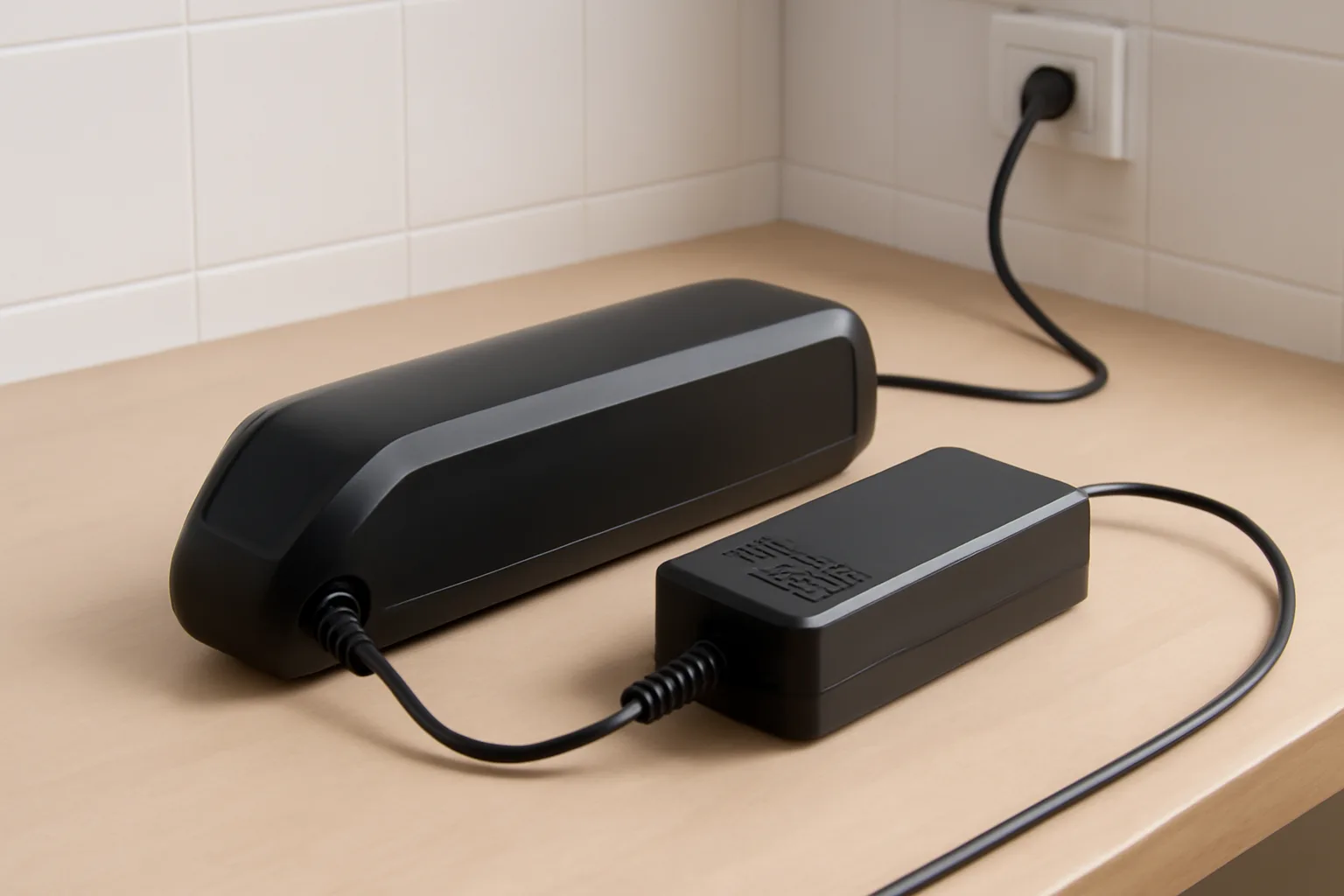
Good charging is about battery life and safety. A routine that keeps the battery healthy but leaves it charging by the front door overnight is not good routine.
The National Fire Chiefs Council advises riders to follow manufacturer instructions, use approved chargers, avoid charging while asleep or away, and keep batteries away from combustible materials. Their e-bike and e-scooter fire safety guidance is worth reading if you store or charge indoors.
Build a simple charging rule
For daily commuting, this works well:
- Let the battery cool after a ride. Give it a little time before plugging in, especially after a hard climb or summer ride.
- Charge where you can notice a problem. A kitchen, utility room or garage with detection is better than a blocked hallway.
- Use the original charger. If it fails, buy the correct replacement from the bike brand, dealer or a reputable specialist.
- Unplug once charged. Do not leave chargers covered, buried under coats or plugged in for days.
- Store partly charged for longer breaks. Check the manual’s storage range and top up every couple of months if needed.
If you need a safer charging spot, a wall shelf, heat alarm and clear area may cost less than £50-£80 in total. That is not glamorous kit, but it beats balancing a battery on a pile of shoes.
For the installation side of charging at home, use our home e-bike charging setup guide.
What to Buy When Range Still Feels Poor
Do the free checks first. Then spend money where it actually helps.
A pump and gauge
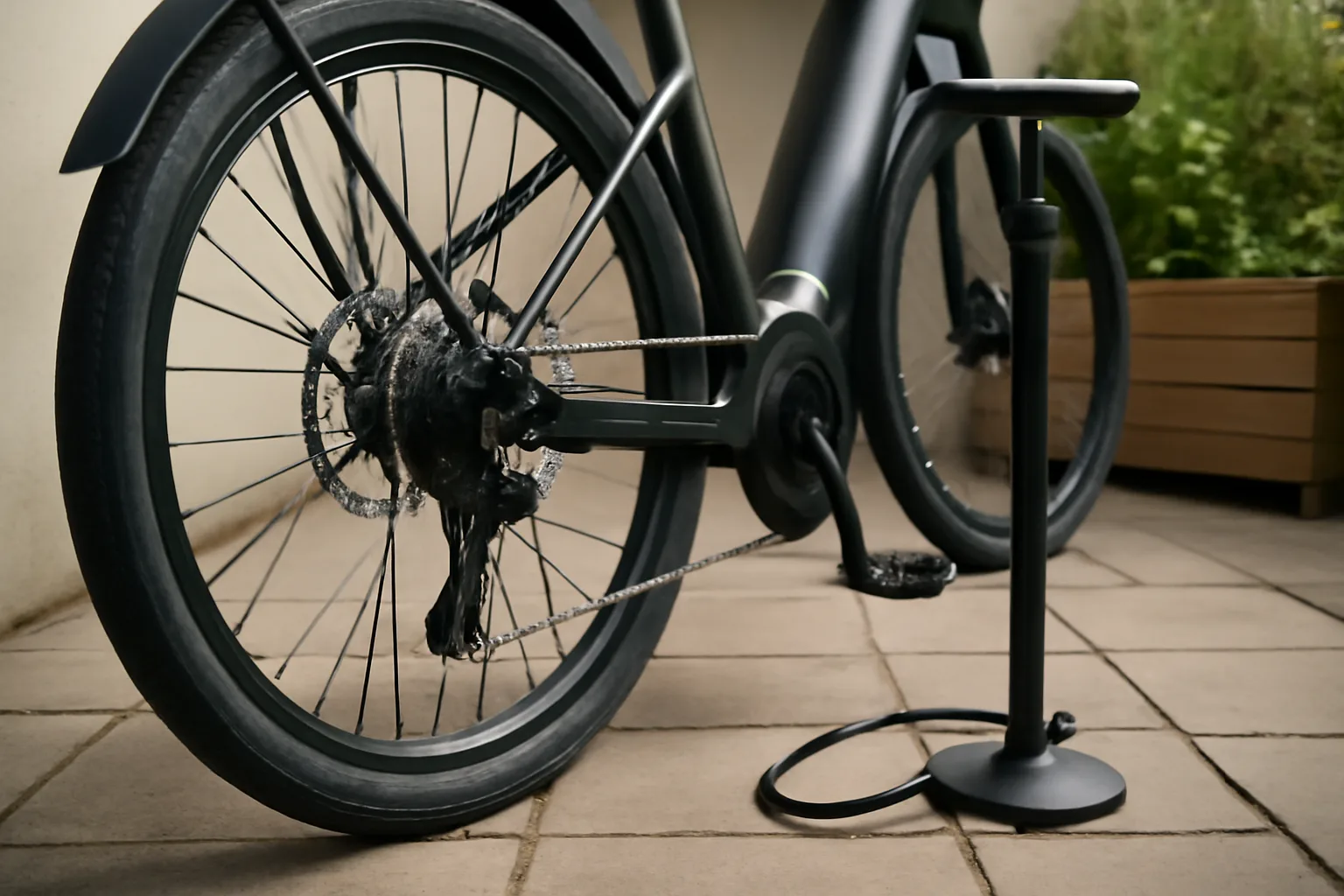
If you do not own a track pump with a gauge, buy that before buying range accessories. Expect £20-£45 from Decathlon, Halfords or Amazon UK. A small portable pump is useful on rides, but a proper home pump is better for accurate pressure.
Better tyres
Range-focused commuter tyres with puncture protection often cost about £25-£55 each. Schwalbe Marathon-style tyres, Continental urban tyres and similar options roll better than chunky off-road rubber on tarmac. If most of your riding is roads and towpaths, do not run heavy MTB tyres just because they look tough.
Chain and cassette parts
If the drivetrain is worn, new chain and cassette parts can restore smoothness. A decent e-bike-rated chain is often £20-£45. A cassette might be £25-£70, depending on speed and brand. Fitting at a local shop adds labour, but it is still cheaper than pretending a skipping chain is fine.
A spare or replacement battery
A genuine replacement battery is the expensive option: often £300-£700, and some premium systems cost more. A spare battery only makes sense if you ride long distances, tour, or need the bike for work. For ordinary commuting, better charging habits and lower assist use usually beat carrying another heavy battery.
Before buying, read our battery replacement signs and costs guide. It helps separate normal ageing from a battery that is actually near the end.
A route-planning app or display
You may not need a new battery; you may need a less punishing route. A paid route-planning app can be about £30-£60 a year, while a dedicated e-bike display or computer can be £60-£250 depending on brand. Use one if it helps you avoid steep repeated climbs or plan charging stops, but do not buy screens as a substitute for basic bike setup.
When Range Loss Means a Fault
Not every range drop is a battery failure. Cold weather, soft tyres, headwinds and heavy panniers can all knock range down for a day. A fault is more likely when the drop is sudden, repeatable and not explained by conditions.
Watch for:
- Range falls sharply in mild weather: especially if your route and assist mode have not changed.
- The battery cuts out under load: climbing or accelerating triggers a sudden shutdown.
- Charging stops early: the charger says full but the bike quickly loses bars.
- Battery casing damage: cracks, swelling, water ingress or strange smells mean stop using it.
- Heat during charging: warm is one thing; hot, hissing or smelling odd is a hard stop.
If you see those signs, stop chasing range tricks and get the system checked. A dealer diagnostic might cost £30-£80, though some shops waive it if you approve repair work. Battery repair is specialist territory; I would not hand an e-bike battery to a random electronics tinkerer just because they are cheaper.
For hilly routes, make sure the issue is not simply terrain. Our hilly-area range guide covers climbing tactics without pretending physics has taken the day off.
The bottom line: maximise e-bike battery life range by removing waste first. Keep the battery in a sensible charge window, keep the bike rolling freely, use assist deliberately, and treat charging as a safety routine. That will do more for most riders than buying another gadget.
Frequently Asked Questions
Should I charge my e-bike battery to 100% every time? Charge to 100% when you need the range, especially before a long ride. For short daily rides or storage, many batteries are happier kept partly charged, but always follow your bike manufacturer’s manual.
Does Eco mode really improve e-bike range? Yes. Eco mode reduces motor assistance, so the battery drains more slowly. The trade-off is that you provide more of the effort yourself, which is fine on flat routes and less fun on steep hills.
What tyre pressure is best for e-bike range? Use the range printed on the tyre sidewall, then adjust for rider weight, load and comfort. Too soft wastes energy; too hard can reduce grip and comfort on rough UK roads.
Is it bad to leave an e-bike battery in the cold? Cold storage is not usually as damaging as heat, but charging a very cold battery is a bad idea. Bring a removable battery indoors and let it reach room temperature before charging.
How much does a replacement e-bike battery cost in the UK? A genuine replacement battery commonly costs about £300-£700, with premium systems sometimes higher. Avoid unknown cheap packs unless a reputable dealer confirms compatibility and safety.
Can a dirty chain reduce e-bike range? Yes. A gritty or dry drivetrain adds resistance, especially on mid-drive e-bikes. Cleaning and lubricating the chain is a cheap way to recover smoothness and reduce wasted effort.