An e-bike kickstand has one job: hold a heavier, more expensive bike still when you load it, lock it, or step away for thirty seconds. For most commuter and cargo-style e-bikes, the safest buy is a double-leg centre stand such as the Ursus Jumbo, usually around £40-£50 in the UK, because it keeps the bike upright instead of leaning all the weight through one side. The best e-bike kickstand heavy duty double leg choice depends on your frame mounts first, then your load, then whether you can live with the extra weight.
In This Article
- Best E-Bike Kickstand Heavy Duty Double Leg Picks: Quick Answer
- What Makes an E-Bike Kickstand Different
- Side Stand vs Double-Leg Stand
- Best Overall: Ursus Jumbo Double Leg
- Best Rear-Mount Option: Pletscher Comp Flex 40
- Best Budget Option: Decathlon 500 Central Stand
- Fit Checks Before You Buy
- Frequently Asked Questions
Best E-Bike Kickstand Heavy Duty Double Leg Picks: Quick Answer
If I were fitting one stand to a heavy hybrid e-bike with panniers, I would start with the Ursus Jumbo Double Leg. It costs about £44.99 from UK cycle shops such as Stamford Cycle Co when in stock, has a wide stance, and suits the sort of bike that feels nervous on a thin single side stand.
That does not mean everyone should buy it. A double-leg stand is heavier, can be awkward on some frame shapes, and may lift one wheel slightly when deployed. If your e-bike already has a clean rear KSA mounting point near the dropout, a rear stand such as the Pletscher Comp Flex 40 at about £25-£30 from UK retailers including Bikeparts and Torque Electric is neater.
My short list:
- Best overall: Ursus Jumbo Double Leg, about £40-£50, for loaded commuter, touring and family e-bikes.
- Best rear-mount stand: Pletscher Comp Flex 40, about £25-£30, for frames with the right KSA mounting holes.
- Best budget option: Decathlon 500 central kickstand, usually about £15-£20, for lighter hybrids and occasional use.
- Best cheap spare-shop buy: M-Wave or Oxford adjustable side stands, usually £12-£20 on Amazon UK or local bike shop accessory walls, for basic town bikes.
Before buying anything, check the bike’s total weight and the stand mount type. The UK GOV.UK electric bike rules define an electrically assisted pedal cycle around power and speed, not accessory weight, so a stand will not change legal status. It can still change how the bike handles when parked, lifted or wheeled through a hallway.
If you are already loading the bike with bags, also read our guide to heavy-duty e-bike rear racks. A rack and kickstand work as a pair: the rack carries the load, but the stand decides whether the whole thing stays upright while you pack it.
What Makes an E-Bike Kickstand Different
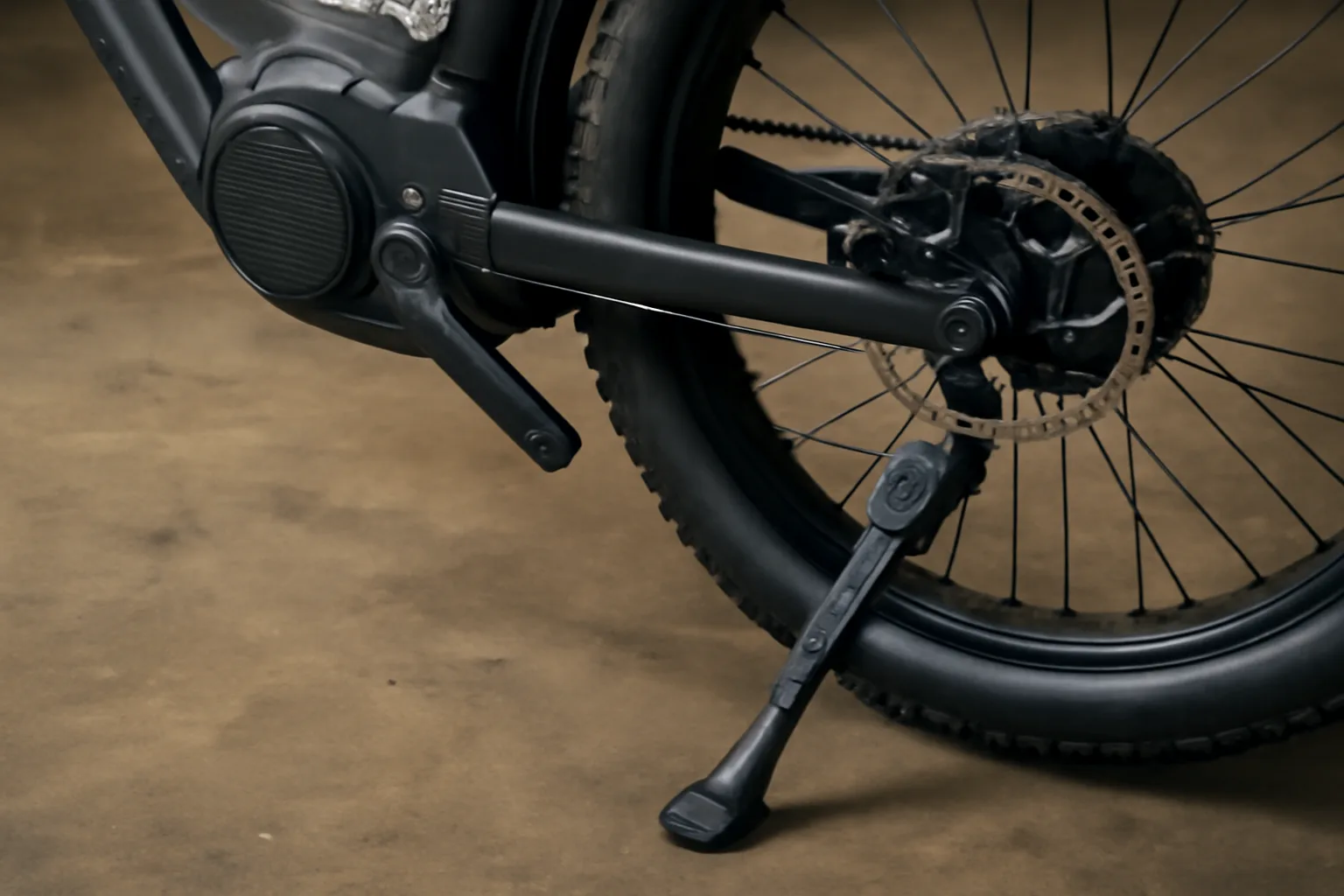
A kickstand that feels fine on a 12kg hybrid can feel flimsy on a 25kg e-bike. Add a frame battery, rear rack, panniers, child seat or lock chain and the parked bike can easily push past 30kg before you have even added shopping.
The big difference is where that weight sits. Many e-bikes carry mass low in the down tube and around the motor, which helps riding stability but puts more stress through the stand when the bike leans. Rear-hub bikes can feel tail-heavy. Mid-drive bikes can put more weight near the bottom bracket. Cargo and longtail bikes add length, so a narrow side stand can leave the bike rocking if the ground is not flat.
There are three practical questions to answer:
- Will the stand fit the frame? Some e-bikes have KSA mounting holes near the rear dropout, some have a central plate, and some have awkward battery/motor shapes that block universal stands.
- Will it hold the real load? Do not judge by bike weight alone. Count panniers, locks, child seats and the weekly food shop.
- Will it clear the crank, tyre and brake rotor? A stand that fouls the crank arm or sits too close to a disc rotor is not a bargain.
Based on owner reports, the common failure is not the stand snapping in half. It is wobble: the bike leans too far, the foot slips on wet paving, or the mounting bolt loosens after a month of commuting. That is why I would pay the extra £15-£25 for a better stand on a heavy e-bike rather than treating it as a throwaway accessory.
This matters even more if you store the bike indoors. Our guide to folding e-bike storage in small flats covers the same problem from the storage angle: a stable parked position is often more useful than saving a few grams.
Side Stand vs Double-Leg Stand
Most e-bike owners should choose between a rear side stand and a double-leg centre stand. The right answer depends less on brand and more on what the bike carries.
Rear side stands
A rear side stand bolts near the back wheel, often to a KSA 18 or KSA 40 mount. It is light, tidy and quick. On a commuter e-bike with a rear rack and one pannier, a good rear stand is usually enough.
The downside is lean angle. The whole bike rests on one side, so if the front wheel turns, the surface slopes, or one pannier is much heavier than the other, it can tip. I have seen this most often with loaded shopping panniers: the bike looks fine for five seconds, then the bars flop and the whole thing goes down with a horrible scrape.
Double-leg centre stands
A double-leg stand lifts or braces the bike more evenly. It is the better choice for a cargo e-bike, child-seat setup, longtail, or heavy commuter with two panniers. It also makes loading easier because the bike stays upright rather than leaning away from you.
The trade-off is bulk. A double-leg stand can weigh about 1kg or more, and it may not fit frames with unusual motor housings, low-slung batteries or limited centre clearance. Some riders also dislike the feel of stepping the bike up and forward to deploy it.
My rule of thumb
Use this quick filter:
- Under 25kg, light commuting: a rear side stand is probably fine.
- 25-30kg with rack and panniers: choose a strong rear stand only if the mount is excellent.
- 30kg+ or child seat/cargo load: buy a double-leg stand if the frame accepts one.
- Bike stored in a narrow hallway: check deployed width before buying; some double-leg stands make the bike wider than expected.
The battery also changes the calculation. If you regularly remove it for charging, a parked bike can feel different with the battery out than with it fitted. Pair this with our advice on where to store an e-bike battery overnight if your bike lives in a flat, shed or garage.
Best Overall: Ursus Jumbo Double Leg
The Ursus Jumbo Double Leg is the one I would buy for a heavy-duty e-bike if the frame fit checks out. UK pricing moves around, but expect about £40-£50, with Stamford Cycle Co showing the Ursus Jumbo Double Adjustable Kickstand at £44.99 when available and Idealo-style comparison listings often showing lower starting prices from around £30 before delivery.
Its appeal is simple: two legs, wide stance, aluminium body, and a design aimed at heavier bikes rather than skinny town hybrids. Ursus lists the Jumbo as suitable for e-bikes, family bikes, tandems and loaded bicycles, with a high quoted load capacity. That is the right category for an e-bike carrying panniers or a child seat.
What it does well
The Jumbo feels like a proper parking solution, not a token bolt-on. A double-leg layout keeps the bike more upright while you load panniers, fit a child’s helmet, or unlock a heavy chain. If your e-bike has ever tried to roll forward while you clip a bag on, you will understand the appeal.
It also suits bikes where one-sided lean is the problem. A rear side stand can be strong but still leave the bike balanced on a diagonal. A centre double-leg stand spreads the contact points and reduces the twisting force through one rear dropout.
What to watch
Fit is the danger. Some e-bikes do not have the right central mounting plate, and some motor housings leave no clean space. On smaller-wheel bikes, fat-tyre bikes, or frames with unusual chainstay shapes, you need to check clearance carefully before ordering.
It is not light either. If your bike already feels heavy when you carry it over a threshold, adding a chunky stand will not help. But for most heavy commuter e-bikes, I would rather carry the extra weight than watch a £2,000 bike fall onto a kerb.
Who should buy it
Buy the Ursus Jumbo if you have:
- A loaded commuter e-bike: especially with two panniers or a heavy rear rack.
- A family e-bike: where stability while loading matters more than weight.
- A touring setup: where the bike often sits packed outside cafes, stations and campsites.
Skip it if you only need a neat parking leg for a light folding e-bike. You will be happier with a frame-specific side stand or a stand recommended by the bike maker. For bike-load context, our guide to e-bike weight limits is worth checking before you assume the stand is the only weak point.
Best Rear-Mount Option: Pletscher Comp Flex 40
The Pletscher Comp Flex 40 is the tidy option for e-bikes with the right rear mounting points. Current UK listings put it around £25-£30: Bikeparts has shown the Comp 40 Flex at £25.74, Torque Electric lists the Comp Flex at £28.99, and some local shops sit closer to £29.99.
This is not the stand for every frame. It is for bikes with compatible rear KSA mounting holes, usually near the dropout. If your e-bike has those mounts, it can look cleaner than a universal centre stand and is less likely to interfere with the motor area.
Where it makes sense
I like the Pletscher route for commuter e-bikes that carry moderate weight but do not need cargo-bike stability. Think rear rack, one pannier, waterproof jacket, D-lock and laptop bag. It is also useful if your centre area is crowded by a mid-drive motor, cable routing or frame shape.
The stand is adjustable, which matters because tyre size and wheel diameter alter the lean. A stand that is 15mm too short can make a heavy e-bike lean like it is sulking. A stand that is too long can leave the bike too upright and easy to knock over.
Limitations
The rear mount concentrates force at the back of the bike. If you overload one pannier, leave the bars turned, or park on a cambered pavement, it can still tip. It is a parking aid, not a loading dock.
Check the mount spacing before buying. KSA 18 and KSA 40 are not interchangeable guesses. If the retailer page is unclear, measure the holes on the frame or ask the bike brand. That five-minute check saves a pointless return.
If you are also fitting racks or bags, our e-bike lights guide is relevant because rear accessories can compete for space around the dropout, mudguard and rack stays.
Best Budget Option: Decathlon 500 Central Stand
For lighter e-bikes and hybrid-style commuters, a Decathlon central stand is the budget option I would look at first. Decathlon’s own-brand bike stands tend to sit around £15-£20 in the UK, depending on model and stock, which is fair for a simple adjustable stand.
This is not my top pick for a fully loaded e-bike. It is the sensible cheap option when your bike is not especially heavy and you need something better than leaning it against a wall. If the bike already has a centre mounting plate and the stand clears the crank, it can do the job.
What you gain
You get a low price, easy UK returns, and a practical stand for normal day-to-day parking. For a town e-bike used for short trips, school run drop-offs without a child seat, or light commuting, that may be enough.
It is also a good test of whether you like a central stand before spending more. If you fit one and find the central position awkward, you have learned that cheaply.
What you give up
Cheaper stands tend to have more flex and less refined feet. On wet paving slabs or rough tarmac, that matters. A rubber foot that slips is not much better than no stand.
I would not use a budget central stand as my first choice on a longtail, cargo bike, or e-bike with a loaded child seat. For those, spend the money on a proper double-leg model or use the stand specified by the bike manufacturer.
The same thinking applies to cheap side stands from Amazon UK, Oxford, M-Wave and generic accessory brands. At £12-£20, they are fine for light use, but check the weight rating, mount type and reviews from owners of heavy bikes. Reviews from road-bike owners do not tell you much about an e-bike with a 500Wh battery and loaded panniers.
Fit Checks Before You Buy
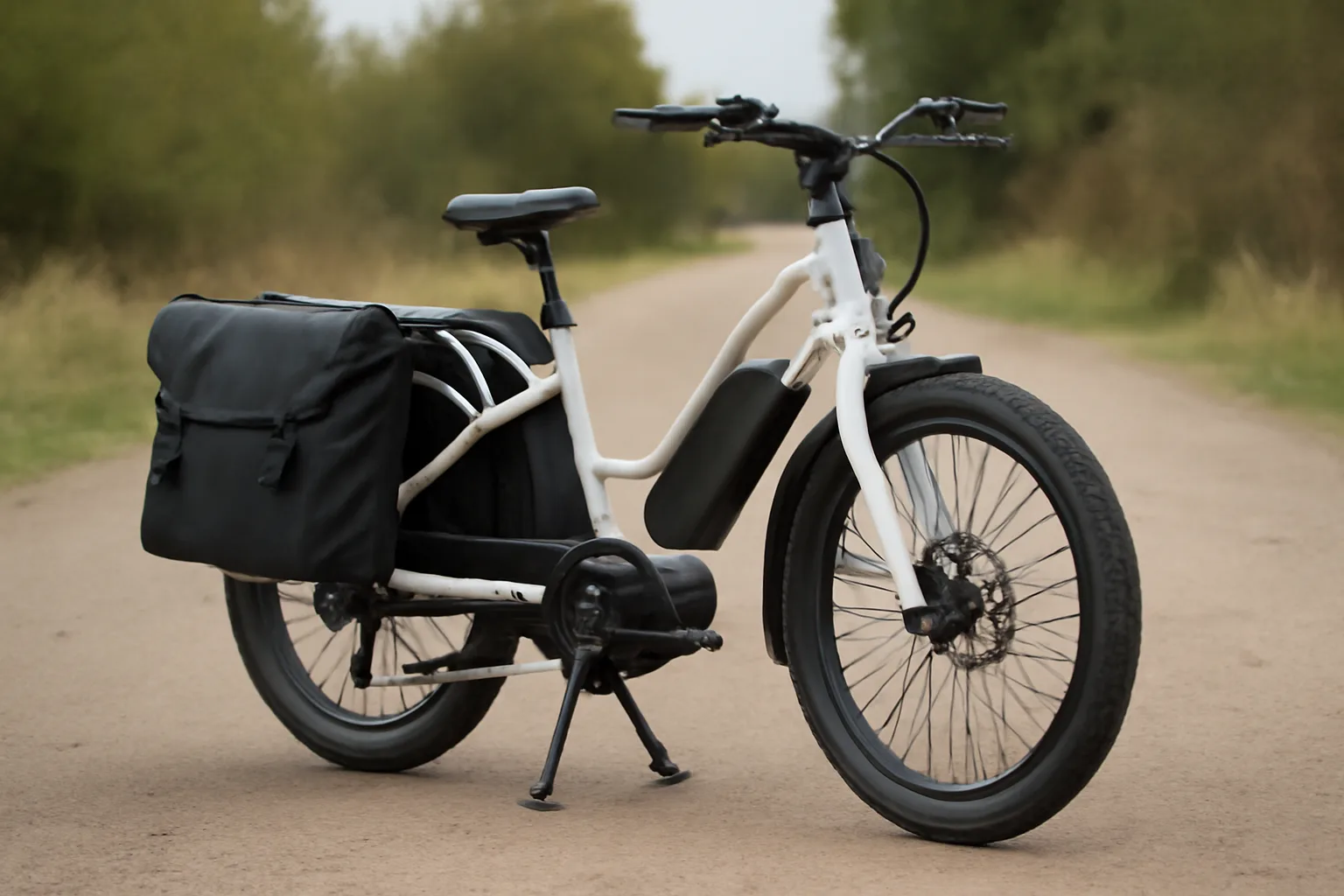
The worst e-bike kickstand is the one that nearly fits. It bolts on, looks fine, then knocks the crank, leans too far, or twists loose after a week.
Check the mounting type first
Look for one of these:
- KSA rear mount: two threaded holes near the rear dropout, often 18mm or 40mm apart.
- Centre plate mount: a bridge behind the bottom bracket for a central stand.
- Frame-specific mount: common on cargo, folding and brand-specific e-bikes.
- No clean mount: in which case a universal clamp may be risky on an expensive frame.
Do not clamp a stand around carbon stays, unusual hydroformed tubes, or cables unless the bike maker says it is safe. A scratched frame is annoying. A crushed cable or damaged dropout is worse.
Check loaded balance
Test the bike as you use it. If you ride with a pannier, put the pannier on. If you carry a chain lock, leave it on the bike. If you remove the battery indoors, test balance with and without it.
This is where double-leg stands earn their place. They are not just stronger; they make the bike easier to handle while stationary. The Highway Code rules for cyclists cover road use and night equipment, but the everyday ownership issue is more basic: a legal e-bike can still be heavy, awkward and expensive to drop.
Check clearance
Spin the cranks backwards slowly after fitting. Bounce the bike gently. Turn the bars. Fold the stand several times. Watch for:
- Crank strike: the pedal or crank arm catching the stand.
- Tyre rub: especially on wider 27.5in, 29in or fat tyres.
- Brake rotor clearance: a rear stand must not sit close enough to touch under flex.
- Cable pressure: no stand should pinch motor, light or brake cables.
After the first week, tighten the mounting bolt again to the recommended torque if the manufacturer gives one. A stand that was snug in the workshop can loosen after a few kerb drops and rough paths. The same habit belongs in your wider e-bike maintenance schedule.
Final recommendation
For a serious heavy-duty e-bike, buy the Ursus Jumbo Double Leg if it fits. For a cleaner rear-mount setup, buy the Pletscher Comp Flex 40. For a cheap stand on a lighter bike, try the Decathlon 500 central stand or a similar £15-£20 adjustable model, but do not pretend it is cargo-bike hardware.
The mistake is buying by price before checking the frame. Start with the mount, then the loaded weight, then the stand style. That order saves more hassle than any brand loyalty.
Frequently Asked Questions
What is the best e-bike kickstand heavy duty double leg option? For most heavy commuter or cargo-style e-bikes, the Ursus Jumbo Double Leg is the best starting point because it gives a wide, stable stance and is built for heavier bikes. Expect to pay about £40-£50 in the UK.
Can I fit any kickstand to an e-bike? No. You need to match the stand to the frame mount, wheel size and clearance around the motor, crank and rear brake. Some e-bikes need a brand-specific stand.
Is a double-leg kickstand worth it? It is worth it if your e-bike carries panniers, a child seat, shopping or touring kit. For a light commuter with a clean rear KSA mount, a good rear side stand may be enough.
How much should I spend on an e-bike kickstand? Budget about £25-£30 for a good rear stand and £40-£60 for a stronger double-leg stand. Cheap £12-£20 stands can work on lighter bikes, but they are not the best choice for heavy loads.
Will a kickstand affect e-bike legality in the UK? No. UK e-bike legality is about motor power, assistance speed and pedal-assist rules, not accessories such as kickstands. A stand can affect weight and handling, though.
Why does my e-bike fall over even with a kickstand? The usual causes are too much lean, uneven loading, turned handlebars, slippery ground or a loose mounting bolt. Test the bike with your normal bags fitted, not empty in the shed.